



כ״א אב ה׳תשפ״ה | August 14, 2025
The Kolel Network Where Seniors Find Torah and Community
There are an estimated 2 million Jewish retirees in the United States, who find themselves with an abundance of free time, often with little to occupy it. Kolel Tiferes Z’keinim – Levi Yitzchok, established by the Rebbe in his father’s memory, functions in hundreds of locations and online, giving seniors around the world community and purpose.
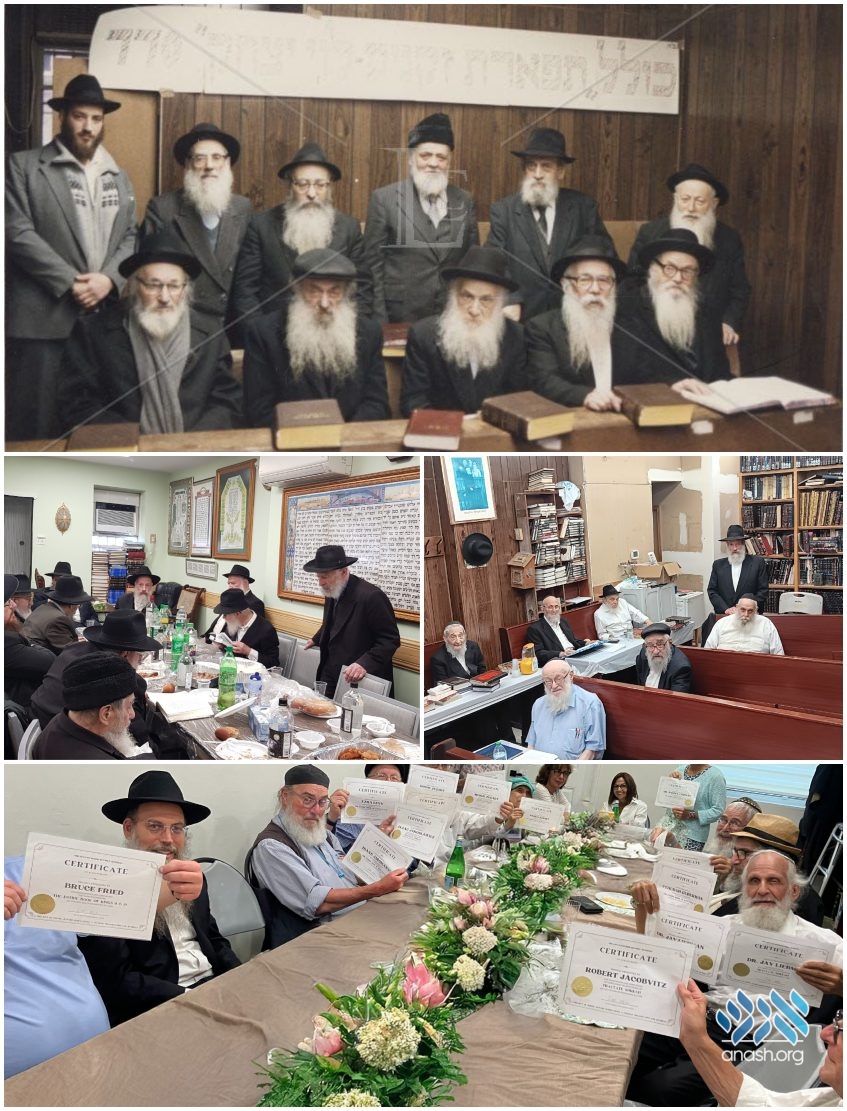
There are an estimated 2 million Jewish retirees in the United States, who find themselves with an abundance of free time, often with little to occupy it. Kolel Tiferes Z’keinim – Levi Yitzchok, established by the Rebbe in his father’s memory, functions in hundreds of locations and online, giving seniors around the world community and purpose.
By Anash.org reporter
This coming year, an estimated 4 million people are expected to retire in the United States, bringing the total number of retirees to roughly 69 million. Based on population studies, approximately 2 million of these retirees are Jewish – and that’s in the U.S. alone.
Many, if not most, will suddenly find themselves with an abundance of free time, often with little to occupy it, leading to boredom and a sense of aimlessness. It was for this reason that the Rebbe established Kolel Tiferes Z’keinim – Levi Yitzchok.
During the farbrengen of Shabbos, Chof Av 5740 – the 35th yahrtzeit of the Rebbe’s father, Harav Hagaon Hamekubal R’ Levi Yitzchok – the Rebbe announced that the time had come to place a special emphasis on encouraging the elderly to increase in Torah learning with public shiurim. The Rebbe called for establishing an official organization to facilitate these classes to ensure success in a much greater measure.
On Motzei Shabbos, the Rebbe added that it would be appropriate to establish an official kolel in every city and every shul, with set times for public shiurim; and participants should receive a monthly stipend (in amounts of 18 in the local currency) so that they are motivated to participate consistently and punctually. This is the responsibility of the local rov, and it would be best for the shiurim to have at least 10 participants. To unite all of these kollelim, they should learn the same topic – the daily portion of the parsha – at these classes.
The Rebbe asked that the kollelim be called Kolel Tiferes Z’keinim, and then made a “personal request” that the name Levi Yitzchok should be added to the name of the kolel – Kollel Tiferes Z’keinim Levi Yitzchok – to commemorate the incredible mesirus nefesh of his own father. The Rebbe added that whoever establishes a kolel with that name would receive 100 dollars. “This will certainly be a source of great nachas for his neshama,” the Rebbe concluded.
Shluchim throughout the world immediately opened kolelim in their respective cities, and in New York City, Reb Sholom Ber Brod coordinated groups to visit and give shiurim to Yidden in many old-age homes. Some yungerleit even arranged a shiur for elderly members in Crown Heights buildings. In a short time, thousands of elderly Yidden were reached and afforded the opportunity to learn Torah.
In 5743 (1983), Rabbi Menachem Gerlitzky was hired to lead the organization, and it was decided to open a kolel for retired Anash to learn on a regular basis in one of the rooms of 770, and to be paid on a monthly basis. Reb Shia Pinson was appointed as the maggid shiur for the kolel, a job he carried out faithfully until his passing in 5761 (2001). The Rebbe would often give him a bottle of mashke during a farbrengen for the kolel.
The Rebbe awarded tremendous affection to the kolel’s activities. Starting in 5744, Rabbi Menachem Gerlitzky began bringing the elderly participants of the Tiferes Z’keinim programs throughout New York City for a kinus in 770 – usually on Chanukah and around Chof Av – and the Rebbe addressed them on numerous occasions. Once, when the Rebbe was going to the Ohel that day, Gerlitzky was called to the Rebbe’s room, where the Rebbe proceeded to tell him, for several minutes, what he should relay to the kinus participants on the Rebbe’s behalf.
In 5744, the Rebbe even edited a collection of all the sichos about the kolel, which was published for Chof Av (later printed in Likkutei Sichos vol. 29, pg. 263).
Inside the Kolel Today
Since the launch by the Rebbe, hundreds of kollelim for elderly men and women have been established around the world, and the idea has spread even beyond the boundaries of Chabad.
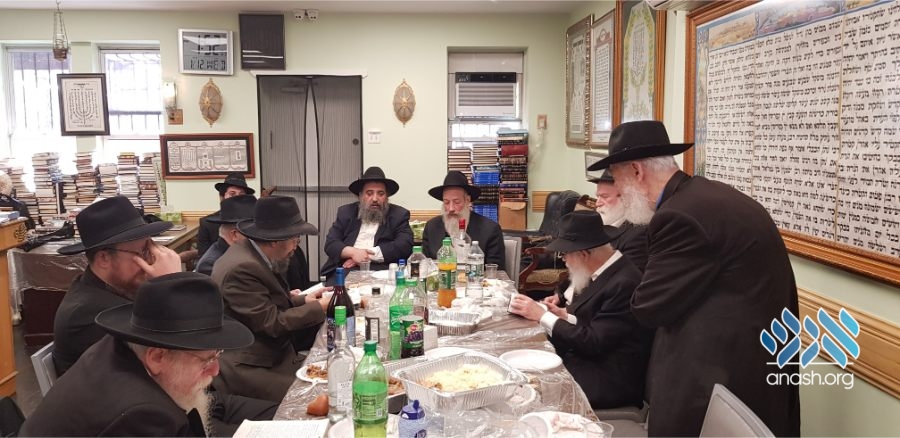
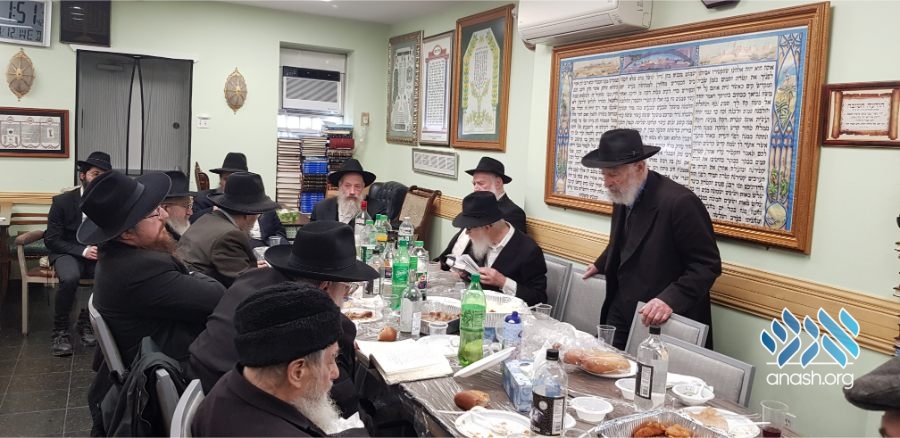
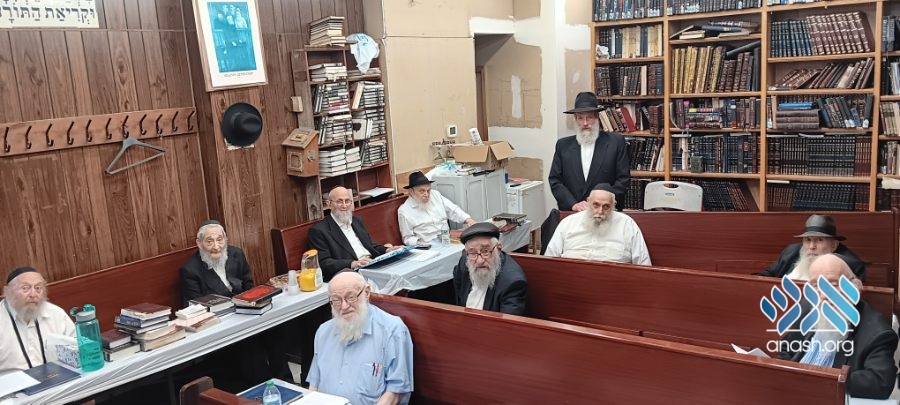
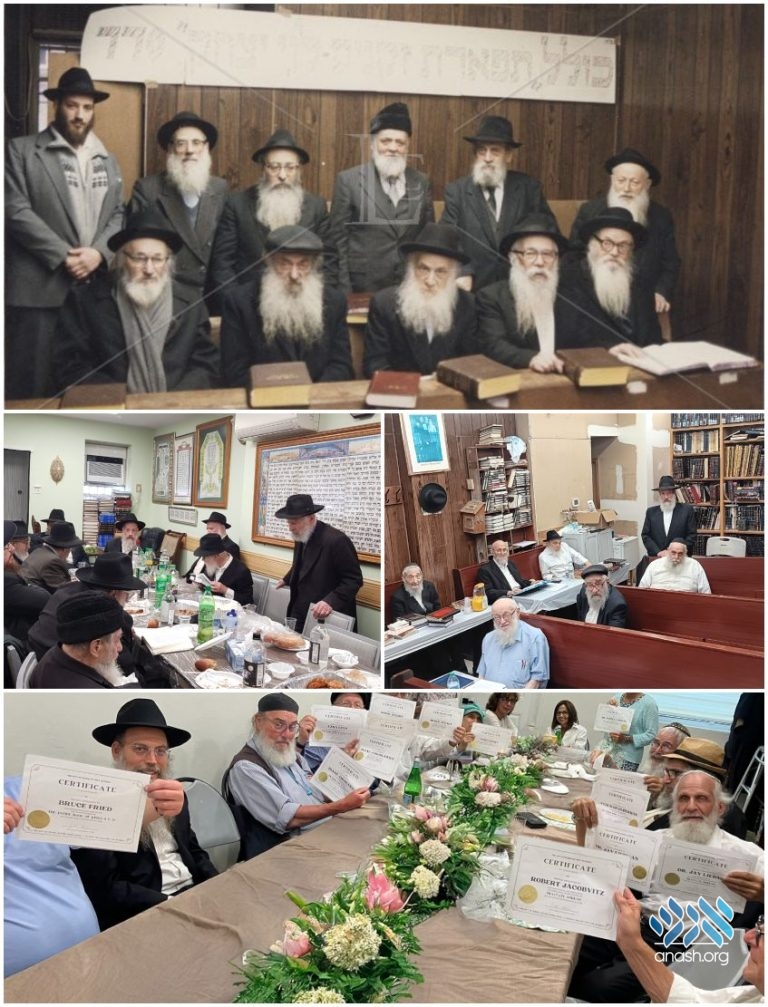
In Crown Heights, there are three kollelim currently running under Rabbi Menachem Gerlitzky – two with shiurim in English and one in Yiddish. One kollel is in 770, another in the Frankel Shul on President St., and the third in the Sefardi Shul on Empire Blvd.
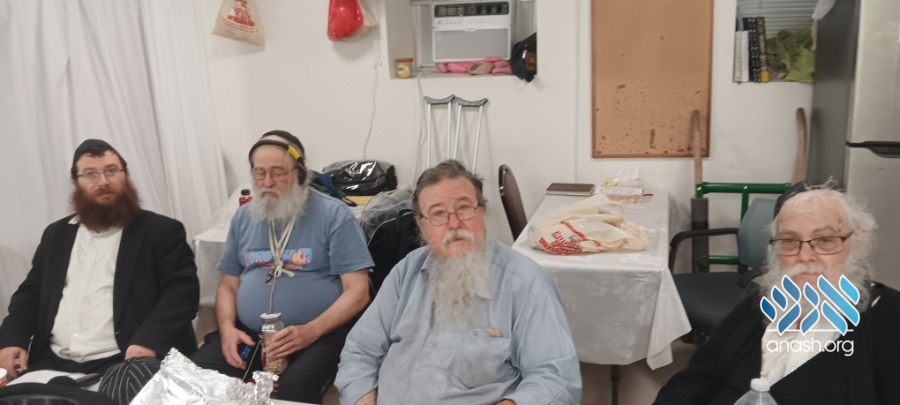
Dozens of elderly or retired Anash attend the kollelim, where they learn and participate in shiurim on a variety of topics from Gemara to Chassidus, Rambam, and the Rebbe’s sichos. The learning usually takes place from 11 a.m. to 1:30 p.m. and is often accompanied by breakfast or the like. Each attendee receives a monthly stipend as the Rebbe stipulated in the sicha.
“This is what gives them chayus for their day”, Rabbi Gerlitzky told Anash.org. “Just today, I heard that the maggid shiur delayed slightly, and they already complained, ‘What are we going to do without him?’”
Many shluchim across the U.S. and around the globe have chosen to establish a kollel for the Rebbe’s father in their areas by placing an emphasis on the elderly in their communities and coordinating shiurim for them, as well as doing mivtzoim with them on a routine basis. This too, says Rabbi Gerlitzky, is included in the Rebbe’s effort.
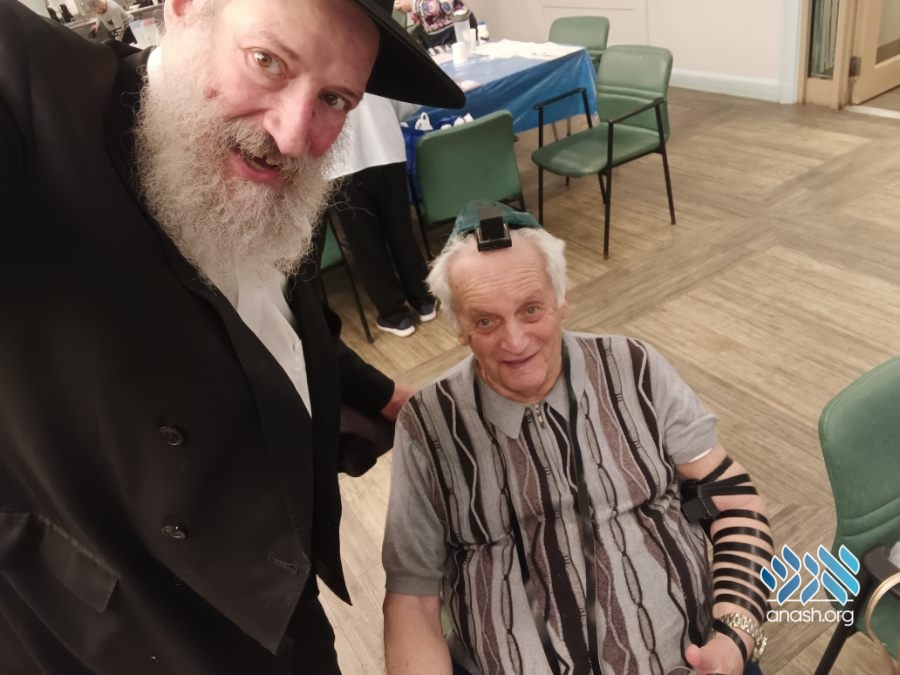
In Crown Heights, yungerlait go out every Friday or Sunday to do mivtzoim with the elderly – sharing Divrei Torah, singing Shabbos songs, helping men put on tefillin, and distributing Shabbos candles. For yomim tovim, hundreds of Anash and bochurim visit to assist them with the mitzvos of the day, and classes from local schools often join in the mivtzoim.
“This is exactly as the Rebbe requested in the sicha,” says Rabbi Gerlitzky, “that alongside the shiurim, there should be a strong focus on helping them actively fulfill mitzvos.”
From Local Groups to a Widespread Network
In Eretz Yisroel, 88 (!) senior community centers have been established across the country under “Kollel Tiferes Z’keinim – Levi Yitzchok” (including two just this past month!). The kolelim are under the auspices of Colel Chabad, with the generous support of philanthropist Mr. Lev Leviev.
At the heart of the kolel are shiurim given by maggidei shiurim and shluchim who teach in an engaging way accessible for all, for seasoned learners and those completely new to Torah learning alike, with 1,584 ongoing participants across the country.
Alongside the learning, many kollelim offer a variety of engaging activities, including age-appropriate health and fitness classes, lectures by prominent rabbis, well-planned trips, and events throughout the year.
One newly launched initiative brings the weekly parsha to life through an interactive computer game based on kolel shiurim. Participants earn points by answering questions from their learning, creating a fun and competitive atmosphere. After a successful pilot, the program is now active across the entire network.
An annual conference is set to take place for Chof Av at Binyanei HaUma in Yerushalayim, bringing together members from the 88 branches across Eretz Yisroel for an inspiring program with leading rabbinic and public figures.
“The Rebbe was the first to point out the tremendous spiritual potential of the senior years,” wrote Chief Rabbi Harav Yitzchak Yosef in a public letter. “This group carries immense strength and an unparalleled ability to influence. I appeal to you to join this important mission – to find, encourage, and assist anyone willing to establish a Kollel Tiferes Zkeinim Levi Yitzchak, which provides its participants with an anchor, a sense of purpose, and true meaning.”
Expanding the Vision
But around the world, there is still much to be done. Millions of Jewish retirees and elderly are still sitting at home, often with very little to do, yet eager to join a Torah shiur and interact with others. With the rise of technology and remote learning becoming increasingly popular, this has become more feasible than ever.
Rabbi Menachem Smith is a shliach based in North Miami Beach who spends much of his time visiting over 40 assisted living facilities and old age homes, where he gives out Shabbos and Yom Tov packages and devotes time to mivtzoim.
In the beginning, Rabbi Smith arranged a weekly shiur for the seniors at a designated location – usually at a kosher restaurant – but it didn’t garner as much participation as he would have wanted.
Then COVID hit.
“We moved our shiurim to Zoom,” Smith told Anash.org, “and all of a sudden everyone wanted to join. These shiurim are perfect for many of our retirees who are looking for a way to fill their day or week with something meaningful and are not looking to get dressed and travel somewhere.”
Today, his Kolel Tiferes Z’keinim (RetireeAcademy.com) hosts two daily Zoom shiurim: a morning shiur of an hour Gemara in depth (where they’ve already finished a few masechtos) and an afternoon shiur for men and women on a range of topics from Tanach, Chassidus, sichos, Ohr Hachayim, Shulchan Aruch, and more.
The Zoom shiurim bring in dozens daily from a diverse crowd – from Litvishe retirees to people who are not yet frum. One nursing home even got their residents iPads so they could join. Another assisted living facility plays the shiurim on a large screen.
“The feedback is overwhelming,” says Rabbi Smith. “These are very great people, but unfortunately, they often feel bored or even neglected and can be going through a lot. This makes them feel appreciated and cared for. They interact with others, it organizes their day, and gives them meaning, accomplishment, and fulfillment. When I told them I was taking a week off, they complained, ‘What are we going to do without it?’”
The potential for a global online community for seniors to connect over Torah is limitless and largely undeveloped. Extensive live shiurim, chavrusos, and chaburos could unite seniors of similar levels in different cities; interactive programs, special talks, and events can supplement the Torah learning; and an annual live, in-person conference would allow them to bond and celebrate the year’s accomplishments – all together allowing seniors to belong and thrive in Torah.
“There is vast opportunity in this shlichus!” Rabbi Smith adds. “There are millions of retired Jews in the U.S., and every shliach can allocate part of his time to focus on the seniors and establish a local Kolel Tiferes Z’keinim, as the Rebbe requested.”
“Everyone has a bit of free time they can dedicate,” says Gerlitzky. “If every yungerman would adopt a home or senior center, Moshiach would come!”
 COMMENTS


How about publishing a list of all the locations and contact information for all the kollelim?