




כ״ז תשרי ה׳תשפ״ו | October 19, 2025
Sofer Sounds Alarm: We’re Facing a STa”M Crisis
“As I checked mezuzahs and tefillin this past Elul, one thing became painfully clear: we are facing a serious lack of education about the world of STa”M.”
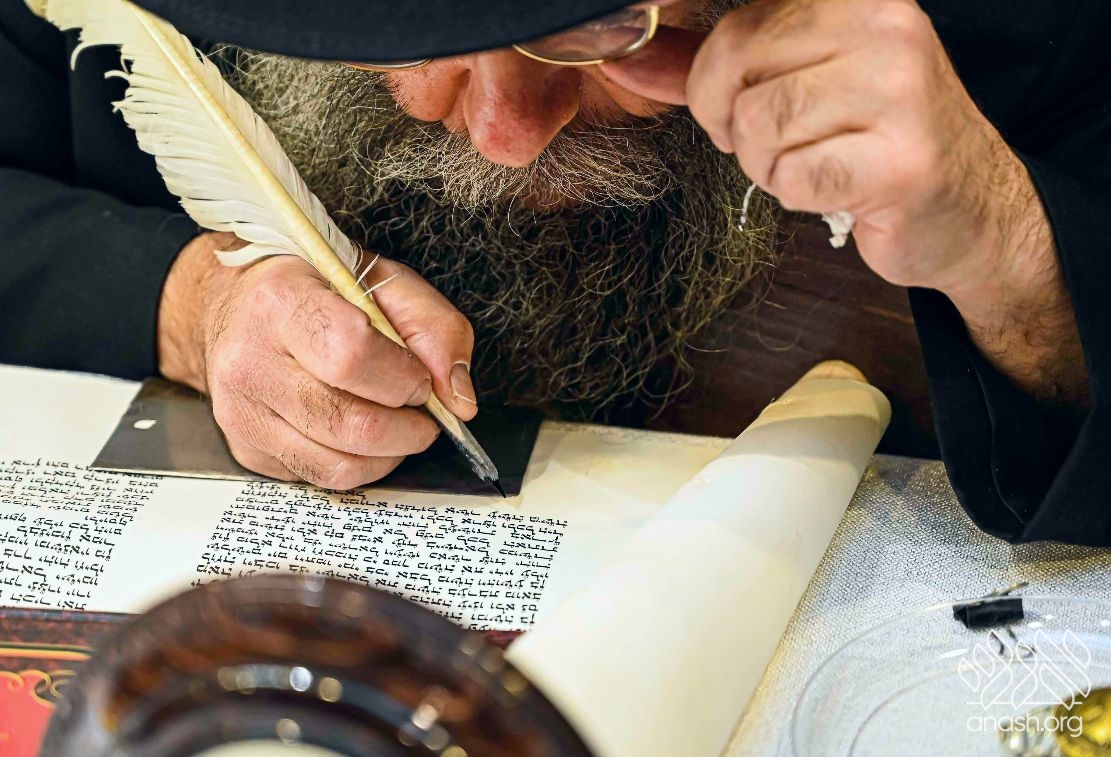
By Yosef Kaufmann
Over this past Elul, as I checked mezuzahs and tefillin, one thing became painfully clear: we are facing a serious lack of education about the world of STa”M (Sifrei Torah, Tefillin, and Mezuzahs) — especially within our own Chabad community.
Time after time, people bring me their mezuzahs and tefillin, assuming that all is well. But when I begin to explain issues that I encounter while checking, the usual response is, “I don’t speak this language.” These are sincere, frum people who want to do the right thing — but they were never taught how to navigate this area of Yiddishkeit that is both halachically complex and spiritually fundamental.
Chazal have taught us that STa”M is not just parchment and ink — it is a physical expression of Hashem’s presence in our lives. Every aspect of each letter carries kedushah; every detail matters. The Rebbe spoke many times about the shemira that kosher mezuzahs bring. When something so central to a Yid’s connection with Hashem is neglected or misunderstood, it affects both the gashmiyus and ruchniyus of our homes.
As a sofer, I can say with certainty that too many people are unknowingly using mezuzahs or tefillin that are well below the standard that a Chossid should have. Not out of neglect, but out of a lack of knowledge. They were never given the tools to know better. To understand the difference between a 10cm and a 15cm mezuzah. To appreciate that the extra expense is a worthwhile investment in the spiritual foundation and protection of one’s home and family.
This should be a priority for all mechanchim. Our chosson teachers also have a huge impact and responsibility: they are preparing our bochurim to build and establish chassidishe homes. The mezuzahs they are about to affix to their doorways — and the tefillin they will, iy”H, one day buy for their sons — are not side details. They are part of the very foundation of that home’s kedusha and protection. Teaching how to buy STa”M, what to look for, what questions to ask, must be included in that preparation.
The same applies to our bar mitzvah boys. Alongside learning how to put on tefillin properly, they should be taught how to recognize basic issues — such as cracked retzuos, so they can avoid, chas v’shalom, putting on problematic or invalid tefillin. This awareness is not beyond them; on the contrary, it empowers them to take true ownership of the mitzvah.
That is why I turn now, with respect and urgency, to our roshei yeshivah, rabbonim, and chosson teachers, principals and mechanchim: please make STa”M education a part of your curriculum and guidance. Even a single shiur, a short discussion, or a few minutes in a chosson class can open eyes and prevent years of unintentional issues.
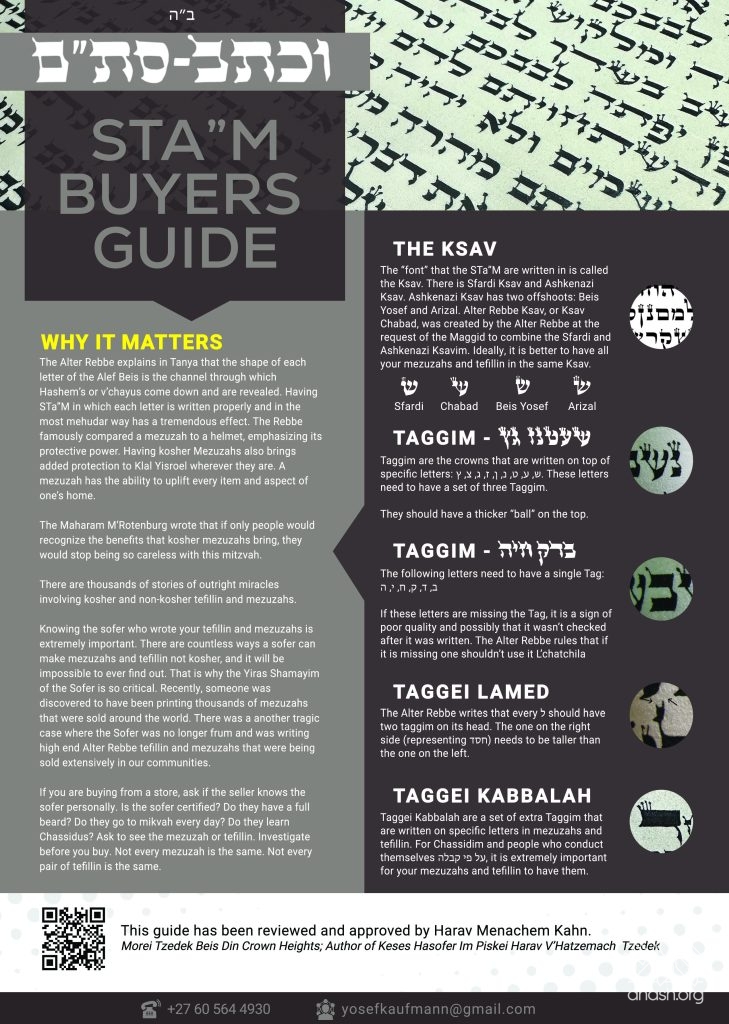
As a small step in that direction, I have put together a short STa”M Buyer’s Guide — a simple resource to help people know what to ask, what to look for, and how to make informed decisions when buying mezuzahs and tefillin. But this can only go so far. Real change will come when the awareness begins in the classroom, in yeshivah, and under the guidance of our rabbonim and teachers.
If we can give our community the language of STa”M — the ability to ask, to discern, and to take pride in the beauty and hiddur of these holy items — we will be fulfilling not only a halachic responsibility but also a directive of the Rebbe: to ensure that every Yid is surrounded, physically and spiritually, by the Kedusha of kosher mezuzahs and tefillin.
Let’s not let another Elul go by with people saying, “I don’t speak this language.” Let’s start teaching it.
 COMMENTS


I may be wrong, but I don’t think this is the problem or the solution. Unfortuntely there are problems of this sort in so many other serious areas as well, like Shabbos and Kashrus. There are bandaids and quick and perfect fixes, but then there is reality. Reality is that Yiras Shamayim is the only way to solve these types of problems and there are no quick fixes for that. When there isn’t Yiras Shamayim, big problems will always crop up, when there is Yiras Shamayim that’s the antidote for Hashem’s help to protect and guide a Yid.
A good place to start is with respect for Rabonim. People say the Rabonim this and the Rabonim that, not realizing that this excuse is as old as every Yiddishe community with Rabonim. A Yid’s business is to listen to the Rabonim, not to figure out why they aren’t good. Yidden can R”L manage to do that even with Moshe Rabeinu.
Yiras shomaim doesn’t cover for lack of knowledge
A home needs many mezuzahs. Today, an Alter Rebbe mezuzah cost over $200 each. Tefillin x 2 pairs, over $5,000. People would love to buy the best, but they just can’t afford it, so they purchase lower quality.
You write that choson teachers should stress that the need mehudar mezuzahs. I agree that mehudar is best, but most newly married couples can’t afford it.
If STAM was affordable, I think people wouldn’t hesitate to buy the best.
It doesn’t have to be Alter Rebbe. If one must choose between low-quality or another script but Mehudar, any LOR will most likely opt for the latter even if he generally prefers AR.
The problem is that even when you go to a sheliach and you want to buy a mezuza.They are selling you mezuzot that costs approximately 60-65 dollars that some are sofek kosher or bediavad kosher or you need to bring them to sofer to fix some problems. I bought from some sheliach for 2 members of my community 2 mezuzot and checked them by a sofer before i brought them to them and they were sofek kosher or very bediavad kosher according to some psak of a Rabbi (to not passel it).And also some mezuzot were rolled up wrong(there were black lines from ink on the mezuzah.) And a sheliach told me mezuzot had an chabad hechsher .
And the problem is that the Rebbe made a shturem about kashrus of mezuzot, and we speak about it and tell the stories and we give them sofek or bediavad koshere mezuzot.
Teaching Hilchos Shabbos, which is fundamental, is almost totally neglected in our Yeshivos. Don’t expect any changes in anything else if we’re not going to teach Hilchos Shabbos and teach it well.
1) First of all, the price of stam is not overpriced, it’s actually very fair, life is expensive. If you can spend 1,500 on a chosson shas, you can also spend a little for the oibershter too. It takes a sofer three hours to write a nice AR mezuzah, and if he makes a mistake sometimes hours of work go down the drain, plus 20$ for the klaf, and probably not writing 8 hours a day, and invested money to learn safrus, and if he has a store and workers factor that also in, after all these things you see $200 for a mezuza is very reasonable if not on the low end
2) Second, cracked retzuos, although not specified here exactly in what way, the way it is by most people is nisht geferlich.
Third, a much bigger problem is placement of mezuzos. A lot of stores in crown heights have the mezuzah in the very end of the doorway, when it’s supposed to be right by the door, instead they put it in middle of the wall that looks like a door. Anyone who knows hilchos mezuza should go around and and comment to storeowners, and they should be receptive.
Kol tuv
Why are you saying it’s nisht geferlich?
My understanding is that cracked details are a problem even if there I one tiny non black spot anywhere in the retzua, in the part that’s needed to fulfill the mitzvah.
Because the loshon is: “black as a raven” just as a raven is completely 100% black so need to be the retzuos.
Poskim write that as long as the overall color is black it is not a problem (see הליכות שלמה – תפילה פ”ד סכ”ח).