




ב׳ אב ה׳תשפ״ה | July 26, 2025
Sir Moses Montefiore’s Culture Clash with Chabad Chasidim
From the Margins of Chabad History: The 16th of Av will mark the 140th yahrtzeit of the legendary philanthropist Sir Moses Montefiore. Two anecdotes about his interactions with Chabad Chasidim highlight the culture clash between the British gentleman and the Russian shtetl Jew.
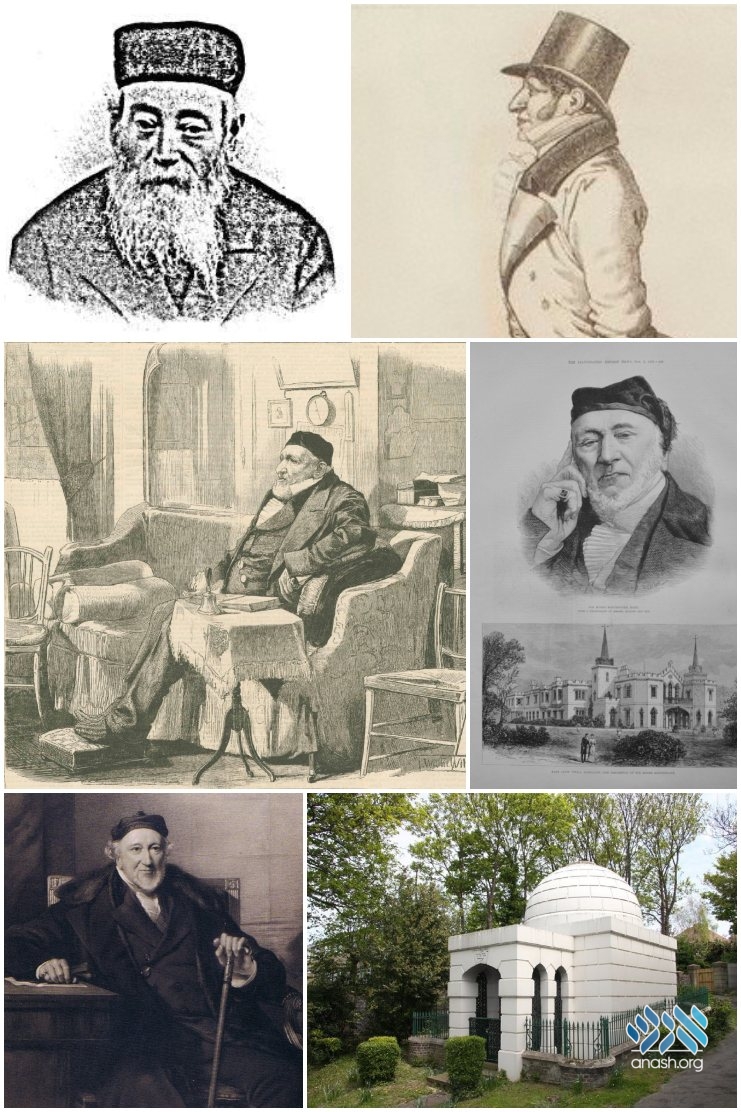
From the Margins of Chabad History: The 16th of Av will mark the 140th yahrtzeit of the legendary philanthropist Sir Moses Montefiore. Two anecdotes about his interactions with Chabad Chasidim highlight the culture clash between the British gentleman and the Russian shtetl Jew.
By Shmuel Super
Sir Moses Haim Montefiore was born in Livorno (Leghorn), Italy, in 5545, to a British-based Sephardic Jewish family. Raised in London, Montefiore married Judith Cohen and became the business partner of her brother-in-law, the famous banker Nathan Mayer Rothschild.
In his early life, Sir Moses was somewhat lax in his observance of Torah and mitzvos. A visit to Eretz Yisrael in 5587 was spiritually transformative, and he became very frum and particular in his mitzvah observance.
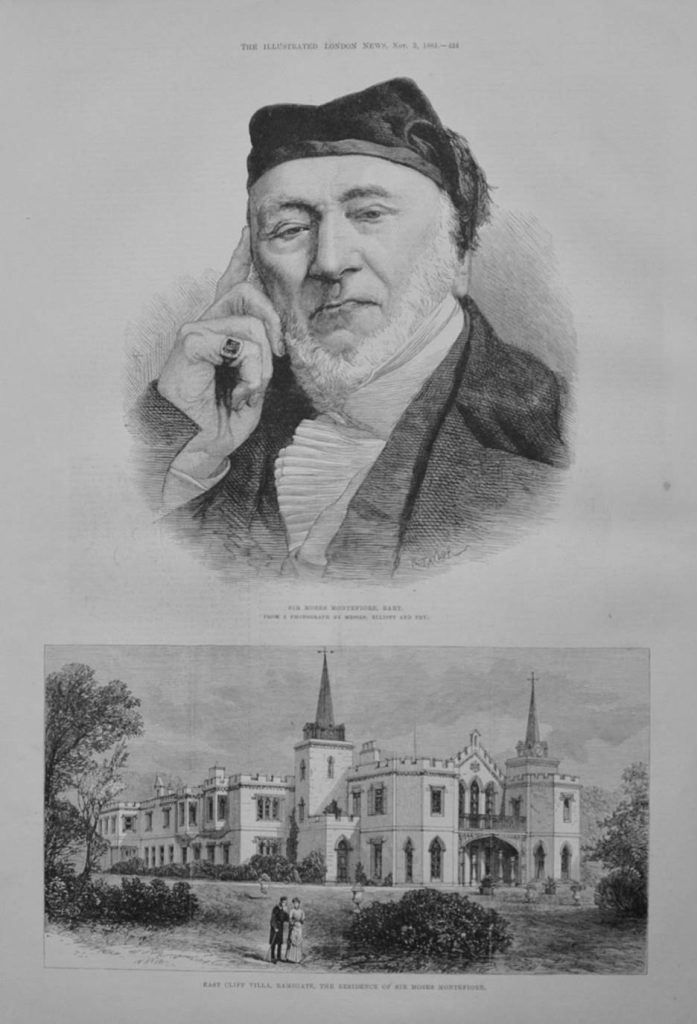
After becoming fabulously wealthy as a young man, Montefiore retired from business and devoted most of his long life to philanthropy and activism on behalf of the Jewish people around the world.
Sir Moses’s diplomatic efforts during the Damascus Affair blood libel, the Mortara case in Rome, and his missions to Russia, Morocco, and Romania to advocate for the welfare of local Jewish communities turned him into a folk hero of near mythological proportions among oppressed Jews worldwide. His philanthropic efforts on behalf of the Jews of Eretz Yisrael were pivotal in the history of the yishuv.
The Russia Mission
The present article focuses on Moses Montefiore’s encounters with Chabad Chasidim during his 5606 journey to Russia. The Russia trip was not Montefiore’s only encounter with Chabad Chasidim. His extensive interactions with the Chabad community in Chevron during his 5599 and 5609 visits to Eretz Yisrael are well documented and discussed in a number of sources (see Kerem Chabad, vol. 1, pp. 104–116; Kerem Chabad, vol. 2, pp. 127–130; Toldos Chabad BeEretz HaKodesh, chapter 17; Kfar Chabad Magazine, #933).
In keeping with the goal of the From the Margins of Chabad History column, we will focus on the lesser-known story of Montefiore’s encounters with prominent Chabad Chasidim during his 5606 Russia journey.
First, some historical background. At this time, the Russian government was implementing aggressive policies aimed at the forced assimilation, or “Russification,” of its large Jewish population. The cruel Cantonist decree was already in effect, and now the Russian government was planning to expel the Jews from a broad swath of land along the borders of the Russian empire, a decree that would affect up to one-third of all the Jews in Russia.
Montefiore set out for S. Petersburg to meet with high-ranking Russian officials, including Count Kisselev, the Minister of the Interior, and Sergey Uvarov, the Minister of Education. He was eventually granted an audience with Czar Nicholas I, who had never before spoken with a Jewish person despite ruling over millions of them.
In his interactions with the Russian authorities, Montefiore firmly but politely refuted the false accusations they leveled against the Jewish people. He described the severe economic hardship caused by government decrees and pogroms, and argued for the Jews to be granted equal rights.
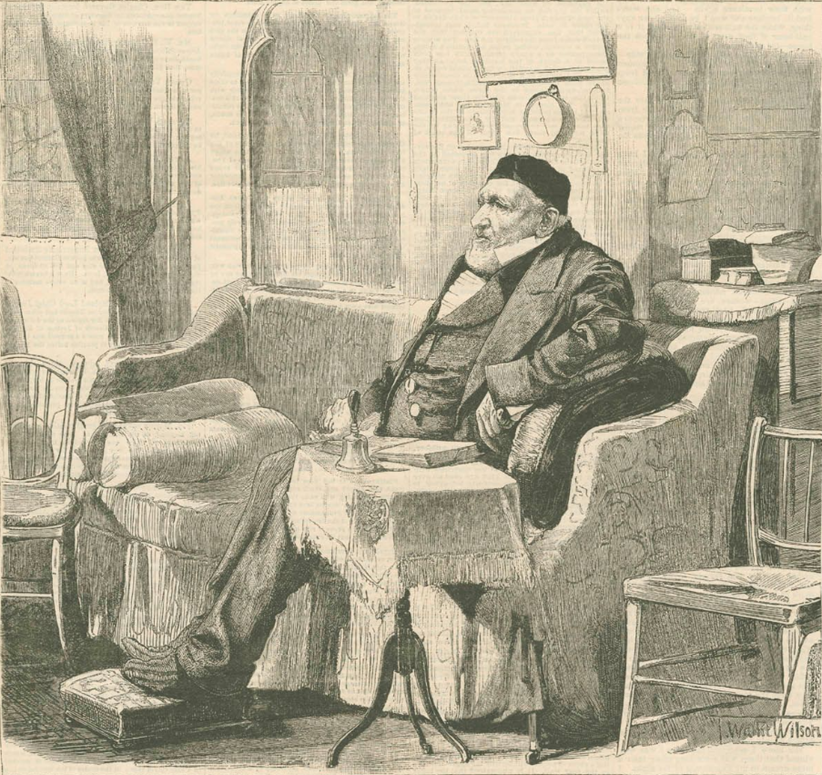
After meeting with the authorities in Petersburg, Montefiore embarked on a journey across Russia to Vilna, to meet with the local Jewish communities personally and learn firsthand about their difficulties.
Wherever he went, Montefiore was welcomed by the Jewish masses as a savior, a hero who had come to rescue them from Russian persecution. His visit left a deep impression on the Jews of the Russian Empire, and many stories and legends circulated about him and his exploits.
Historians debate the degree of influence Montefiore had over Russian government policy. The authorities certainly didn’t make a drastic visible change in their attitude and policies towards the Jews. However, the planned edict of expulsion was never implemented, and other proposed decrees were also later shelved.
The Jews in the Russian Empire and their rabbonim greatly appreciated Sir Moses Montefiore’s devotion to their cause and dedicated efforts on their behalf. However, there was an obvious multi-level culture clash between the modern English gentleman and the old-school shtetl Jews and their leaders.
This culture clash ranged from Montefiore’s external appearance to his modern methods of diplomacy. Montefiore was clean-shaven at this time in his life, an appearance that was jarring to the frum Jews in Russia, for whom a beard was a key marker of frumkeit. Montefiore’s approach to diplomacy was also very different from the traditional Jewish approach of shtadlanus and bribery.
In his description of Montefiore’s visit, frum historiographer R. Yaakov Lifshitz (5598–5681) aptly expresses both the deep admiration frum Jews had for Montefiore, as well as their reservations about his appearance and approach. R. Lifshitz’s account is important because, in addition to his broad knowledge and understanding of history, he was an eyewitness to Montefiore’s visit as an 8-year-old child living in Vilkomir, a town where Montefiore stopped on his journey (see Zichron Yaakov, vol. 1, ch. 61–64).
The two anecdotes we present here from Montefiore’s encounters with prominent Chabad chasidim highlight these two elements of the culture clash: Montefiore’s external appearance and his approach to diplomacy.
Chabad Encounters
Our first encounter takes place in the famous city of Dvinsk, then known by the German name Düneberg and now known by the Latvian name Daugavpils. The published Diaries of Sir Moses and Lady Montefiore record on Sunday, April 26th: “We proceeded to Düneberg, thence to Wilcomir, where, on our arrival, a deputation from Wilna came to bid us welcome” (p. 339).
The rov of Dvinsk when Montefiore made his brief stop there was the venerable R. Yehudah Leib Zelikand (d. 5618), a chasid of the Alter Rebbe, the Mitteler Rebbe, and the Tzemach Tzedek. R. Leib was known by the nickname Batlan, because he was completely removed from worldly matters and entirely devoted to Torah.
The following account about the encounter between R. Leib Batlan and Montefiore was written by the chazan of the historic Touro Synagogue in Newport, Rhode Island, Reverend Nathan (Nasan Zalman) Friedman (5626–5708), who came from a Chabad family in the shtetl of Dokshitz.
Reverend Friedman wrote a series of articles for the Glubocker Lebn, a weekly newspaper published between 5691 and 5696, reporting on news in Glubocke and the surrounding towns, including Dokshitz.
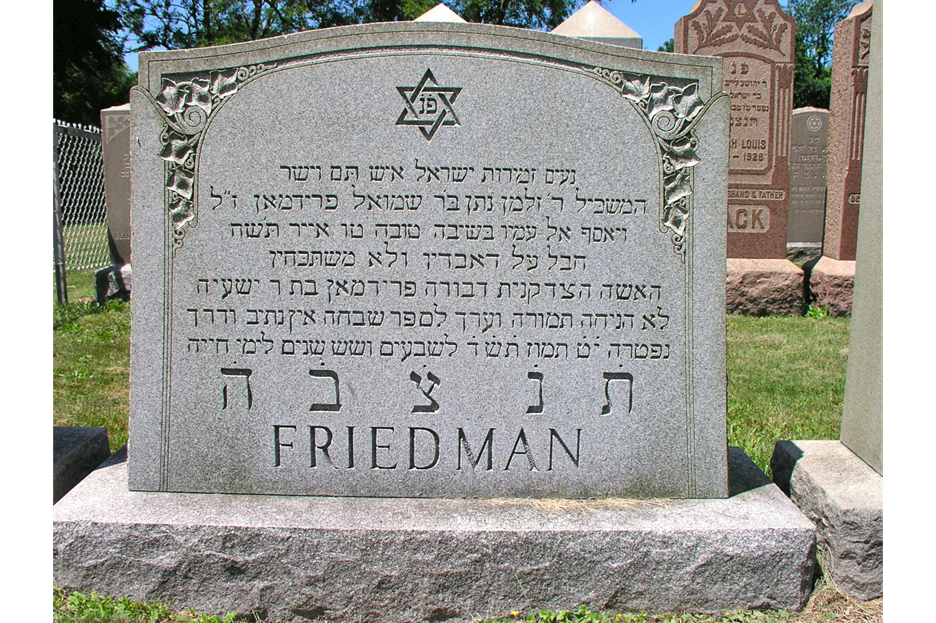
In one of his articles relating his memories from his youth in Czarist Russia, Friedman recounts what he heard about R. Leib Batlan. Although he was born after R. Leib’s passing, Friedman spent some time in Dvinsk, where he was acquainted with R. Leib’s son and family.
Friedman’s entire article is of interest, but here we will focus only on the Montefiore-related anecdote. In the Glubocker Lebn newspaper from 19 Cheshvan 5693 (November 18, 1932), Friedman writes:
A story is told about this rov, the “batlan.” When Sir Moses Montefiore came to Dvinsk on his return from Peterburg—where he had petitioned Czar Nicholas to annul the harsh decrees against the Jews—the leaders of the Dvinsk community organized a banquet in his honor. The batlan was also present at the meal.
Montefiore honored the assembled crowd with his fine wine. Everyone drank a lechaim to Montefiore. Only the batlan said lechaim—but didn’t drink. All of the assembled saw this as an insult to Montefiore.
But Montefiore approached the batlan and kissed him. He thanked him “for not fawning over anyone—not even me.” He declared before the guests that he held even greater affection for the batlan because of it.
Since Montefiore didn’t have a beard, the batlan had initially been suspicious of him. “Now that’s a true tzadik,” Montefiore proclaimed. He then explained that he achieves his clean-shaven appearance with a special cream that removes the hair completely, and he never uses a razor.
The batlan showed undue favor to no one, not even Montefiore, the shtadlan who combated Nicholas’s decrees.
***
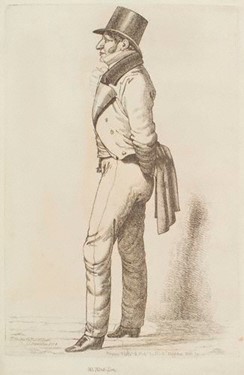
Our next Chabad encounter is related to us by R. Yaakov Lifshitz. The protagonist of this story is identified as “the gvir and respected Chabad Chassid R. Hillel Rapoport of Tshashnik.” We have encountered the distinguished Rapoport family from Tshashnik in a previous article in this column, recounting the story of the mysterious Tshashniker iluy R. Shmuel Volfson, a son-in-law in the Rapoport family.
The well-known chasid who was the head of this family was R. Berel Rapoport. He is known in Chabad history as a chasid of Harav Mottel Chernobyler, and later of the Mitteler Rebbe (see Shemuos Vesipurim, vol. 1, pp. 251–252; Maasar Ugeulas Admur Haemtzai, pp. 167–169; Vitebsk, p. 185).
It seems likely that R. Lifshitz’s story is referring to the well-known R. Berel Rapoport, and the name given is a mistake. If the name Hillel is accurate, this would be a son or relative of R. Berel. Here is R. Lifshitz’s story (Zichron Yaakov, vol. 1, p. 158):
On his return from Vilna via Vilkomir, Sir Moses Montefiore stopped in Kovno and stayed at the home of the distinguished and G-d-fearing gvir Markil Kadishzon, of blessed memory. At that time, Kadishzon’s mechutan, the gvir and respected Chabad Chassid R. Hillel Rapoport of Tshashnik, in the Vitebsk region, happened to be staying in the home as well, as he had business dealings in Kovno.
There too, Montefiore shared some of the details of his journey. The gvir Rapoport possessed the trademark Chabad Chassidic “eighth of an eighth” (shminis shebeshminis) of holy boldness, and didn’t care for aristocratic conventions. In his heart, he was skeptical about the chances of success for Montefiore’s journey.
After listening to Montefiore’s account, the gvir Rapoport asked: “Approximately how much did your trip to Russia cost?”
Montefiore replied, stating a number.
To that, the gvir Rapoport responded, “If we had taken this sum and used it to bribe the powers that be, we would have achieved greater benefit than the whole journey.”
Dr. Levi translated his words, and Montefiore became very upset. “We’ve had enough,” he said, “of relying on that old method, which is a crooked path. It is our obligation to ensure that justice and righteousness prevail—not to follow such corrupt strategies.”
***
Montefiore and His Legacy
R. Yaakov Lifshitz poetically describes the impact of Sir Moses Montefiore on Jewish history (Zichron Yaakov, ibid.):
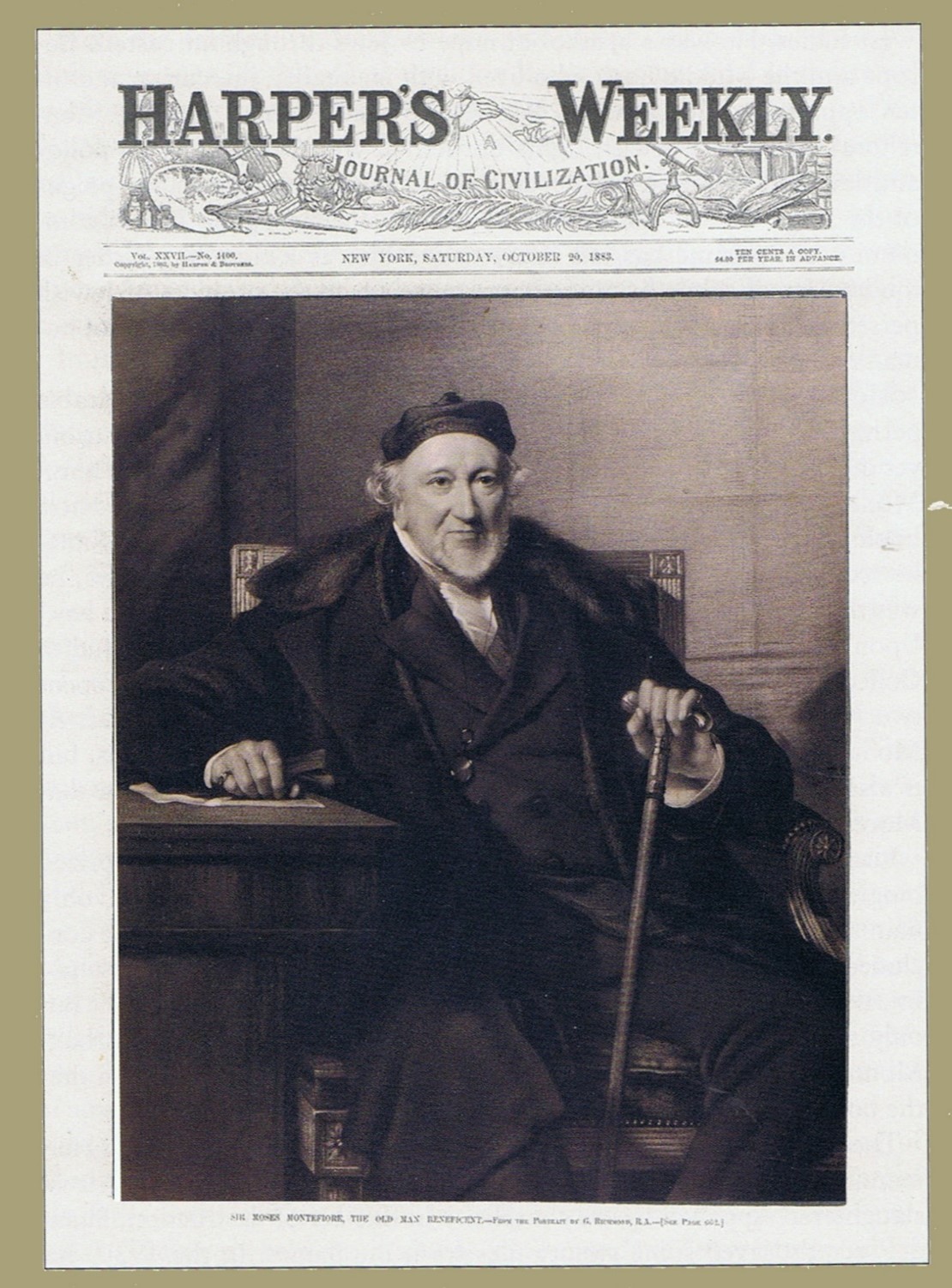
Like a bright meteor in the splendor of the heavens, so did the light of the righteous nobleman, Sir Moses Montefiore, zatzal, shine across the Jewish sky.
But while the meteors travel their course and eventually fade and lose their glow, the light generated by this tzadik endures—his rays still sparkle and illuminate the earth and its inhabitants, and they will yet grow in strength and brilliance.
***
R. Lifshitz explains why he sees Montefiore’s contribution to the Jewish people as so important:
Sir Moses Montefiore served as a living example of a kind of Jewish greatness that had scarcely been seen since the golden age of the Jews in Spain. Since that time, Jews who managed to rise to prominence in non-Jewish world circles did so at the expense of their Yiddishkeit, distancing themselves from their brethren. Montefiore showed that it was possible to be wealthy, powerful, and respected by kings and governments—while remaining a proud and faithful Jew, a true yerei Shamayim, scrupulous in shemiras Torah umitzvos, and wholly devoted to Klal Yisrael.
Through his selfless efforts, Montefiore inspired an entirely new league of Jewish askanim—men of means who saw their influence not as a personal asset but as a vehicle for helping Yidden in need, wherever they were. In many ways, all organized international efforts on behalf of suffering Jewish communities can be traced back to Montefiore’s pioneering work. The very sense of responsibility for the fate of Jews across the globe, something we take for granted today, is in large part thanks to Montefiore’s example, R. Lifshitz concludes.
Indeed, the name Montefiore has become synonymous with tzedakah and chesed across the Jewish world. Hospitals, nursing homes, cemeteries, and more bear his name, testament to the lasting impact of his legacy.
We conclude with a quote from the Frierdiker Rebbe about Montefiore’s efforts and legacy. This quote is from a letter the Frierdiker Rebbe wrote in 5686 to Mr. James Rosenberg, the Vice-Chairman of the American Jewish Joint Distribution Committee, who was then visiting Russia. In a heartfelt letter pleading for financial assistance for chadarim operating in Russia under Communist oppression, the Frierdiker Rebbe invokes the historical example of Sir Moses Montefiore, encouraging Rosenberg to follow it (Igros Kodesh, vol. 1, p. 527-528):

And you, honored sir, Mr. Rosenberg—please allow me to share with you what I have been asked to convey to you personally:
In these days—during your visit and travels throughout the cities of our land—Klal Yisrael is looking to you and your esteemed colleagues, just as the eyes of our people once turned Heavenward for salvation through the righteous and noble Sir Moses Montefiore, of blessed memory. Just as he saved the Jewish people from a terrible libel and delivered them from death to life, so too, may the Jewish people today be saved through you and your distinguished companions.
And just as the name of the tzadik Sir Moses Montefiore, of blessed memory, remains etched in eternal praise, so may Hashem bless you with long life and good years. May your name—together with the good name of your gracious colleagues and your respected leader, Mr. F. M. Warburg, may he live—be engraved forever with eternal honor upon the heart of every Jew.
To view all installments of From the Margins of Chabad History, click here.
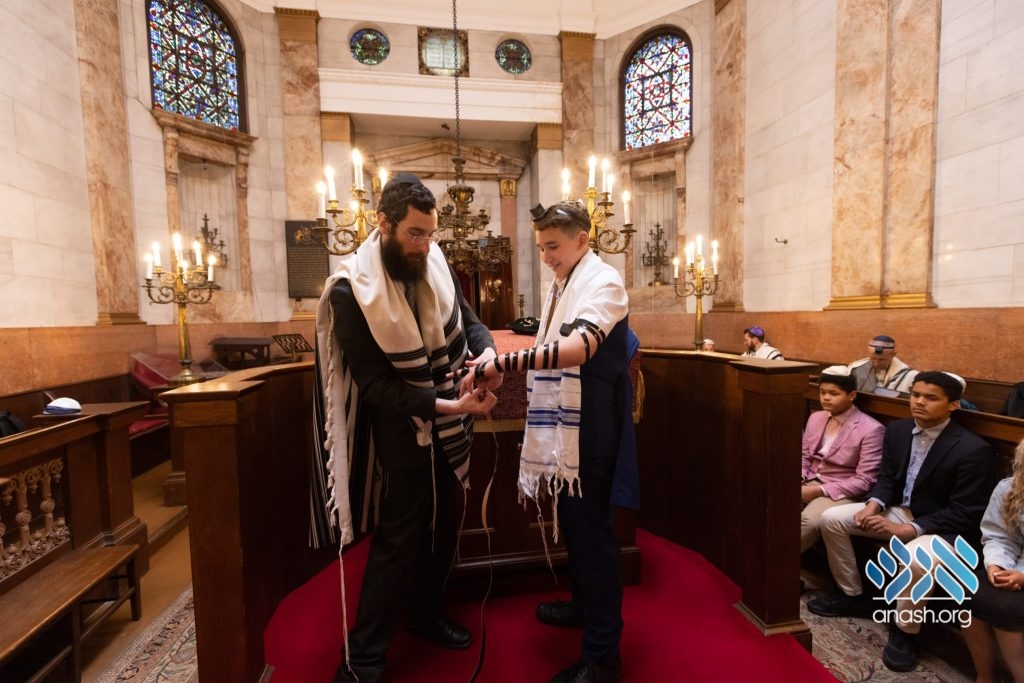
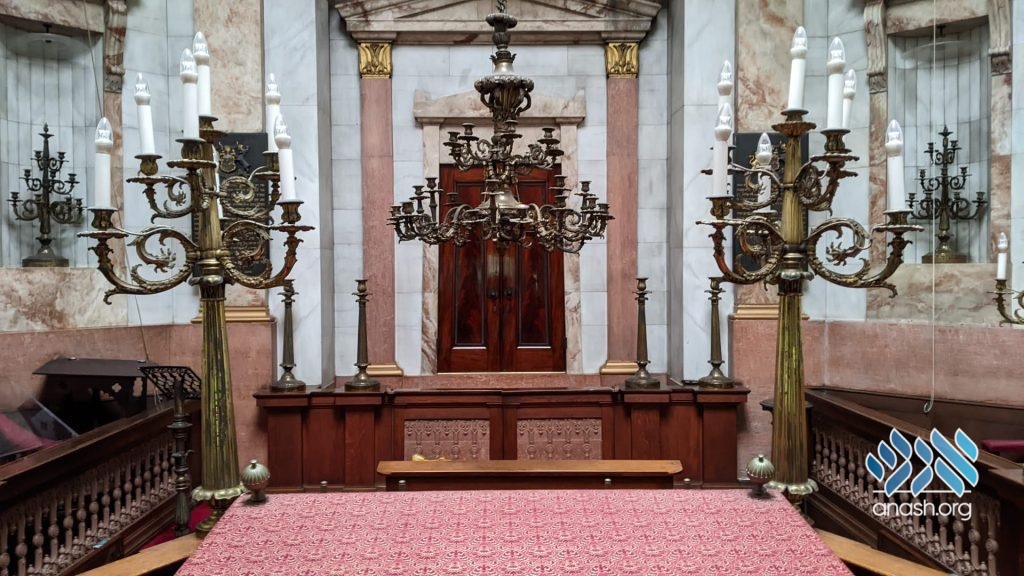
The Ramsgate shul where Sir Moses Montefiore davened. His seat is covered in protective plastic in the front left. Credit: Rabbi Zalman Lewis
 COMMENTS


Great article! Thank You!
Interesting!
Super article ty
That’s a great article. I would recommend renaming it. You seem to be highlighting about a clash. How about “Moshe Montefiore legacy of kindness and connection with world jewery”.
What’s so beautiful about the article and the letter you quoted at the end from R Rayatz is all his kindness and help to the Jewish community.
Bsuros tovos
Mashiach now
Kedai to mention that the Ohel is situated in the Moses Montefiore Beis Hachaim.
This is were the Rebbe bought a portion when Rebbetzin Shterna Sara passed away in 5702, and it became the Lubavitcher Chelka. (which was previously in Staten Island).
Lubavitch house of London used the estate in Ramsgate as a camp and a getaway place,the Great Sir Stanley Kinn and his wife Rivky were the caretakers.
I’m not sure but it’s possible that the grounds were available for over 10 years.
I have fond memories of this camp. It was the late 1960s, when we davenned every day in this shul.
Agree 100% title to be changed as you suggest. All the Tzaddikim would certainly agree.
The correct name is MOSHE ben YOSEPH ELIYAHU MONTEFIORE ZT”L. as stated in his Ohel and Shul at Ramsgate. Apparently there may be confusion with his grandfather’s name which was Moshe Chaim.