



כ״ג ניסן ה׳תשפ״ו | April 10, 2026
Shlissel Challah: Origin and Meaning?
Ask the Rov: What is the origin and meaning of “shlissel challah”? Rabbi Chaim Hillel Raskin responds.
What is the origin and meaning of “shlissel challah”?
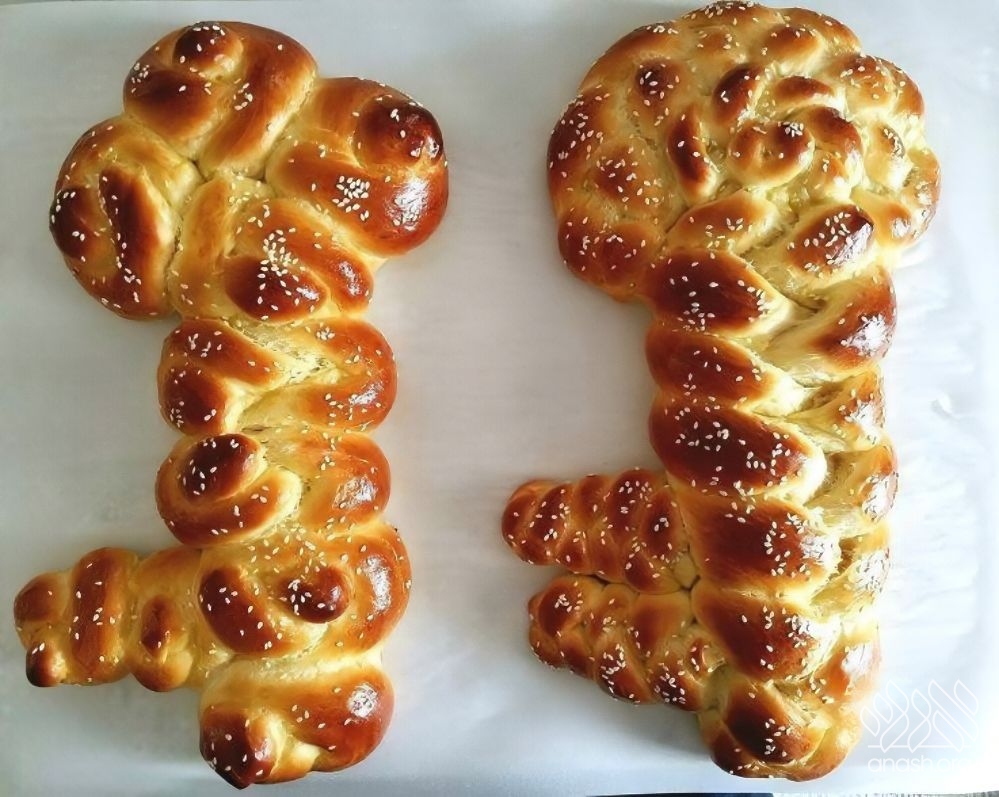
In many communities, there is a minhag on the Shabbos after Pesach to bake “shlissel challah” – challah marked with a key or shaped like one. It is mentioned in seforim as a minhag Yisroel and is traced to several circles and countries.
Early sources refer to this Shabbos as one of “gelle matzos.”1 R. Pinchas Koritzer is quoted as saying that on the Shabbos after Pesach (which is also Shabbos Mevorchim Iyar), we make the challah like matzah, and we make holes in it with a key, hinting that the heavenly gates remain open until Pesach Sheni. The challah was baked round and relatively flat, resembling matzah.2 The Apter Rav writes that the minhag was to pierce the Shabbos-after-Pesach challos with a key, and also mentions that “a shape of a key is made on the challah.”
Over time, the practice branched into various forms, such as: Docking a flat, round challah with a metal key; pressing a key into the dough so that its outline is visible after baking; shaping the entire challah as a key; or baking a metal key inside the challah.
Seforim offer a variety of reasons behind this minhag.3 For example: When the Yidden entered Eretz Yisroel with Yehoshua, they stopped eating mon after Pesach, and began needing parnasa through natural means. The key challah hints that Hashem should open for us the gates of parnasa, just as He did for our forefathers.4
Sifrei kabbalah teach that the forty-nine days of Sefiras HaOmer are a progression through the fifty gates of Binah. Each day is another “sha’ar” requiring a “key,” and the key-challah at the start of this period hints at our avodah of opening each gate.5
Chazal teach that if the Yidden open for Hashem “kechudo shel machat,” He opens for them “kepischo shel ulam.” On Pesach, all the higher gates are opened from Above; following Pesach, it’s our avoda to “open a little” with our efforts. Piercing the challah with a key symbolizes this small opening from below, through our very observance of Shabbos.6
The practice of “shlissel challah” is not mentioned in Chabad seforim.
If the entire challah is shaped like a key, it’s permitted to break it on Shabbos and it’s not considered erasing (see issue 553). (There’s discussion regarding designs carved into dough.)
See Sources (open PDF)
 COMMENTS


We appreciate your feedback. If you have any additional information to contribute to this article, it will be added below.