




ו׳ אב ה׳תשפ״ה | July 30, 2025
Reb Yoel Kahn, As I Knew Him
Article by Rabbi Moshe Shilat: It’s possible to write endlessly about Reb Yoel – his absolute devotion and bittul to the Rebbe like a servant to his master, his tremendous enthusiasm for speaking hours on a topic, his magnetic energy that drew people in, and on and on. Marking Reb Yoel’s 4th yahrtzeit.
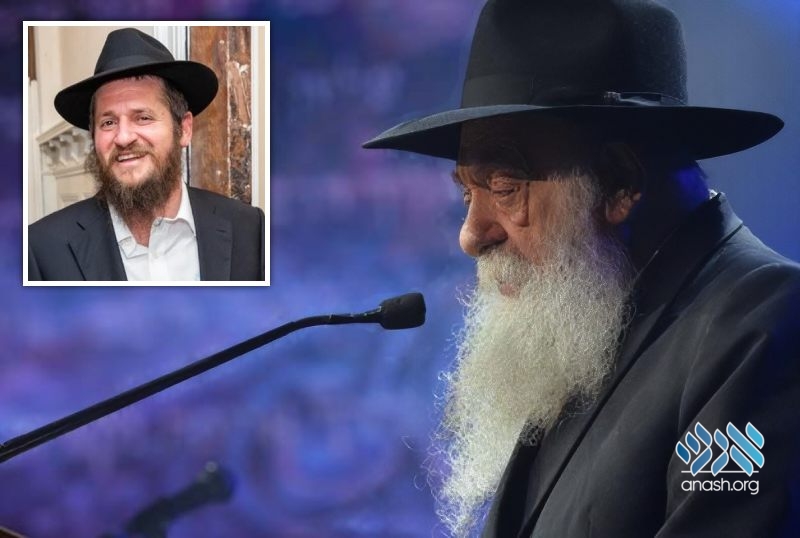
Article by Rabbi Moshe Shilat: It’s possible to write endlessly about Reb Yoel – his absolute devotion and bittul to the Rebbe like a servant to his master, his tremendous enthusiasm for speaking hours on a topic, his magnetic energy that drew people in, and on and on.
By Rabbi Moshe Shilat
For over a year, the Rebbe’s chozer, Reb Yoel Kahn, was unwell. His health was declining. But even at ninety-one years old, his students couldn’t have imagined what was about to happen. And then the heartbreaking news arrived, leaving us in shock and disbelief.
When someone passes on from this world after a long life, logically, we shouldn’t be so shocked. But when it is someone who represents so much of what we cherish and stand for, someone who embodied the beliefs that are dear to us, the loss leaves us with a deep void, one that is hard to describe.
I will try to touch upon several of his qualities: those of which I witnessed in my time spent in 770, and from the course of fifteen years of hosting Reb Yoel on his visits to Eretz Yisroel during the week of Yud-Tes Kislev.
A Teacher of Chassidus
While Reb Yoel was invited to speak in many places over the years, it was only after Gimmel Tamuz that he began to travel. Until then, he devoted over forty years entirely to his work as a “chozer,” spending day and night listening to and reviewing the Rebbe’s sichos, maamarim, and farbrengens. Most of these were delivered on Shabbos and Yom Tov, when recording was not an option—Reb Yoel himself was the “recorder.” After chazarah, he oversaw the team responsible for writing and editing the sichos and maamarim.
After Gimmel Tamuz, when this work was no longer in practice, Reb Yoel utilized the void in his time for disseminating the Rebbe’s teachings, giving shiurim in chassidus and farbrenging for tens of thousands. It was then that he began travelling to give lectures, talks, and farbrengens, and much more
He used to travel to the many branches of Hesder Yeshivos in Eretz Yisroel, where he would farbreng every year. He enjoyed visiting these places.
In general, Reb Yoel loved spending time with yeshiva students. He was familiar with students from the various types of yeshivas and communities, besides the “kipah srugah” students, whom he only encountered when he visited Eretz Yisroel later in life. He admired their qualities, especially their authenticity and sincerity. I remember him using the word “sincerity” many times in describing them.
He was very clear that he wasn’t out to turn everyone into Lubavitcher chassidim. To the contrary, people should stay with their circle. At the same time, his firm belief was that Chassidus Chabad was for every Jew, and that the Rebbe is there for everyone.
Incidentally, chassidim from every type of Chassidus held him in high esteem. Many of them would say that if he had not been a Lubavitcher chossid, he would be a Chasidic rebbe or gadol himself, and perhaps amongst the greatest of them…
Many remember the Yud-Tes Kislev farbrengens in Binyanei Haumah in Yerushalayim, where Reb Yoel would lead the central farbrengen. Both on the night of and the night following Yud-Tes Kislev, he would sit and speak for hours on end.
Yud-Tes Kislev was truly a yom tov for him. When the farbrengen was over and he would return to his host, he would continue to farbreng all night long. (For the last six years of his visits, he stayed in our home.) He would farbreng with the same enthusiasm of a yeshiva bochur. He once disclosed to me that since his younger days, he never went to sleep on either of these special nights.
It’s possible to write about Reb Yoel to no end. What follows are stories that I personally witnessed, which also serve to illustrate somewhat the type of person that he was.
Divested from Materialism
As everyone knows, Reb Yoel was a man constantly immersed in thought, oblivious and divested (“mufshat”) of the material world.
There is a story told that Reb Yoel was once walking the streets of Crown Heights holding a bag of garbage. When one of his students bumped into him and asked him why he was walking around with garbage, Reb Yoel suddenly realized – he had meant to throw it out but had forgotten, completely lost in thought. Whether or not the story happened, I cannot say. One thing is certain: it could have happened.
While staying in Eretz Yisroel on the Shabbos before Yud-Tes Kislev, he awoke early to go to shul. About an hour later, his wife got ready to go, but she could not find her shoes. These were her shiny Shabbos shoes. No one expected what was about to unfold. Several hours later, Reb Yoel returned, wearing the missing shoes. His wife burst out laughing, and no matter how much she tried to impress upon him his obliviousness in physical matters, it made no difference.
Several years ago, he visited a doctor for pain in his feet. Given that the air pressure on a plane would exacerbate matters, the doctor forbade him from flying. After leaving the doctor, Reb Yoel asked the bochur who accompanied him to call me and find out if he could travel to Eretz Yisroel by boat. The student was surprised by the request and explained to Reb Yoel that passenger ships – like the one Reb Yoel had taken from Eretz Yisroel seventy years earlier – were no longer in use.
Another incident that really impressed me was when we were on our way to a yeshiva for Yud-Tes Kislev, where he would give a shiur. On the way there, I got a call with the news that Saddam Hussein had been captured. This was big news around the world and particularly joyous for the Jewish people. I listened to some of the details and enthusiastically pointed out how this coincided with Yud-Tes Kislev. After hanging up, I told Reb Yoel the news. He barely took any notice. He nodded his head and responded, “Nu, nu.” It was obvious that it was of no interest to him whatsoever.
A Genius in Chassidus
Reb Yoel was an incredible maskil and a gaon in Chassidus. His brilliance was unmatched. He was fluent in all the deep hemsheichim, especially in the most famous two of the Rebbe Rahsab: “Samech Vov,” an extended discourse from the year 5666, composed of sixty-six maamorim, and the longer and more difficult “Ayin Beis,” from the year 5672, composed of a hundred and forty-four maamorim. He was fluent in these seforim like the streets he walked, and perhaps, even more so…
One could say that he was also a “mekubal” (Kabbalist). His fluency of Kabbalistic works was accompanied by understanding and comprehension of their mystical teachings. He was from the few who understood the commentary on the Zohar by the Mitteler Rebbe and Tzemach Tzedek (printed as Biurei Hazohar), as well as the deep teachings of the Rebbe’s father Likutei Levi Yitzchak.
His tremendous understanding of Chassidus is also evident from his most prominent work, Sefer HaErchim – the Chassidus Chabad encyclopedia. His immense depth and incredible precision led him to produce nine volumes, but all still on the letter “Aleph.”
Even during his moments of rest, he immersed himself in the depths of Chassidus. I will never forget one winter Friday night in his home. It was after his Friday night shiur, a three-hour-long shiur he would deliver throughout the winter in the upstairs zal in 770 before Kabolas Shabbos.
After davening, a group of bochurim would join him for the seuda, where he would engage in discussions, farbreng, and relay stories for hours on end. By the time the meal was over, we were exhausted, but Reb Yoel was wide awake. It was 1:00 am when we were about leave, and Reb Yoel moved to the living room couch where he opened up an Ayin Beis. He lay there reading it as one would read a magazine. We were absolutely incredulous.
A similar thing happened when we visited Chevron for a Shabbos before Yud-Tes Kislev. We were joined by bochurim from various yeshivos that came to farbreng. On Friday, I told Reb Yoel that he would be farbrenging for them on Friday night, but on Shabbos day, someone else would farbreng so that he could rest and save his strength for Motzaei Shabbos, when he would be farbrenging at the grand farbrengen in Binyanei Haumah.
Reb Yoel agreed, but asked me to bring him something to read while he rested. I asked if he had anything specific in mind, assuming he might want a book of Chassidic stories or something similar. “Hadranim al HaRambam,” he replied. This is perhaps the Rebbe’s deepest work – a collection of the siyumim the Rebbe delivered upon completing the Rambam cycles, filled with incredibly deep and profound inyonim.
In his final years, visiting us for Yud-Tes Kislev, he stayed in our home. One time, he arrived at our home in the evening and went to rest. In the middle of the night, I suddenly heard him calling me from the living room. I don’t think he even realized what time it was.
I offered him a glass of water, but it was something else that he was after. “Do you have a Samech Vov?” he asked. I told him that my copy was in my office, which wasn’t far. He asked me if I could bring it, which I promptly did.
When I handed him the sefer, he flipped through it until he arrived at a certain page and ran his finger down the page in search of a specific line. Having found what he was looking for, he was satisfied. He closed the sefer and returned to his room. I didn’t ask, and he didn’t tell.
Abhorring Honor
By now, it should be fairly clear that the person we are speaking of and honor don’t exactly go hand in hand. Because of this, I was “privileged” to receive a rebuke from Reb Yoel on two occasions.
The first was about ten years ago. Reb Yoel had already flown to Eretz Yisroel several times for a week of spreading Chassidus, and each time, he and his wife flew economy. Now he was already eighty years old, and his health was declining. As the organizers, we felt that it was only right to seat them in the more comfortable business class, where they could sleep while flying. Considering that Reb Yoel refused any sort of payment for his week of speaking, shiurim, and farbrengens, this was the least we could do. We suggested the idea to his wife, and she accepted.
When they arrived in Eretz Yisroel, we went to the airport to greet them, but when I wasn’t met with the usual warm hello, I realized something was amiss. Once we were away from the crowds and had some privacy, I asked him what was wrong. He let out his frustration, “Who let you waste Yiddishe gelt? Where did you put me on the plane? I’m not willing to sit there!”
Later, his wife told me that about an hour into the flight, he noticed that something was off; it was just too comfortable. When he realized that extra money had been spent on him, he was disappointed for the rest of the journey.
The second time was a year and a half ago. Reb Yoel had turned ninety, and in honor of the occasion, I had arranged that a prominent dedication be placed in one of the magazines that we publish. The page was filled with warm wishes from the organizations that I direct. A month later, I was in New York, and as always, I visited Reb Yoel to say hello and update him about our work. I didn’t realize what I was in for.
When I arrived at his house, he let me in, but something wasn’t right. Once inside, he turned to me and, in an aggravated tone, he said, “I saw what you did to me. And I’m not interested in your explanations, nor am I interested in explaining to you why this is totally unacceptable. If anything like this happens again, we will no longer be friends. This is your warning.”
Reb Yoel always spoke with sensitivity and dignity. In this scenario, however, he could not allow for any form of honor. From our perspective, it was only natural to bentch him on his ninetieth birthday. But for him, everything was true to the end.
*
There is plenty more to write about regarding the qualities and characteristics of this unique individual, such as his absolute devotion and bittul to the Rebbe, like a servant to his master, his tremendous enthusiasm and excitement, with which he could speak about a topic for hours, his magnetic energy that would pull people in to listen, and on and on. We would still only begin to describe this incredible man, who has departed from our midst.
“V’hachai yiten al libo” – and the living shall take to heart.
 COMMENTS


This is beautiful, thank you! Please post more articles like this.