




י״ב אדר ה׳תשפ״ו | February 28, 2026
Rare Footage Shows Chassidim in Communist Moscow
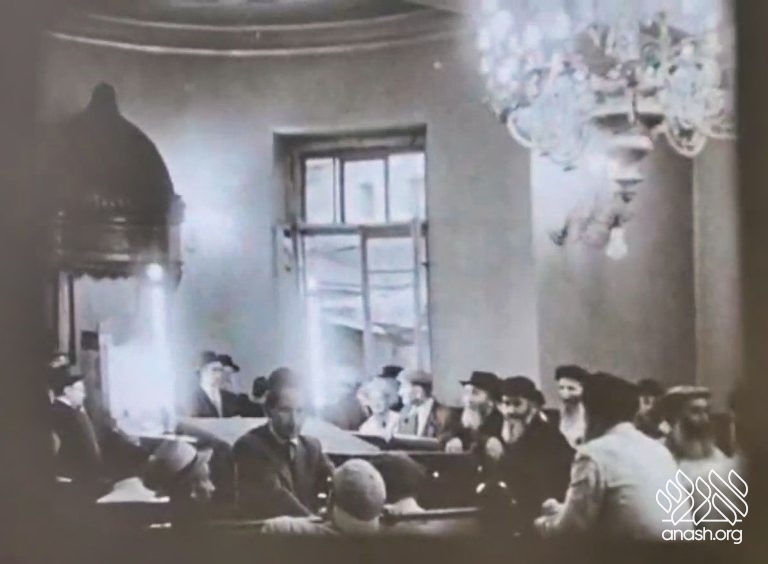
Rare video footage from 5717 (1957), recently uncovered in the Rebbe’s library, show chassidim at the levaya and hespedim of the Chief Rabbi of Moscow, Rabbi Shlomo Shleifer. Can you recognize any of the faces?

Two rare videos, recently uncovered in the Rebbe’s library, document the levaya and hespedim of the Chief Rabbi of Moscow, Rabbi Shlomo Shleifer, in the year 5717 (1957).
The footage, filmed in Moscow, offers a striking glimpse into Jewish life behind the Iron Curtain. Clearly visible are rabbonim and mispalelim of the Moscow Choral shul on Archipova Street, including figures who may be recognizable to many readers.
Rabbi Shlomo Shleifer was born on December 23, 1889, in Moscow. His father served as rabbi near Kherson. During the upheavals of the First World War, the family returned to Moscow, where Rabbi Shleifer worked for many years as a bookkeeper.
In 1938, Rabbi Shmarya Yehuda Leib Medalia, the official Chief Rabbi of Moscow and Rav of the Choir Shul, was arrested and later executed. For several years, no new Rabbi was appointed.
After the Soviet Union allied with other nations against the Nazis, and representatives, some of them Jewish, visited Moscow, the government realized that the absence of a Rabbi in the capital city left a bad impression, and they gave orders to appoint a Rabbi.
At first, they appointed R’ Shmuel Leib Levin, known among chassidim as Shmuel Leib Paritcher, a tomim from Lubavitch. However, soon after, the board decided to replace him, fearing that he was too “extreme.” Instead they decided to nominate Rabbi Shleifer, who was not a chossid and had served as the community’s secretary during the 1920’s.
In his memoir, R’ Moshe Levertov records the initial reaction of his father, R’ Dovber Levertov:
“Father was adamantly opposed. Firstly, Jewish law does not normally permit evicting a Rabbi from his position. Besides, Rabbi Shmuel Leib Levin, as a learned Chassid, would surely never agree to any compromise, whereas Father knew Rabbi Shleifer only as a Torah-learned layman, employed for many years as a bookkeeper, who seemed unlikely to have the extensive Torah expertise required by a Rabbi. He also had no idea of Rabbi Shleifer’s inner convictions — for all he knew he might be an NKVD agent…
“At a board meeting called in 1944 to discuss the issue, Father argued that it was unethical to replace Rabbi Levin. Most of the board disagreed. But Father’s towering personality and the respect he enjoyed in the Jewish community bore such weight that his opinion could not be ignored. The board therefore decided on a compromise — to employ both Rabbis together (an arrangement that did not last long, anyway).
“Later, Father admitted to us that his suspicions had been unfounded. Rabbi Shleifer was indeed a giant in Torah knowledge, experienced in the entire spectrum of Halachic ruling, and deeply faithful to the Torah. In that frightening era, aware as Rabbi Shleifer was of the fate of so many other Rabbonim, it was an act of tremendous courage and true self-sacrifice for Yiddishkeit even just to accept such a position.”
To protect what remained of Jewish religious life, Rabbi Shleifer was sometimes compelled to publicly demonstrate loyalty to the government. In this context, he composed a “prayer for peace” and even a prayer for the health of Stalin to be distributed among shuls.
In 1957, shortly before his passing, Rabbi Shleifer opened the “Kol Yaakov” yeshiva, which was led by Rabbi Yehuda Leib Levin (who later succeeded Rabbi Shleifer as chief rabbi of Moscow).
On March 27, 1957, Rabbi Shleifer passed away from a sudden heart attack while delivering a shiur. His levaya was attended by the broader Jewish community, including many chassidim who lived in Moscow at the time. He was laid to rest at the Vostryakovskoye Cemetery in Moscow.
Do you recognize some of the faces? Share your knowledge in the comments below.
WATCH

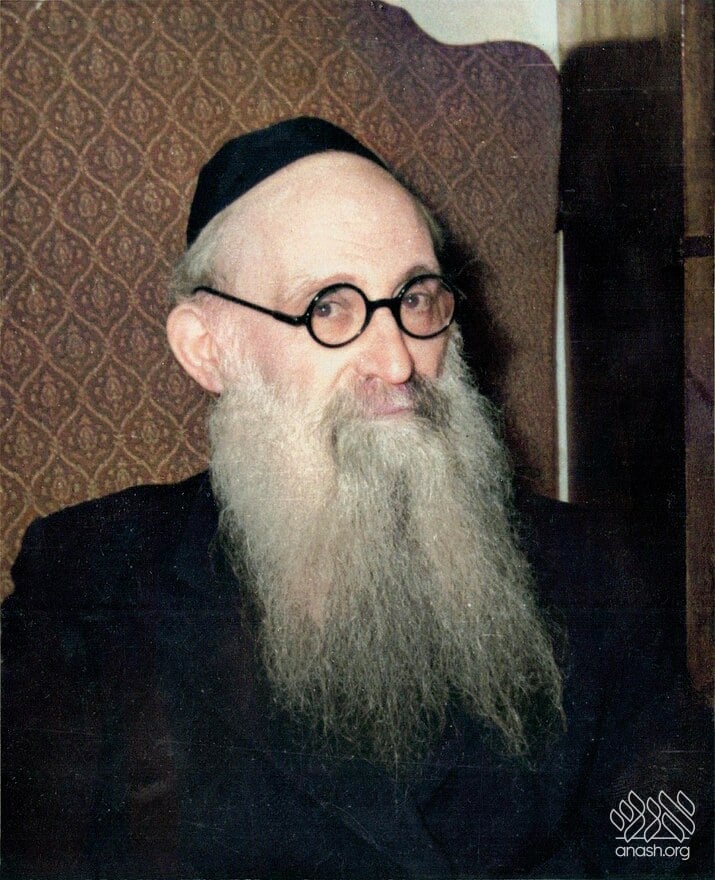
Rabbi Shlomo Shleifer
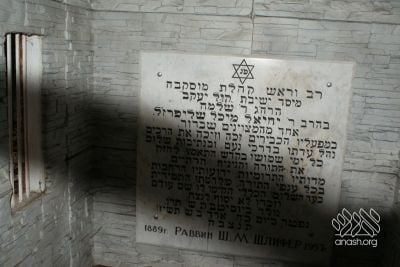
Rabbi Shleifer's matzeiva
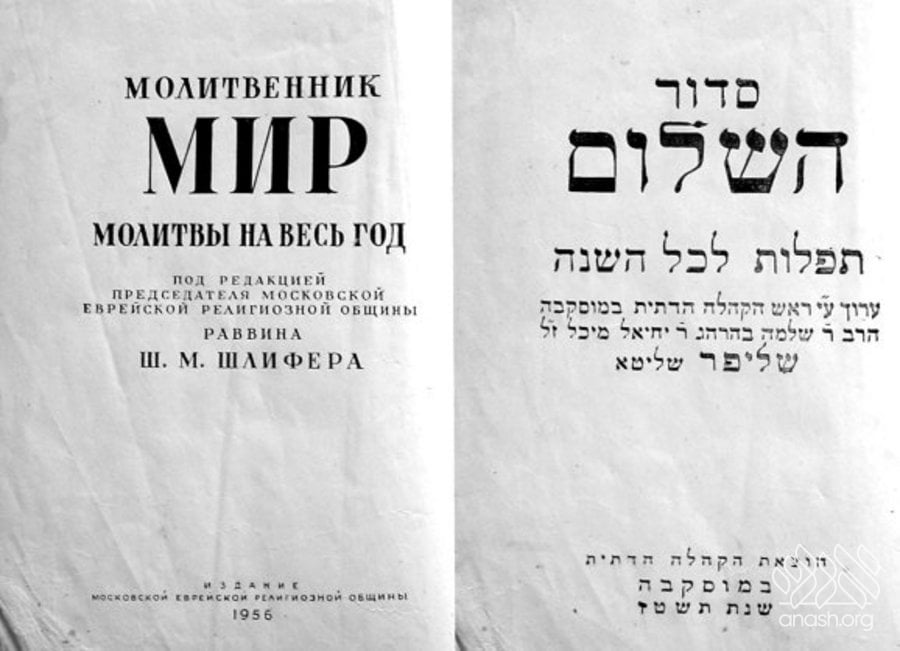
The Siddur Hashalom produced to pacify the Soviets
 COMMENTS


Correction- he was achosid, just not a Lubavitcher. He was a Rotmistrovke chosid. Also, his father was a big Rov.
I think you mean rachmastrivka…
Rotmistrovke????
This is the correct way
The first senior man with a beard at the funeral is Horav Noson Nota Olevsky the long term rov of the Marina Rotchins shul in Moscow. This film was made in 1956 on the occasion of the visit of the first US rabbinic delegation to USSR. In the film we see the RCA delegation leader Rabbi David Hollander a good friend of mine.
We also see Rabbi Berzon and R H Schachter of the Bronx.They all grew a chasimas zakan as a clean shaven rov was unknown in The USSR.
RAV S chleiffer was a grandson by marriage of Hagaon Rav IJ Reined the Lida Rav and rosh yeshiva a powerful exponent of the analytic school of Gemora study as well as founder of the MIZRACHI.
Later in the film we see Rav JL Levin the last classical rov in Moscow and at that time reish yeshiva of Kol Yaakov yeshiva in Moscow.
I do not see another Moscow Rav, the Makhnovker rebbe Rabbi Twersky who managed to get to Israel in 1965.
Rabbi Schleiffers son in law wrote the best and most comprehensive book about frum life in Moscow 1920- until the early 1960s.
I also have copy of the Siddur Hasholom pub by Rav Schleiffer and a reprint published years later.
In the 1960s Rabbi Hollander delivered lectures on Soviet Jewry, after all by 1967 he had been there multiple times. I as a teen attended one of these talks and he showed films of Soviet Jewish life. I wonder if this was not one of the films.
R. Hollander was a leading “informant” to the Lubavitcher rebbe about Soviet Jewry in real time. His travel articles in the Tog Morgen Zurnal presented a first hand portrait of religious life in the USSR.