




כ׳ אייר ה׳תשפ״ה | May 17, 2025
Rare Account of Chassidishe Life in Chabad Kopust
From the Margins of Chabad History: A native of Kopust gives us an intimate and vivid picture of the chatzer of the Kopuster Rebbe, describing the holy ceremony of a maamar chasidus and the conduct of the great chasidim. Presented in honor of the Kopuster Rebbe’s 125 yahrtzeit.

From the Margins of Chabad History: A native of Kopust gives us an intimate and vivid picture of the chatzer of the Kopuster Rebbe, describing the holy ceremony of a maamar chasidus and the conduct of the great chasidim. Presented in honor of the Kopuster Rebbe’s 125 yahrtzeit.
By Shmuel Super
Introduction
Harav Shlomo Zalman Schneersohn was born in 5590 in Lubavitch to his father Harav Yehudah Leib (Maharil), the second son of the Tzemach Tzedek. As the oldest grandson of the Tzemach Tzedek—four years older than the Tzemach Tzedek’s youngest son, the Rebbe Maharash—he merited to have a close relationship with his grandfather.
When the Tzemach Tzedek was nistalek in 5626, Maharil moved to Kopust, where he established a chatzer in the Chabad tradition. Harav Shlomo Zalman accompanied his father to Kopust, and after his sudden histalkus in Cheshvan 5627, filled his place as rebbe in Kopust.
For the next 33 years, Kopust was a bustling center of Chabad Chasidus, attracting many thousands of chasidim from across the Russian Empire. After Harav Shlomo Zalman’s histalkus on 27 Iyar 5660, no successor was appointed in Kopust, and most of his chasidim accepted his younger brother Harav Shmaryahu Noach of Bobroisk as their rebbe.
Harav Shlomo Zalman’s chasidus was published in seven volumes under the title Magen Avos, and many additional maamarim remain in manuscript.
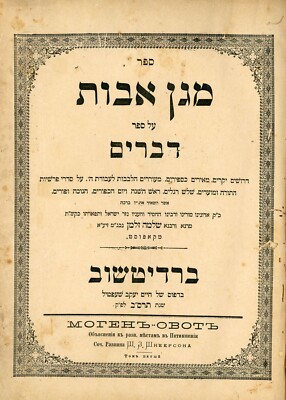
It is no secret that there were periods of tension and points of contention between Lubavitch and Kopust.
However, the Frierdiker Rebbe, and especially our Rebbe, displayed a conciliatory attitude towards Kopust and the other branches of Chabad. The Rebbe explained that the split within Chabad was not a machlokes in the simple sense, it was a division leshem shamayim. As such, both sides are destined to endure for eternity (Sichos Kodesh 5752, p. 11-12). The different streams of Chabad, the Rebbe said, have since flowed into and merged with the great river of Lubavitch, under the leadership of the Frierdiker Rebbe (Toras Menachem 5713, vol. 3, p. 57).
The story of Harav Shlomo Zalman’s life is artfully related at length in R. Amram Bloi’s Benei Hatzemach Tzedek, pp. 215–288. However, unlike most of the other chapters about the sons and grandsons of the Tzemach Tzedek, the chapter devoted to Harav Shlomo Zalman lacks detailed eyewitness accounts of the chatzer in Kopust.
In honor of the upcoming 125th yahrtzeit of Harav Shlomo Zalman on 27 Iyar, we present here an intimate and vivid eyewitness account of the chatzer in Kopust. The author of this account is Zev Lifshitz, who was born in Kopust in 5623 and lived there until he moved to Charkov at age 17.
Lifshitz worked in the freight industry and became a prominent community activist and Zionist leader in Charkov. An advocate of the Hebrew language, he was a member of the administration of the Hebrew-language Tarbut high school in Charkov. He died in 5702 or 5703.
In 5679, the Tarbut institutions of Charkov published a Hebrew journal, Bein Hazemanim. Zev Lifshitz contributed an article to the journal titled “Me’avarenu Hakarov,” “From Our Recent Past,” in which he related his memories of the chatzer in Kopust. Reading the article, it is evident that the writer had a deep and intimate understanding of chasidishe life, and cherished it dearly.
Selections of this article about the singing of nigunim were quoted and paraphrased by Meir Shimon Geshuri, in Hanigun Veharikud Bechasidut, vol. 1, 252–254, but the source was not referenced. The article was reprinted in Haaretz newspaper of September 25, 1935 (27 Elul 5695).
We present here the full article in English translation, but readers who are comfortable with an old literary Hebrew are encouraged to read the article in its original form. Credit goes to Mendel Nemanov for tracking down the original article and providing some of the other sources. After the article, we will comment on some of the characters and themes it describes.
*
From Our Recent Past
A Brief Introduction
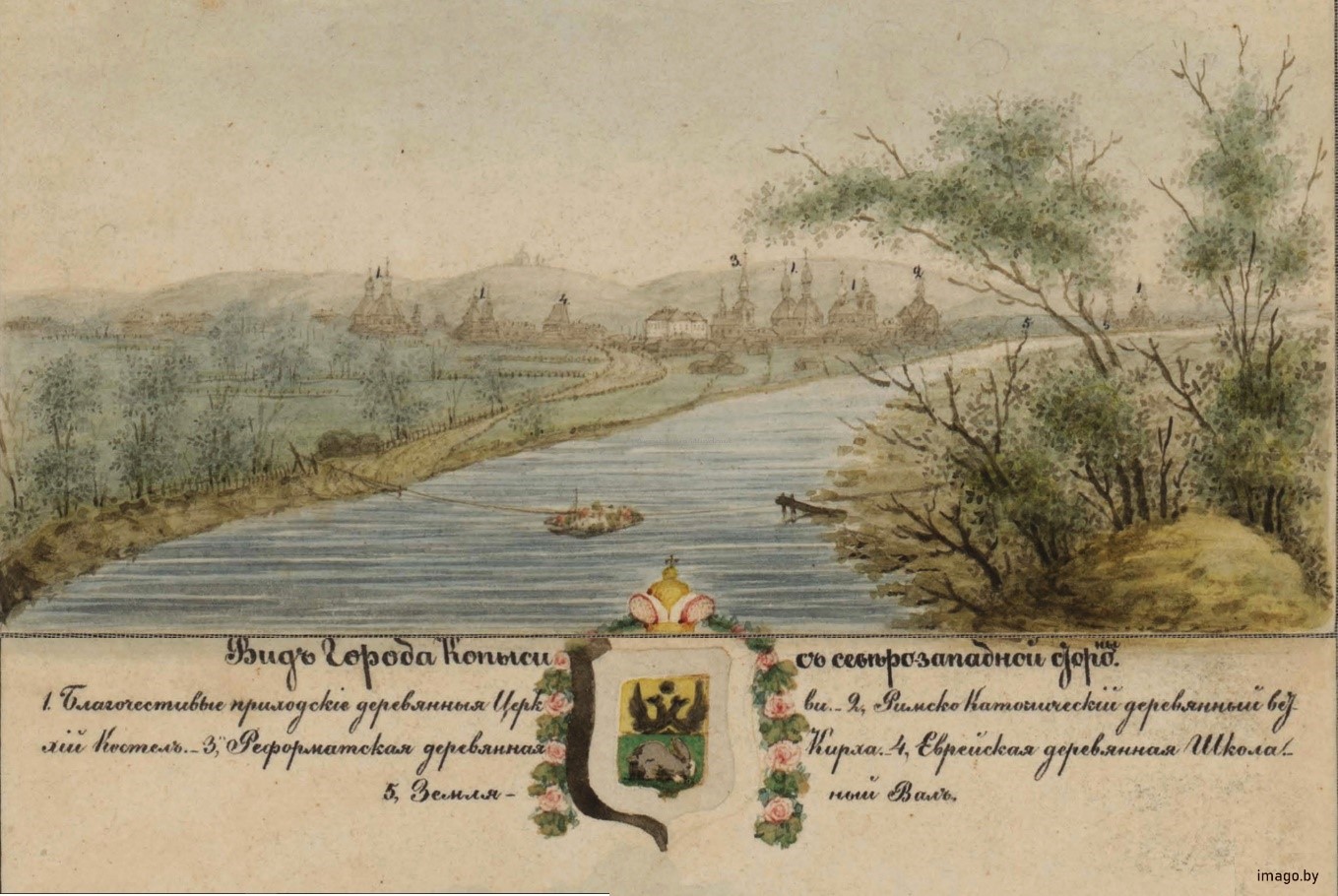
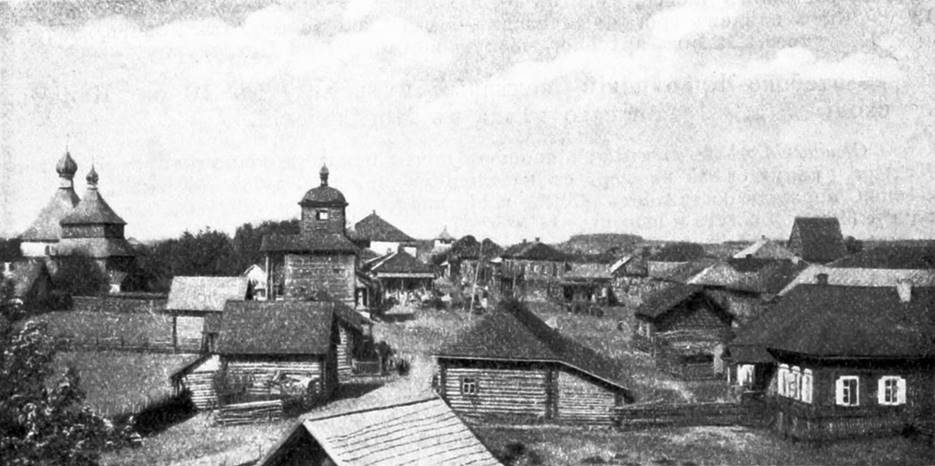
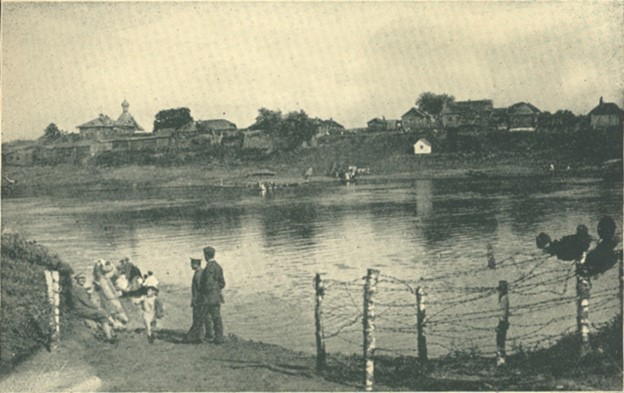
Kopust, the town that sits by the Dnieper River and its springs, is the place where I was born and where all of my childhood and youth unfolded, until I left it in the seventeenth year of my life.
Several decades passed before I visited it again on a winter day. At the request of my relatives, I recorded the impressions this visit left on me and the memories that surfaced during the hours I walked through the streets of the town, as “letters from the road.”
Here, I present to the readers of Bein Hazemanim excerpts from these notes.
Standing for Chasidus
It wasn’t only the chasidim who came to Kopust lishmah, to hear words of chasidus from the Rebbe, of blessed memory. Even the local balebatim, the simple Jews, Jews of everyday life, including even the unlearned and ignorant, the wagon drivers and the craftsmen—all yearned to hear chasidic teachings. They truly and sincerely desired this Torah, and would push and jostle their way in to “snatch” a word of chasidus.
I know well that today’s questioners will wonder: Why? After all, they did not even understand what the sages were saying! What enjoyment could they have had from hearing it?
But that is no argument. Where is it written that listeners must necessarily comprehend? Understanding is not the essence. The primary thing is listening, and comprehension is secondary to it.
We all knew Oreh Feitel, we all remember Zalman Klibanov, and—lehavdil bein chayim lemeisim—Yeshaya Dvoshe’s, people like me and you, ever-faithful listeners whose grasp of chasidus was minimal. Yet, without fail, they all went to hear chasidus, pushing their way through week after week.
I can still recall the peculiar sighs Yeshaya Dvoshe’s used to utter during chasidus, as if he were a true and profound meivin. This wasn’t during a grand “anochi” maamar, but even during an ordinary “vayehi beshalach”…
And do you think his sighs were not well-timed? They most certainly were.
He wasn’t one of the analytical deep thinkers, but he was a listener who knew how to simply listen. Just listening, even without understanding.
True, Oreh Feitel may not have understood anything, with all due respect to him. But were there not also many “understanders” like him, even among the Chassidim who came from other towns?
Let me whisper a secret in your ear: even the listening itself is not the main thing—it is the standing during chasidus.
And one thing I know for certain: when it came to standing for chasidus, Oreh Feitel was no less than all of the greatest listeners.
Perhaps this “standing” seems trivial to you, and you think that all standings are equal, that anyone who wishes can simply come and “stand” during chasidus, and there’s no difference between one type of standing and another?
If that is what you think, you are completely mistaken.
You would certainly be surprised if I told you that one of the most esteemed virtues that the renowned Chassidim and the prominent and devout chasidishe balebatim took pride in was their graceful standing during chasidus.
This seems strange: What is so exceptional about this? Is there any wisdom to this? Is any special activity or unique diligence required for this?
To this, I shall answer you briefly:
You would have had to see with your own eyes how Chatzkel Yanover, Reb Arke Liozhner, or, for instance, Reb Moshe Ber Velizsher stood for chasidus…
The Divine Presence would rest upon them during their standing… One could sense it—the splendor within the majesty…
But some of the well-known Chassidim, such as Abba Leib tantzer [dancer], Avremke Zalman-Asher’s, and Yisroel Moshe Vilkomirer, and others, had a different and unique manner of standing.
Abba Leib, for instance, lived up to his name—he would dance during chasidus. Not that he performed actual dances, but every limb of his body danced and swayed.
Avremke had a unique habit of hearing chasidus with his head covered only by his yarmulke, which would shift and slide down to his neck. He was also in the habit of tugging his beard and stuffing it forcefully into his mouth, so much so that an observer might fear that he would swallow it entirely and be left without any beard, G-d forbid.
The most peculiar of them all, however, was Yisroel Moshe Vilkomirer and his manner of standing for chasidus.
No one could stand within his daled amos, because he would thrash about, flailing like a fish in the sea, lunging forward and then recoiling backward; turning from one neighbor to another, and then back again. There were moments when he stood stock-still, like a stone, only to suddenly leap from his place, as if scrambling to snatch the largest portion of shirayim…
At such times, he would make very odd and frightening facial contortions: winking his eyes, shuffling his legs, stretching his mouth wide as if thirsting for air, only to shut it again with a whistle or a shriek. Anyone unfamiliar with him might have mistaken him for a man afflicted with epilepsy, G-d forbid.
So now you will understand that it was possible for a person to be a devout chasid, among the greatest, and yet not know or understand how to stand during chasidus.
But listeners like Yisroel Moshe were rare. Generally speaking, it was known that the standing of the greatest and most prominent chasidim was highly dignified. But there were even respected balebatim from near and far who had a fine manner of standing, such as Boruch Arke Riske’s, Itche Gordon, Lipa Leib Velizsher, and others.
So when I said that Oreh Feitel stood like one of the greats, I meant these distinguished balebatim whom I have just mentioned.
Say what you will—I stand by my words: Oreh Feitel’s standing was certainly more graceful and praiseworthy than that of simple balebatim like Zalman Hillel or Yosef Yehudah the Blacksmith, despite the fact that the latter was quite learned.
I cannot vouch that he grasped or understood what he heard; that he understood the terminology of chasidus. That does not concern me. But one thing I have said and will not retract: Oreh Feitel stood and listened properly.
Nosson Polotzker
A swarthy man, small in stature and thin of frame, his forehead constantly furrowed, and a pair of eyes, large, black, and gleaming. This was Nosson Polotzker’s entire countenance—this and nothing more.
And yet, he was Nosson Polotzker, known from one end of the chasidishe world of Kopust to the other. When a newcomer arrived, visiting the Rebbe for the first time on the Yamim Noraim or for Shavuos, people would gesture toward him and say:
“This is Nosson Polotzker.”
All of us, Baruch Hashem, would listen to chasidus. We all took part in the Rebbe’s choir, in the melodies sung on Shabbos and Yom Tov… But can one compare our listening to his listening? Our singing to his singing?
For his was a different “listening” and a different “singing,” not like ours, not in the slightest.
He did not listen to chasidus merely with his ears. He listened with his eyes, his mouth, his back, his hands, his feet—with all of his kishkes. And above all, he heard it with his head… Every word, every letter penetrated the depths of the furrows in his brow.
And his singing! The singing of Noshke Polotzker! It was not only all the 248 limbs and 365 sinews of his body that sang, but also his kapote, his hat, his yarmulke, his handkerchief—all sang with him.
Do you think he had a musical voice? G-d forbid! Not in the slightest.
And yet, when Nosson was among the singers, the singing was completely different…
I am not talking about the exceptional nigunim, like the Alter Rebbe’s nigun, and the like. For such nigunim it goes without saying. But even a simple nigun, an everyday nigun, the simplest of nigunim, like Yankel Soloker’s nigun, or Moshke Dan’s nigun, or even a completely mundane melody, like some polonaise or a march, lehavdil—when Nosson sang it, he infused it with the warmth of his heart, with his fervor…
And this flame would ignite all the other singers… Even Avrohom Moshe—that cool, measured soul—was stirred to sing differently, with more warmth, with more passion, when Nosson was among the singers.
Surely you know, gentlemen, that the most important singing at the Rebbe’s court took place when they needed to “arouse” chasidus, to rouse and stir the Rebbe to come out to the public and deliver a maamar chasidus.
When the Rebbe was withdrawn, and even delegations of two or three of the great gvirim—the “lions” and “bears”—proved fruitless; when melancholy settled over all and every spirit was dulled; when matters reached, as they say, the point of utter despair—then they would attempt, as a last resort, one final “remedy”:
The nigun…
But not just any nigun. It had to be a nigun capable of stripping away the husk of physicality and shaking the foundation of the soul…
And in such a nigun, only the greatest and most distinguished took part: Softly, through his nose, even Reb Chatzkel Yanover would hum. With a thundering bim-bom, Abba Leib tantzer would roar. Silently, Reb Arke Liozhner would sway from side to side, tapping his fingers. YBZ, Reb Elazar Vidzher, and other towering figures would sing, roar, drum, and weave intricate harmonies.
A person like myself would feel at that time like an ant among lions—“and we were like grasshoppers in our own eyes,” as meaningless and insignificant as a peel of garlic. We, the small folk, saw and sensed clearly that our singing would not help at all and would not achieve anything… Small folk like us had no effect. Of course, we also “sang,” but our singing didn’t add or detract. You understand, do you not, how vast the difference is? Reb Arke Liozhner compared to Avraham-Moshe Chaim-Itche’s, or Reb Chatzkel Yanover compared to Velvel Avramke’s—tell me, do you think these singers are alike?!
At that time, when the nigun was not merely a nigun, but had a special purpose, a lofty intention, not just for singing’s sake—then we, the simple everyday singers, were merely a fifth wheel.
This is when Reb Nosson’s power reigned… He would be the one opening his mouth in song and melody; he would conduct the music; he would direct the choir. He would take us exactly where he wished… We would keep our eyes on him and closely watch his right hand, which would move downward, then upward, and sway to the sides. Three of his fingers were always sticking up, while the other two fingers held a pinch of fragrant snuff…
To awaken and arouse chasidus, there were special traditional nigunim; the regular everyday nigunim have no place here…
Sometimes they would begin with a tune thought to be one of the most exalted and finest. But then, a signal would come from inside, from the inner sanctum, that this was not the proper one. This would not do. A different melody was needed, something loftier, something deeper… And the melody would suddenly halt in the mouths of the singers…
Everyone would stand frozen, mouths agape, and even he—Reb Nosson, the conductor of the melodies—stood utterly still, like a stone, his burning black eyes gleaming like coals, his gartel dropping down to his waist where his left thumb held it, while his right hand with the snuff remained aloft…
“What? What then do they mean in there?…”
“Which melody do they mean there, which nigun do they want?”
At this time, at this moment of soul elevation, our opinion was completely nullified; here we needed an authority, a knower of mysteries, to reveal and inform what the hidden intention was, which nigun was desired there, above…
And such an authority he was, only he alone—Nosson Polotzker.
And if it ever happened that even the two or three most exalted nigunim failed, they would resort to the final strategy—the nigun of the Alter Rebbe. But they avoided it as much as possible, turning to it only when all else had failed, when there was no other choice left. Only then, out of sheer necessity, would they attempt to salvage the moment this way.
For our Father in Heaven is merciful and gracious—perhaps He will have mercy!
You must understand that the Alter Rebbe’s nigun was never sung unnecessarily—not on an ordinary Shabbos, not even on yamim tovim. Singing this nigun required a special opportune time. A time when a special feeling arose in the hearts, demanding precisely this nigun and no other—until it was inconceivable to sing any other nigun.
You, the youths of this miserable generation, can no longer comprehend how great was our spiritual delight when we stood behind the door, like paupers at the threshold, between minchah and maariv, at twilight, singing or at least listening in the dark, as the congregation sang the Rebbe’s nigun, that wondrous, heartfelt, holy, and divine tune…
And how immense was our joy and excitement when suddenly, in the middle of the song, the door would open… And behold! At last, the nigun had its effect. This nigun cannot fail to work its effect…
Now all of the assembled stand with open mouths, their ears straining to listen and absorb the pesukim, midrashim, and sayings of the Zohar that gush and flow as from a bubbling spring, seasoned and woven with Aramaic words of Kabbalah, lofty and mysterious, saturated with mysteries from the hidden depths of the world: arich and atik, zeir anpin and arich anpin…
“Mah tovu ohalecha Yaakov…!” The word mah (how) is an expression of bitul, as the pasuk says, vaanachnu mah (and what are we)… And so on… and on…
All was still.
Only occasionally a sigh is heard from Reb Yisrael Moshe Vilkomirer, or the sound of movement from Abba Leib tantzer…
And when the maamar ended, they would again begin a nigun, but this time a different kind of nigun, lively and full of joy, a nigun that seemed to sing itself… And so they would have sung and sung endlessly, had not Yisrael the meshares come and announced, stammering through his nose, “It’s time for maariv.” Yisrael would be holding a burning candle in his hand, for he had already davened maariv on his own, and was now softly saying “vi’hi noam, v‘atah kadosh.”
We all knew that this announcement that “It’s time for maariv” did not come from Yisrael of his own accord, but was an instruction from “there,” from inside…
But not all the listeners would remain for maariv prayer. Only the simple balebatim would remain, but the true chasidim, the finest of the congregation, would scatter to every corner, to contemplate alone in their hearts and delve deeply into what their ears had heard.
Special chozrim, experts at their role, would gather groups around them and repeat to them the new chasidus with a special emphasis… intensely, passionately, excitedly…
Yes, gentlemen, once upon a time, there were Jews who lived lives of holiness and purity, of spiritual elevation. There used to be… but they are no more.
Even now, there are still chasidim, shadarim, and mashpiim. Even now they chazer words of chasidus, arrange the shalosh seudos, melaveh malka, and the like… But their charm has been stripped away, the spirit of holiness has departed from them…
Even now they sing the Rebbe’s nigun, but they sing it according to musical notes…
And what flavor does this nigun have when it is sung by notation? They are particular about every jot and tittle of it, they are precise in measure and rhythm. Each stanza is performed perfectly. They preserve its body, while its soul has departed…
It was once understood by all that not every person and not every place and not all times are suitable for this nigun. It was clear that the Alter Rebbe’s nigun is sung by G-d-fearing chasidim at the occasion of a maamar chasidus, in honor of the Alter Rebbe’s yahrtzeit, on Yud Tes Kislev, on the fifth night of Chanukah… And now? Now, anyone who wishes comes along and sings it, and no one protests. We defile it by our touch and profane it with our machshavos zaros…
Woe to such a song!
Can there be a greater chilul Hashem than when the Rebbe’s nigun is now heard from the mouths of artists, choristers, Bundists, Zionists, and the like?
And the place matters greatly too: Where is it sung and before whom is it sung?!…
But what can we say, and what can we speak?… Do we have the power to save it?…
Zev Lifshitz
***
Arousing Chasidus with Song
At the center of Lifshitz’s moving account is the practice of singing a nigun to “arouse” chasidus. The use of nigunim to “induce” a “reluctant” rebbe to say chasidus has strong precedent in Chabad. There is a well-known story about the Alter Rebbe along these lines, presented here according to the version recounted by R. Zalman Shimon Dvorkin (Shmuos Vesipurim, vol. 2, story 3):
Once, a large group of chasidim gathered in Liozna and asked the Alter Rebbe to say a maamar chasidus. The Alter Rebbe sent his attendant to inform them that he would not be saying a maamar.
In an attempt to assuage their disappointment, the chasidim gathered in the outer chamber of the Rebbe’s home. R. Shlomo Tshashniker picked up a violin and began to play stirring nigunim that captivated the heart. Suddenly, the Rebbe opened the door, sat down, and delivered a maamar on the pasuk: “And when the musician played, the hand of Hashem came upon him” (Melachim II 3:15). (For additional versions of this story, see Beis Rebbe [5774 edition], p. 222; and Reshimos Devarim, p. 96.)
A very close parallel is also found with Harav Shlomo Zalman’s uncle and contemporary, the Rebbe Maharash. R. Tzvi Har Shefer (5630–5719) was raised in Lubavitch, and he penned a fascinating account of his childhood memories of the Rebbe Maharash and the chatzer in Lubavitch. Originally published in the Haavar journal (vol. 2), this account has been reprinted in a number of Chabad publications over the years, and was recently published with footnotes by Yisrael Barda in Teshurah Barda-Guberg 5779, pp. 42–52).
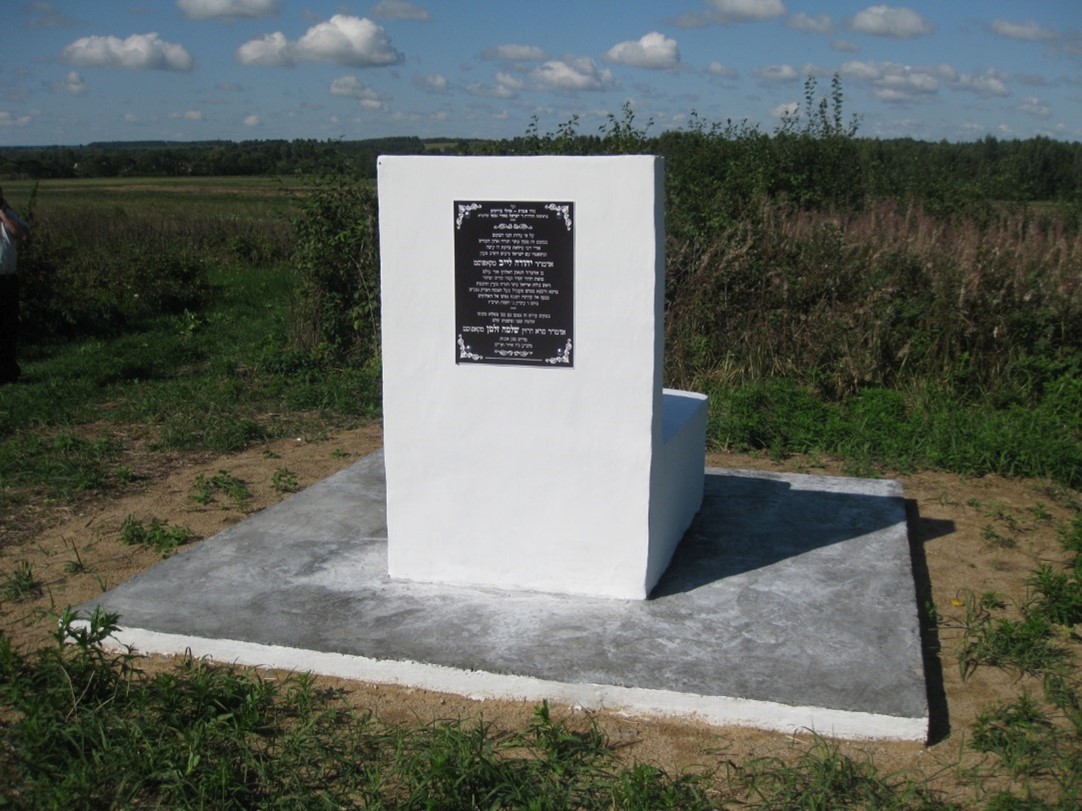
After describing the Rebbe Maharash’s regular scheduled chasidus on Shabbos morning before shacharis, Har Shefer describes how the chasidim would ask for more on special occasions (Teshurah Barda, p. 45):
“On the yamim tovim, the chasidim would request an “addition” between minchah and maariv. The Chassidim, especially the younger ones, would crowd near the entrance of the Rebbe’s room and sing the nigun of the Alter Rebbe, a melody full of yearning and devotion—the soul’s longing for the hidden worlds.
“If there was no immediate response, they would repeat the Rebbe’s nigun two or three times until the Rebbe was compelled to emerge from his private sanctuary. His refusal was of no use—he was forced to set aside his fatigue and weakness.”
Interestingly, Tzvi Har Shefer was a friend of Zev Lifshitz and wrote an obituary for him, from which we drew some of the biographical information about Lifshitz provided above. Har Shefer references Lifshitz’s article about his Kopust memories as an illustration of his excellent Hebrew literary talent.
Precedent notwithstanding, it seems that the need to “arouse” chasidus and the use of a nigun for this purpose reached a new level in Kopust. In a sicha of the Kopuster from Sukkos 5651, he is recorded as saying (Benei Hatzemach Tzedek, p. 227), “There is a sh‘vuah not to say chasidus without a request, as the pasuk says, “I adjure [hishbati] you . . . arouse love until it desires” (Shir Hashirim 2:7).
R. Amram Bloi (p. 242–243) also quotes Yiddish writer R. Chaim Yitzchak Bunin’s description of the singing of nigunim in Kopust to arouse the Rebbe to say chasidus, culminating in the singing of the Alter Rebbe’s nigun. An additional source is also referenced by R. Bloi in fn. 65.
The Kopuster Chassidim
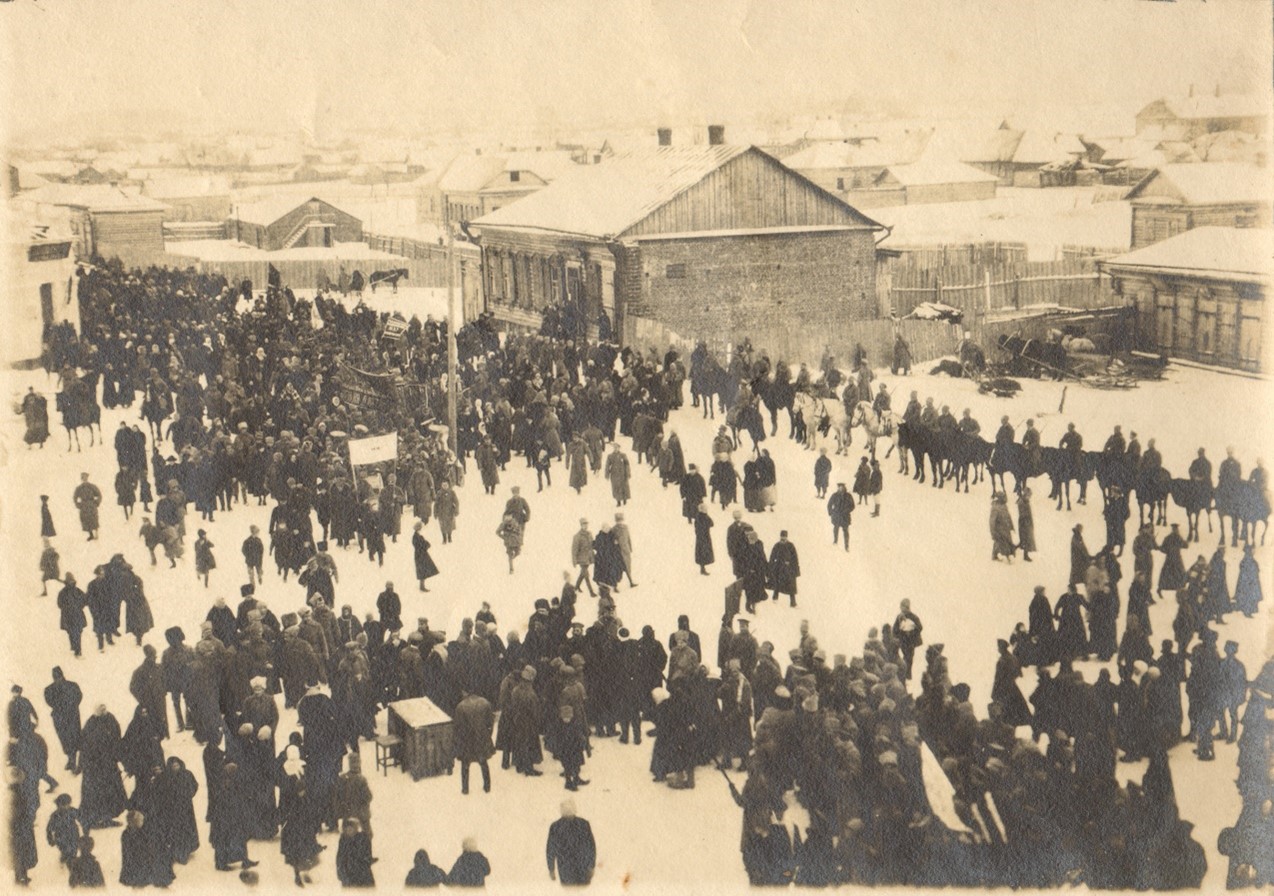
A popular adage states that “history is written by the victors.” This is true of machlokes leshem shamayim as well, and as a result, little is known about the great chasidim of the Kopuster Rebbe.
The present article sheds new light on the personalities of a number of great Kopuster chasidim, some of whom are known to us from other places, and others we hear about now for the first time. The following are brief summaries and references about some of the chasidim mentioned in the article.
R. Yechezkel (Chatzkel, Chatche) Yanover. R. Yechezkel Yanover was a famous chasid of the Tzemach Tzedek, and a talmid of R. Eliyahu Yosef Rivlin. After the histalkus of the Tzemach Tzedek, he was a very close chasid of the Kopuster Rebbes, serving for many years as a shadar for Harav Shlomo Zalman. He lived in Griva (now in Latvia), and passed away on Rosh Hashanah of 5651, reportedly over the age of 90.
He is profiled in Beis Rebbe, p. 394, and additional information about him is collected in Otzar Chasidei Chabad, Chasidei Hatzemach Tzedek, vol. 2, pp. 64–66. The following are some sources about him that are not included in Otzar Chasidei Chabad: Techayenu, vol. 10, p. 97; Masa HaRebbe Beeretz Hakodesh, p. 86; R. Yitzchak Dovber Ushpal, Yizkor Buch Sventzian, p. 218; several mentions in the letters and sichos of the Kopuster Rebbe published in Benei Hatzemach Tzedek. A number of biurim in Tanya in his name are recorded by his talmid R. Avraham Tzvi Brudna, in his kuntres Likutim Biurim. The letter of the Kopuster Rebbe published in Heichal Habaal Shem Tov, vol. 43 p. 154 was written to him; and his name is mentioned in another letter published in Heichal Habaal Shem Tov, vol. 45, p. 15 (thanks to Yisrael Barda for his help compiling these sources).
R. Aharon (Arke, Arche) Liozhner. R. Aharon Levin (c. 5570-5661) was a prominent chasid of the Tzemach Tzedek, and later of the rebbes of Kopust. He was a rosh yeshivah in Dubravna and Vitebsk, before serving as the rov of Liozna for many years. An exceedingly humble elder Chassid, he relayed traditions going back to the Alter Rebbe.
Further information about R. Aharon can be found in Otzar Chasidei Chabad, Chasidei Hatzemach Tzedek, vol 1, pp. 85–92. In addition to the sources collected there, see also R. Zevin’s Sipurei Chasidim, Moadim, story 10; and several stories and anecdotes in R. Avraham Weingarten’s reshimos, some of which were published in The Weekly Farbrengen, no. 665.
R. Moshe Ber Velizher. R. Moshe Dov Ber Luria of Velizh was a chasid of the Tzemach Tzedek, and later of Kopust and the Rebbe Maharash. He lived in Velizh most of his life, before becoming the rov of Lochvitch, Ukraine, in his later years. He was known for his rigorous avodas Hashem and refined character traits.
Further information about R. Moshe Ber is collected in Heichal Habaal Shem Tov, vol. 44, p. 373, fn. 29. See also The Weekly Farbrengen, no. 677.
R. Eliezer Vidzher. R. Eliezer of Vidzh was a prominent chasid of the Tzemach Tzedek, and later of the rebbes of Kopust (Beis Rebbe, p. 398). A fascinating record of words the Kopuster Rebbe Harav Shlomo Zalman told him is preserved in Kisvei R. Chaim Eliezer Bichovsky, p. 154.
R. Abba Leib tantzer. This chasid may be R. Abba Leib of Dvinsk, who the Beis Rebbe (p. 398) counts as one of the great chasidim of the Tzemach Tzedek and Kopust. No further information is available about R. Abba Leib (the mention in Chasidim Harishonim, vol. 1, p. 86 is a mistake, and should be R. Aryeh Leib Zivov).
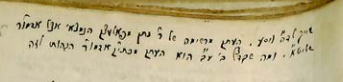
R. Nosson Polotzker. The Lifshitz article describes R. Nosson Polotzker at length, providing us with an intimate portrait of this otherwise unknown great chasid. A mention of R. Nosson is found in an inscription in a manuscript copy of maamarim of Harav Shlomo Zalman in the Rebbe’s library. The context shows us that he was indeed very close to the Kopuster Rebbe: “A copy of the transcript of R. Nosson of Polotzk that is in the possession of the Rebbe Shlita. The piece on p. 2b is a copy of the Rebbe’s handwritten edits to the transcript.”
To view all installments of From the Margins of Chabad History, click here.
 COMMENTS


So interesting!
Thanks for printing this fascinating account of the Kapuster Rebbe son of the Maharil, and a grandson of the Tzamech Tzedek!
These quality articles are priceless. Lead the way in conversation of tochen.
Excellent find!
What does he mean by a “polonaise“ niggun? Does that just mean “Polish”?
Also, was Nosson Polotzker actually holding snuff, or is it just a way of describing how he held his fingers?