




י״ג תשרי ה׳תשפ״ו | October 5, 2025
Rabbi Rubashkin, Teenagers, and Hashem’s Protective Shadow
As you sit in the Sukkah this year, take a moment to look up at the s’chach and reflect on its role. Its purpose is to provide shade and shadow. In fact, that is the very essence of the mitzvah of Sukkah – and that’s pretty unusual.
By Getzel Rubashkin
As you sit in the Sukkah this year, take a moment to look up at the s’chach and reflect on its role. Its purpose is to provide shade and shadow. In fact, that is the very essence of the mitzvah of Sukkah – and that’s pretty unusual.
Ordinarily, we focus on light. We describe Hashem as our light, as we’ve been adding to our tefilos: “L’David, Hashem Ori,” – In the words of David [HaMelech], Hashem is my light. Torah is compared to light, the mitzvos to radiant candles — “Ki ner mitzvah, v’Torah ohr,” and our own neshamos are called the candles of Hashem, “Ner Hashem nishmas adam.”
There’s a good reason why we focus on light. Light illuminates, dispelling darkness and ignorance. It allows us to see the truth, the proper path to reach it, and the dangers and pitfalls to avoid along the way. Light is warmth, light is passion, light is life.
Despite all that, on Sukkos, Hashem tells us to sit in the shade, shielded from the light! In fact, a Sukkah in which the shadow is not dominant, where there is more light than shade, is passul, unfit for use. Why would we want darkness?
The answer is found in the Zohar’s description of this specific darkness, the shadow of the Sukkah as “tzila d’meheimenusa,” the shadow of faith, of Emunah.
Darkness, the absence of light and perception, usually represents ignorance and obliviousness. No one wants that. But darkness can also refer to a connection that is so deep and fundamental that it is beyond logic and reason. The light of our minds doesn’t penetrate or illuminate it.
We see the truth of our connection to Hashem, our Emunah and Bitachon, with the certainty and clarity of our neshama, but it cannot be expressed in terms of light or logic. It defies explanation or definition. It just is, solid and eternal.
This darkness is not only good – it offers the ultimate protection! We see this in our own lives. When it comes to things we understand, there can always be a challenge and a struggle. There’s always the possibility of a doubt, a counter-argument, a rationalization. But when our motivation and conclusion is deeper than logic, such as our pure and simple faith and trust in Hashem, there can be no challenge, argument, or negotiation.
Hashem’s protection is compared to the shade throughout Tanach (including with relation to the Sukkah) for precisely this reason, and it holds true in our inner spiritual and emotional struggles. Our true protection from confusion and temptation is not in our understanding but in our simple Emunah, Bitachon, and mesirus nefesh.
Throughout his ordeal, Rabbi Sholom Mordechai Rubashkin was a living demonstration of this connection. Countless Yidden followed his story and drew tremendous inspiration in their own lives. Not because of brilliant explanations that resolved or illuminated the difficult challenges in life, but because of his simple and stubborn Emunah and Bitachon. He lived his ordeal in a year-round Sukkah, in the unassailable shadow and shelter of faith and trust in Hashem that didn’t require explanation or argumentation, and he inspired others to do the same.
*
Since his miraculous salvation, Rabbi Rubashkin has dedicated himself to teaching the principles of Emunah and Bitachon and guiding people in applying them practically.
Whether they’re facing something extraordinary or the challenges of everyday life, whether the problem is financial pressures, medical uncertainty, or emotional struggles, Rabbi Rubashkin helps people lay the solid foundations of Torah. In classes, one-on-one guidance, and countless personal encounters, he shows people how to live their lives in the tzila demehaimenusa.
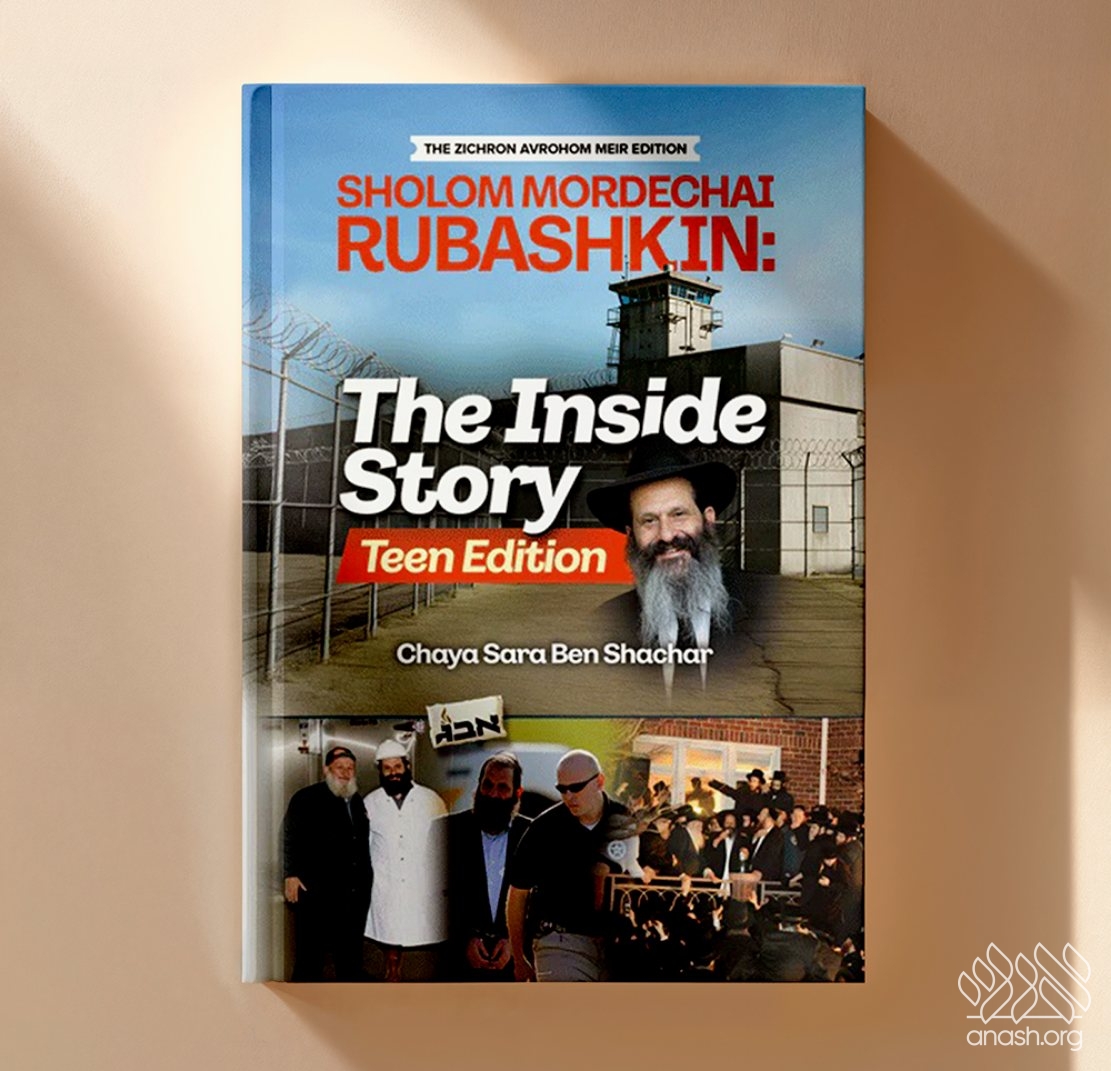
Just in time for Sukkos, Rabbi Rubashkin extends this invitation to teens and pre-teens: The Inside Story, the bestselling account of Rabbi Rubashkin’s experiences and his message, has been rewritten for teens. At a more manageable length and in a clear, engaging, and age-appropriate style, it speaks the language of young readers, drawing them in with gripping narrative and accessible explanations.
In some ways, they need it the most. The teen and pre-teen years can be very turbulent. Young, developing minds are always seeking to better understand the world and their place in it. At every turn, they face questions, challenges, and pressures pulling them in many directions. As their minds grapple with all of that, it’s critical for them to know that there’s a Sukkah – an unshakeable foundation, a place of Emunah and Bitachon on which they can build their life.
The Inside Story, Teen Edition, is not just another dramatic read for teens, retelling the saga of Rabbi Rubashkin. It’s an invitation into their own Sukkah, teaching them to make Emunah and Bitachon part of their daily life.
 COMMENTS


We appreciate your feedback. If you have any additional information to contribute to this article, it will be added below.