




ח׳ אדר ה׳תשפ״ו | February 25, 2026
‘Pain Doesn’t Define You,’ Wounded Shliach Tells Snowed-In Teens
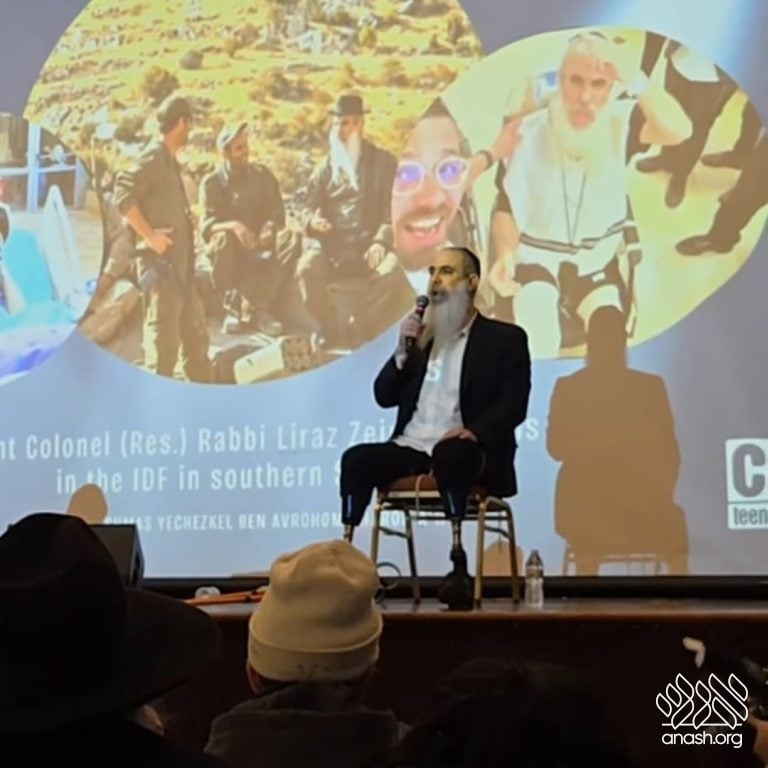
Rabbi Liraz Ze’ira, Major (res.) and campus shliach who lost both legs in a Syrian landmine explosion, inspired nearly 2,000 snowbound CTeen teens in Crown Heights. Sharing his story of recovery and faith, he urged the teens to embrace challenges and strengthen their Jewish pride with unwavering bitachon.

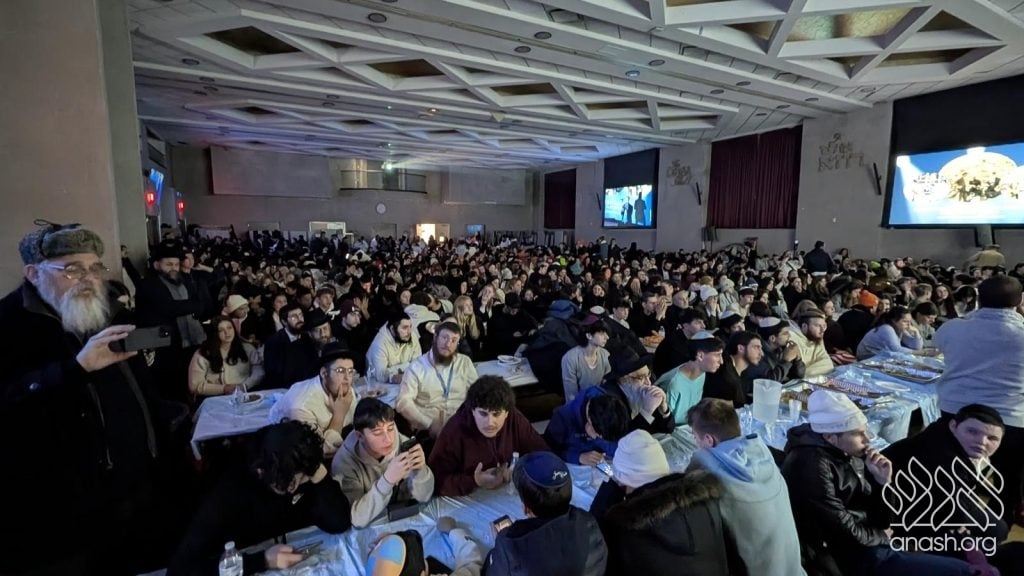
Nearly 2,000 teens remained in Crown Heights on Monday after a powerful snowstorm grounded flights and left participants of this weekend’s CTeen International Shabbaton unable to travel home.
CTeen leadership quickly jumped into action, organizing a full day of structured programming, inspiration, and fun, thanks to the generosity of multiple mosdos in the neighborhood, culminating in a spontaneous, rousing concert with Israeli singer Noam Buskila and a moving talk by Rabbi Liraz Ze’ira, Major (res.), a campus shliach in Nachlaot, Yerushalayim.
Rabbi Ze’ira shared his extraordinary story of survival and recovery after being seriously injured by an old Syrian landmine during an operational mission, which resulted in the loss of both his legs.
Reflecting on that harrowing moment, he told the teens, “Shema is what you say when you’re… jumping in a grenade because you want to save someone. I’m not going anywhere. I’m staying here. I have a wife and five beautiful kids.”
He recounted being airlifted to Ram Hospital in Yerushalayim, unconscious and facing uncertainty. Communicating with his wife via a whiteboard, he asked, “How are the kids? Do I have knees?” His surgeon, one of Israel’s top experts, reassured him that while the joint’s condition was uncertain, they would do everything possible to save it.
Rabbi Ze’ira spoke about his rapid recovery, walking with prosthetics within just a few months. He emphasized the power of mindset in overcoming adversity.
“I never read the textbook. I know that whatever I put my mind to, I’m able to do.” He said. “There’s always the option of looking at the bright side, which is always the better side to be on.”
The first major surgery brought intense pain, which he described as “turning into a monster.” Guided by his doctor, he placed his hands on his knees and repeated, “I can deal with the pain. The pain is not that bad.” Within minutes, the pain subsided, and he emphasized, “Do I still have pain? Yeah. Does it control my life? No. I control my life. Nothing else. I can choose.”
Following the talk, the teens had the opportunity to ask questions. Rabbi Ze’ira answered inquiries about his rehabilitation, coping with pain, and learning to walk again. He encouraged the audience to embrace challenges rather than avoid them:
“If there’s no resistance, the muscle is not going to grow. Same in your soul. Same in your life… look for the challenges in life with open eyes and say, ‘I’m going to beat this challenge.’”
He also connected resilience to Jewish pride, reminding the teens, “Being Jewish is not the easiest thing on the planet, but it’s the most important… we can look at ourselves the way we are and defeat every challenge we have together.”
VIDEOS

 COMMENTS


We appreciate your feedback. If you have any additional information to contribute to this article, it will be added below.