




כ״ד תשרי ה׳תשפ״ו | October 16, 2025
OU Executive Rabbi Moshe Hauer Passes Away
Rabbi Moshe Hauer, Executive Vice President of the Orthodox Union (OU) and a great admirer of Chabad and shluchim, passed away suddenly at the age of 60 from a heart attack on Shemini Atzeres at his home in Baltimore.

Rabbi Moshe Hauer, Executive Vice President of the Orthodox Union (OU), passed away suddenly at the age of 60 from a heart attack on Shemini Atzeres at his home in Baltimore.
After serving as rabbi of Bnai Jacob Shaarei Zion Congregation in Baltimore for over twenty-five years, where he devoted himself to chinuch, family guidance, and community leadership, Rabbi Hauer joined the OU in 2020, serving as its rabbinic leader and primary voice on Torah and communal life.
Rabbi Hauer was a close friend of Chabad in Baltimore and a great admirer of shluchim’s work around the world. Ahead of the recent Shnas Hakhel, Rabbi Hauer joined Baltimore rabbis in encouraging the public to get involved.
In a powerful tribute written after the murder of Rabbi Tzvi Kogan, shliach to the United Arab Emirates, Rabbi Hauer expressed his admiration for the Rebbe’s shluchim. He shared a story that, to him, captured the essence of their mission:
A shliach stood every Friday morning at the entrance of a subway station, asking passersby if they were Jewish and offering to help them lay tefillin. It was rare for anyone to stop, but when asked how he continued week after week, the shaliach replied, “My success rate is 100%. Every Jew that walks by me is reminded that he or she is a Jew.”
“Chabad’s dedicated emissaries,” Rabbi Hauer wrote, “can be found in every corner of the globe, creating Jewish presence and outposts of Jewish life and caring, reminding Jews of who they are.” He marveled at the scope of their reach: “According to Pew, an astounding 37% of American Jews engage with Chabad from rarely to often.”
Describing his visit to the Kinus Hashluchim, he wrote how moved he was “by the sight of hundreds of shluchim gathered from every corner of the world.” During the roll call, the screen showed “Russia – 222.” He turned to a colleague and whispered, “Do you see that? We struggle to find a few people to spend a couple of years of their lives teaching Torah in communities without a kosher pizza store, while Chabad has 222 people who, at around the age of 22, decided to go alone to remote corners of Russia where they will care materially and spiritually for Jews, raise their families, and remain until they die or until the Moshiach arrives.”
He concluded, “No movement or group even remotely approaches Chabad’s relentless dedication to mission and its reach and success in reminding Jews – wherever they may be – of who they are.”
Rabbi Hauer urged that “we in the Jewish community would do well to pause and make note of the debt we owe them for their steadfast commitment to all of us, for the Jewish infrastructure they have created and maintain throughout the world, and for reminding us of who we are and the values we stand for.” He added, “The world would also do well to pause and learn from Chabad’s remarkable army of men and women who never hide or shirk their identity and values but choose instead to work fearlessly anywhere and everywhere to bring light to a darkened world.” He ended that essay with the striking line, “If only they had the moral courage of a Chabad shaliach.”
In a talk that Rabbi Hauer gave at a Yud-Tes Kislev farbrengen at Chabad of Maryland, which he later submitted for publication in Mishpacha Magazine, he reflected on Chasiddus and the Alter Rebbe’s imprisonment and release, nothing how “the antagonism that led to the Rebbe’s imprisonment came instead from forces in the heavens that questioned the world’s readiness for this precious aspect of Torah learning.” He pointed to the Alter Rebbe’s unwavering ahavas Yisrael, writing that “he encouraged his followers to fully love all Jews, including those from outside their circle.”
For Rabbi Hauer, that message defined Chabad’s greatness — “their faith in Hashem’s guiding hand, their unconditional commitment to leave no room for resentment of others in their hearts, and their love for every one of our fellow Jews.”


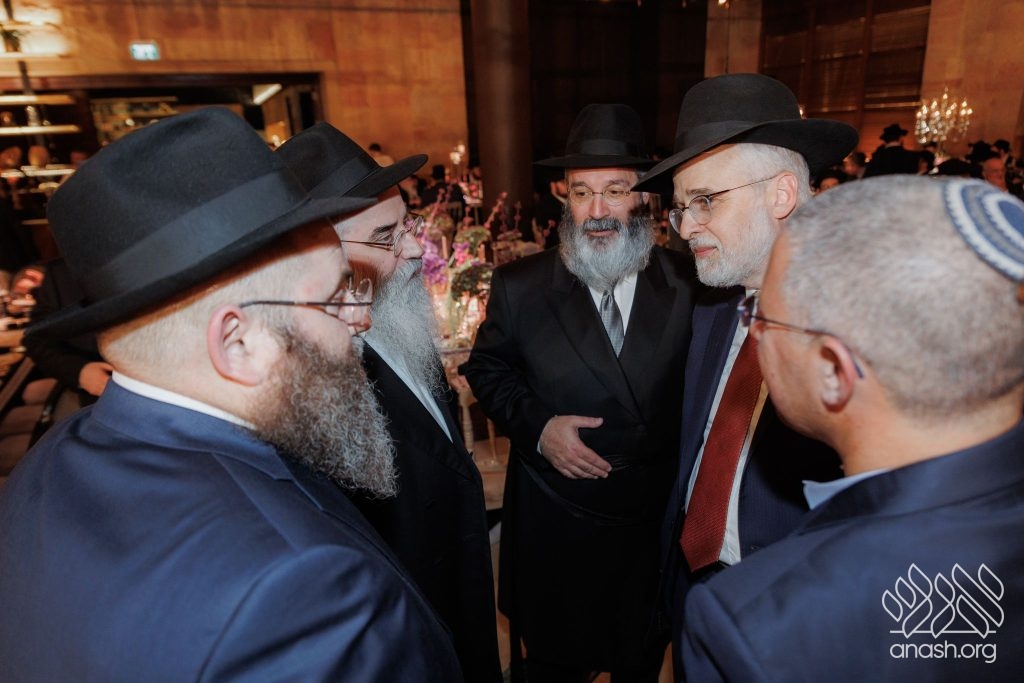





Rabbi Hauer at last Yud Tes Kislev farbrengen in Baltimore, together with Rabbi Yosef Yitzchok Kalmanson who passed away this Rosh Hashana.

 COMMENTS



We appreciate your feedback. If you have any additional information to contribute to this article, it will be added below.