Newspapers Report the Leadership and Sacrifice of Harav Levi Yitzchak
In honor of 18 Nissan, 148 years from the birth of Harav Levi Yitzchak Schneerson, the Rebbe’s father, From the Margins of Chabad History presents a series of newspaper articles about his appointment as rov of Yekatrinoslav and his mesiras nefesh under Soviet rule.
18 Nissan marks 148 years from the birth of Harav Levi Yitzchak Schneerson, the Rebbe’s father, in 5638. The same day is also the 124th anniversary of the bris of his son, the Rebbe. In honor of the occasion, the present installment From the Margins of Chabad History presents new information about his appointment as rov of Yekatrinoslav in 5668 and his mesiras nefesh fighting to preserve Yiddishkeit under Soviet rule.
After their marriage in 5660, Harav Levi Yitzchak and Rebbetzin Chana lived in Nikolayev, where Rebbetzin Chana’s father, Harav Meir Shlomo Yanovsky, served as the rov. It was here that their three sons were born, and where the Rebbe’s bris was held on 18 Nissan 5602, Harav Levi Yitzchak’s 24th birthday.
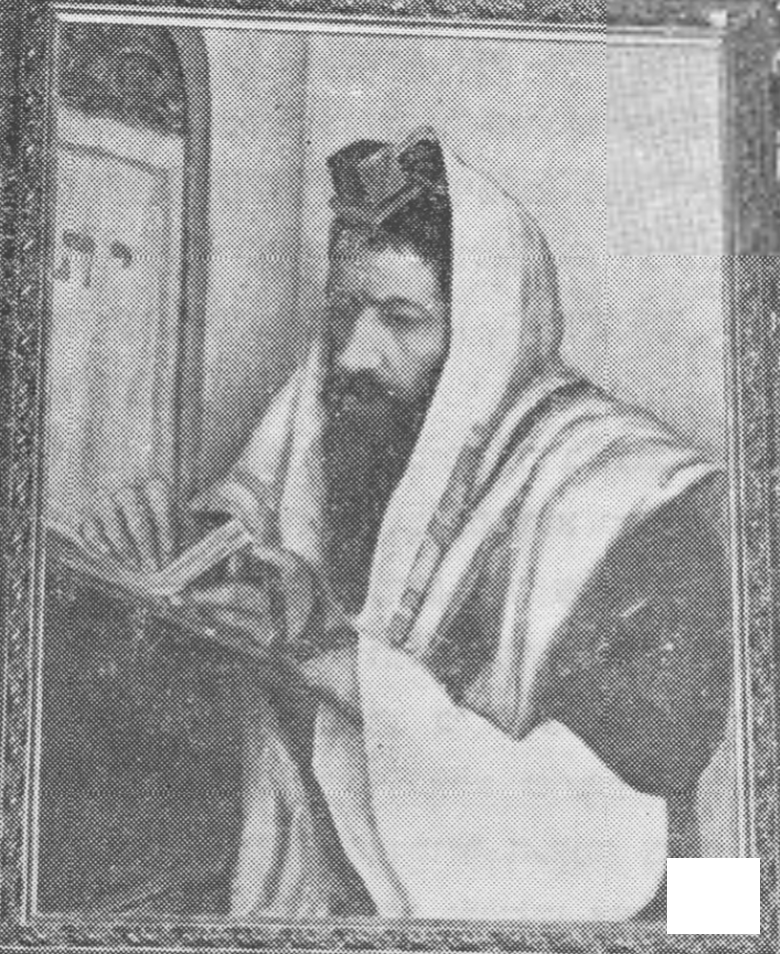
Harav Bere Volf Kozevnikov (c. 5598-5668)
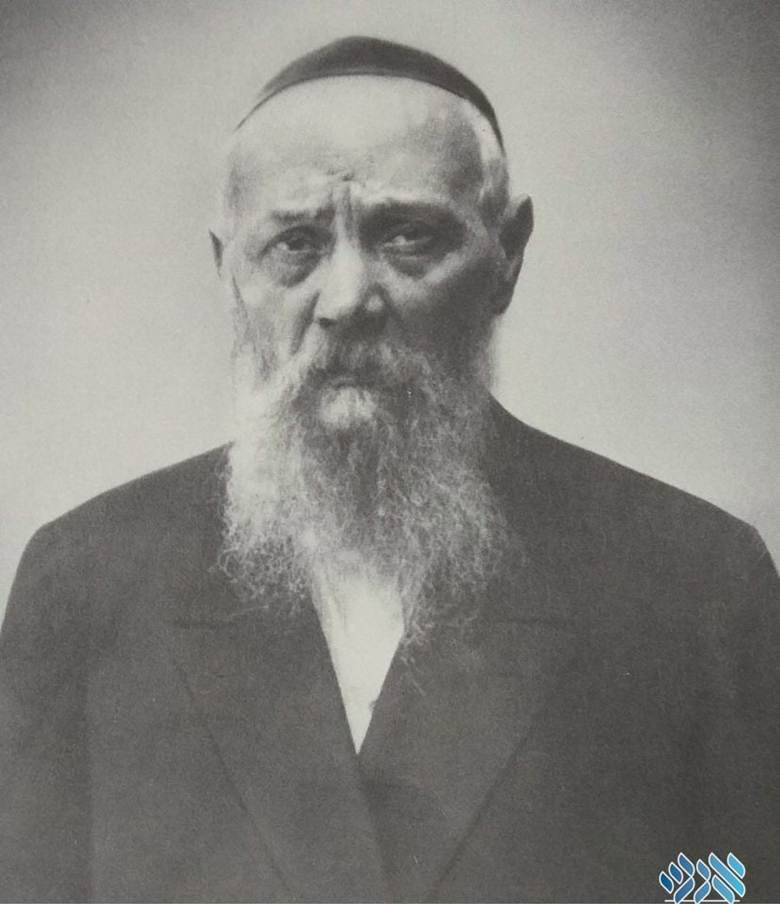
In 5668, the nearby city Yekatrinoslav (now Dnipro, Ukraine) was in a rabbinic crisis. The city had long been served by an Av Beis Din, Harav Binyamin Zev Zakheim (c. 1840-1913), and a chasidishe rov, Harav Dov Zev (Bere Volf) Kozevnikov, a chasid of the Tzemach Tzedek, Rebbe Maharash, and Rebbe Rashab, and a close talmid of Harav Hillel Paritcher. Harav Zakheim served as rov in the old city center, while R. Bere Volf served in the neighborhood on the bank of the Dnieper River. Two other rabbonim, Harav Eliyahu Shmuel Levin and Harav Baruch Zaslovsky, served as morei tzedek in newer neighborhoods of the rapidly growing industrial hub.
On 27 Teves 5668, the chasidishe rov Harav Bere Volf passed away. A few weeks later, shortly before Pesach, Harav Baruch Zaslovsky passed away as well. When Harav Eliyahu Shmuel Levin suddenly fell ill and passed away on 27 Iyar of the same year, the city was plunged into a crisis of rabbinic leadership. The only remaining rov was Harav Zakheim, and he was already elderly and weak.
It was clear that a new rov was needed. For the chasidim of Yekatrinoslav, it was also clear that the new rov needed to be a chasid, like R. Bere Volf, whose place he would be filling. This has been the arrangement in the city: a non-chasidishe rov and a chasidishe rov. But the booming city of Yekatrinoslav was now dominated by modern secular and Zionist elements, and they had other ideas.
The Dispute Over the Rabbonus of Yekatrinoslav
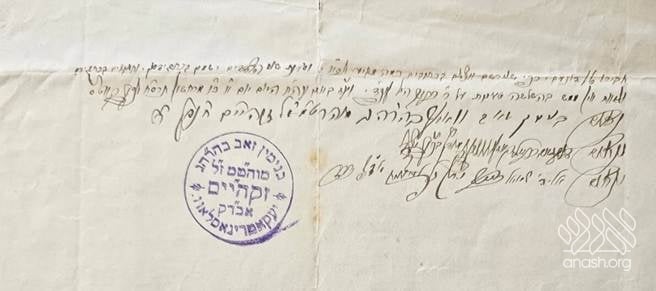
Harav Binyamin Zakheim’s seal and signature on a document.
The story of the dispute over the Yekatrinoslav rabbonus and the eventual appointment of Harav Levi Yitzchak as the chief rabbi of the city is surveyed in Sefer Yekatrinoslav-Dnepropetrovsk (pp. 113-119) and Toldos Levi Yitzchak (vol. 1, pp. 128-153). In the present article, we present a series of contemporary newspaper reports that complete the picture, adding new information.
Our first report of tensions in Yekatrinoslav over the rabbonus comes from the Vilna-based Hebrew-language Hazeman newspaper of 4 Elul 5668 (August 31, 1908). This was a modern secular newspaper, so its report naturally favors this side of the dispute, but it still gives a good picture of the background.
Yekatrinoslav:
Following the period of the Revolution, a new interest arose in our city regarding internal community life. Everyone felt the need for a central body to conduct all the affairs of the Jewish community, which had been in a state of terrible neglect.
Such a body—more or less suited to this purpose—took shape in the form of representatives from the various shuls. There are 110 representatives in total, and they selected a committee from among themselves to administer all communal affairs. Whenever an important communal issue arises, the committee convenes all the representatives, and decisions are made by majority vote.
At present, the question of the rabbonus is on the agenda, the resolution of which is of great importance to us.
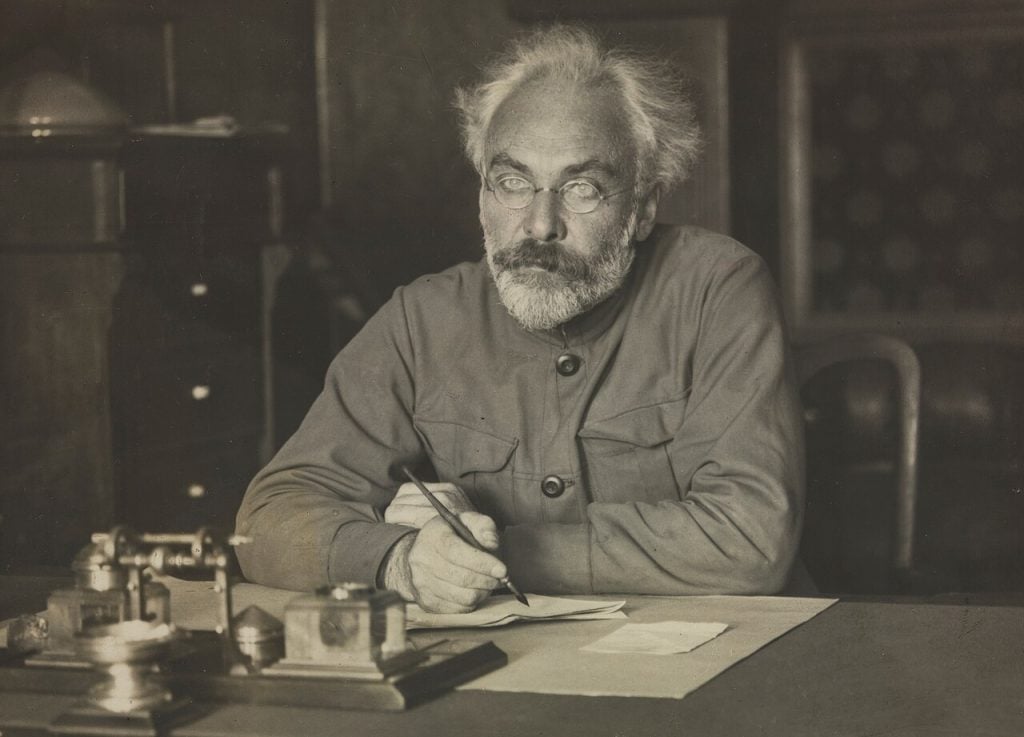
Sergei Pallei (d. 5678)
Regarding this question, there are two opposing views among the members of the committee. One group argues that the rov is the symbol of Yiddishkeit, and he must therefore be a yerei shamayim, a lamdan, a man cloistered in the realm of halachah. The other group, by contrast, demands that the rov must be a man of his time, engaged in contemporary life, a person with an impressive personality whose presence will be felt in the life of the community.
The first group, who are the minority, have put forward the rov from of Nikolayev, Mr. Schneerson, as their candidate. This side includes the chasidim, along with some members of the intelligentsia. The majority, however, who follow the second view, support the candidacy of the rov of Tarashcha, Mr. Pinchas Hillman. The good reputation this esteemed rov earned in the Kiev district during his tenure in Tarashcha has become known in our city as well, and our community has found in him the rov it desires.
So what did the chasidim do? They rose and appointed Mr. Schneerson as rov on their own initiative. They rented him a residence and sent to bring his family here.
Now the question of the rabbinate has grown even more charged, and a fierce dispute has broken out in the city.
Ben Menachem.
This article draws the battle lines between the chasidishe and the modern camp. Interestingly, it notes that some of the modern intelligentsia actually support the chasidishe candidate, Harav Levi Yitzchak. This appears to reflect the support of the local secular Zionist leader, Sergei Pallei, for Harav Levi Yitzchak, after he met with him personally and was deeply impressed. Rebbetzin Chana relates the story of this meeting and Pallei’s support for Harav Levi Yitzchak in her diary (Part 30).
But even with Pallei’s support, the chasidim were in the minority. The largely secular community representative body convened and elected Harav Pinchas Gelman (also spelled alternatively as Hilman or Helman) as the rov of the Dnieper river district, in place of Harav Bere Volf.
Hazeman newspaper reported on the election, a week after their original article (11 Elul 5668 – September 7, 1908).
Yekatrinoslav
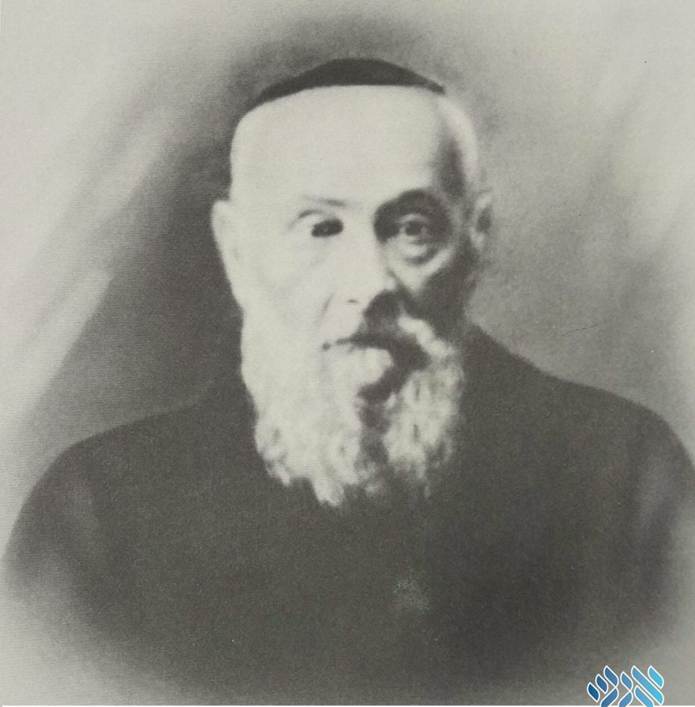
Harav Levi Yitzchak, pictured after his arrest in 5699.
At last, after the many disputes and clashes stirred up by the question of the rabbonus in our city, Harav Pinchas Hillman—formerly the rabbi of Tarashcha in the Kiev district—was elected, almost unanimously.
The supporters of Harav Schneerson employed various means to win the favor of the public, but all their efforts came to nothing. They even tried to publish a notice that Harav Schneerson would be arriving here with his family to settle, hoping thereby to establish a chazakah, but this attempt, too, did not succeed. The heart of the community was drawn instead to Harav Hillman, the gifted orator.
The election of this rov is certain to have a significant impact on the course of communal life in our city. The authority of the religious rov here is exceptionally strong, and Harav Hillman has a reputation as an energetic communal activist. There is broad scope of opportunity for meaningful communal and national work in Yekaterinoslav, where the community is in need of activists and organizers for communal affairs and its public institutions.
But in reality, the dispute was far from over. The chasidim did not accept the authority of the largely secular community council to decide who the rov should be. And the election itself was hardly free and fair. Rebbetzin Chanah relates the story in her memoirs (Part 31):
At first the opponents thought that since my husband was a young man, only 30 years of age, and was also a Chasid—belonging to a group they held in very low regard—only a few old Jews would support him and that would be all. But the attitude towards him improved by the day, and people of all backgrounds began to come over to him.
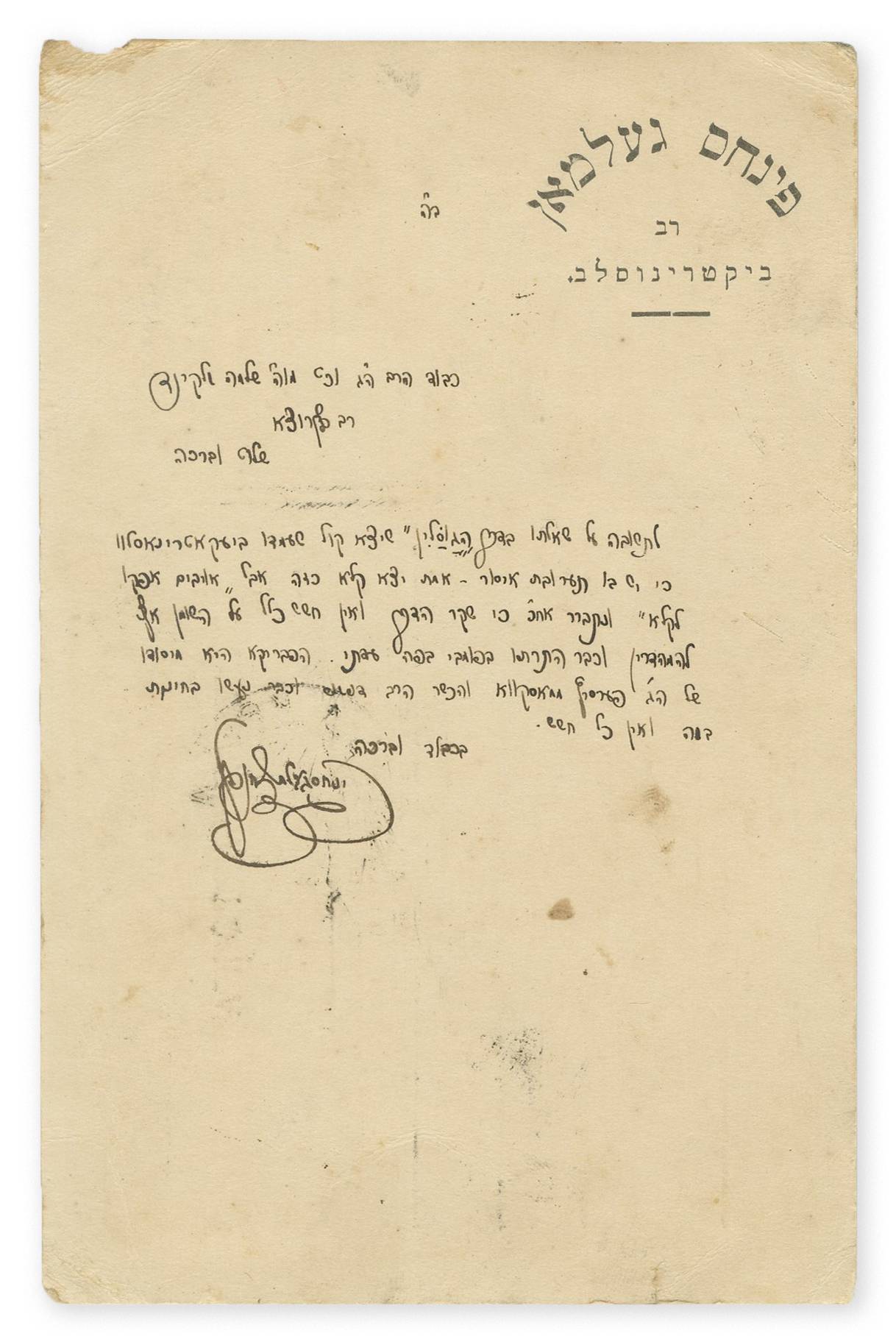
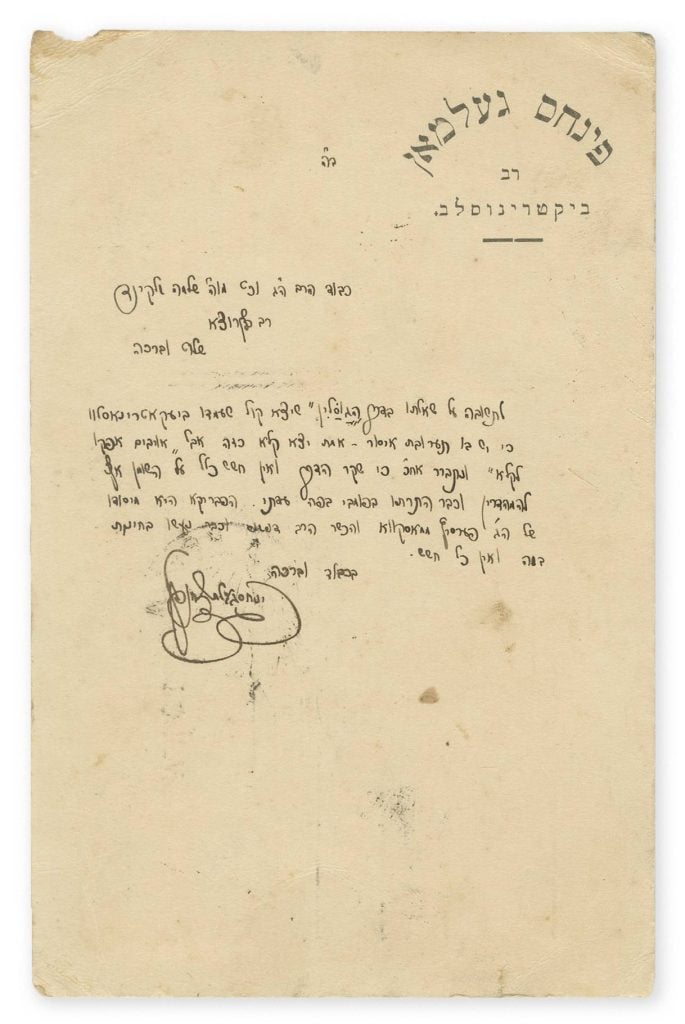
A letter written by Harav Pinchas Gelman (5641-5681).
In order to prevent this movement in favor of my husband from becoming too influential, the opponents immediately called a meeting at the building of the “Upravver” (Jewish community council), as it was then called. The initiative for the meeting came from the more powerful camp noted above. Police were stationed at the door, admitting only a very limited number of people, mainly from the opposing camp. Accordingly, decisions were taken that were not entirely to Schneerson’s benefit.
On the morning following the meeting, young people walked around the streets dressed in the party uniforms of the era—black shirts with leather belts—showing their lack of any connection with Orthodox Jewish life. Their faces reflected their sense of triumph, giving them great cause for rejoicing.
Another newspaper report about the Yekatrinoslav rabbonus dispute appeared in the Yiddish-language Forverts newspaper. This New York-based secular newspaper had a column titled “What’s news back home? Tragic and comic news from your shtetl,” keeping the Jewish immigrants to America informed about news from their old hometowns in Eastern Europe.
An article in the September 30, 1908 issue of the newspaper surveyed the dispute, from a decidedly secular perspective.
In Yekatrinoslav: A dispute over a rov
For several months now, there has been an uproar and commotion among the Jewish population of Yekaterinoslav, and a deep agitation among the city’s Jewish leadership. Large assemblies are held very often, where shouts and yells are heard.
The minds of the communal leaders have become so consumed by this matter that they have ceased to take any interest in the communal institutions. They have even abandoned the Jewish hospital, which now remains almost entirely without supervision.
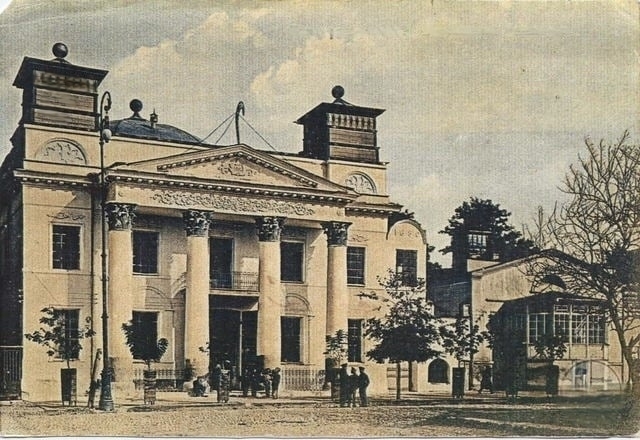
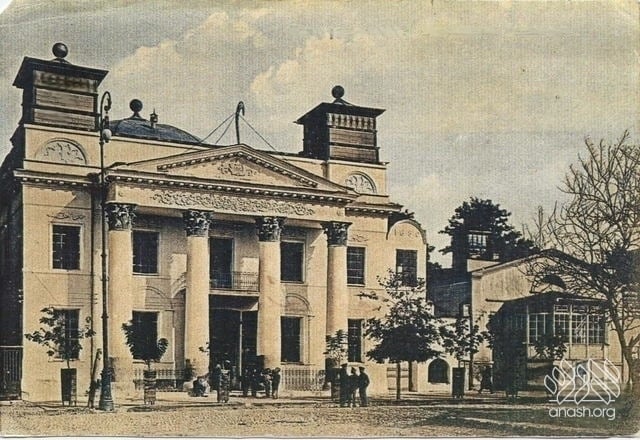
The Great Synagogue in Yekaterinoslav
All of this turmoil stems from the need to appoint a second rov in place of the one who passed away this past winter. In Yekaterinoslav, there have always been two rabbonim: a chief rabbi for the city center, and another for the “factories.”
Fairness dictates that the rov should be chosen by the city administration, which includes the Jewish representatives from all parts of the city, including the factory districts. Had things proceeded this way, there would have been no dispute.
But the Lubavitcher chasidim—though they are few in number, joined by a handful of prominent lumber merchants—refuse to rely on the judgment of the city administration. They insist on having a rov like the one who passed away: a Lubavitcher chasid. Without much effort, they indeed found the rabbi they wanted. He arrived here and has remained, waiting until he can secure the local rabbonus.
The protests published by the city administration in the local newspaper against his settling here have made no impression on him.
The city administration put forward as its candidate the rov of Tarashcha, Harav Gelman—a man who is both a great lamdan and a well-educated person, and a good speaker as well. At the same time, they also included the “arriving” rabbi as a candidate, despite the fact that he had only a very small number of supporters among the city’s leaders.
It was decided that whichever of the two candidates found greater support would be chosen as rov. The result of this rabbinic contest was that Gelman was selected. But the chasidim were not moved by this outcome and went their own way: they issued their rov a ksav rabbonus and went from house to house collecting signatures, spreading the word that their candidate was already the rov, and that all that remained was to secure the necessary financial support for him.
How this dispute will ultimately end—no one can say.
The Settlement
After a few months of intense communal fighting, a settlement was reached whereby Harav Gelman served as rov in the Dnieper river district, where Harav Bere Volf had served previously, and Harav Levi Yitzchak served as rov in the new district of the city, where Harav Eliyahu Shmuel Levin had previously served (see Sefer Yekatrinoslav-Dnepropetrovsk).
But this settlement didn’t put the dispute completely to rest. A few years later, on erev Pesach 5673, the chief rabbi of Yekatrinoslav, Harav Binyamin Zakheim, passed away. Over the course of the following year, a comprehensive settlement of the Yekatrinoslav rabbonus situation was reached. Harav Gelman moved to the city center, taking Harav Zakheim’s place. Harav Levi Yitzchak now moved to the Dnieper River district, finally taking the place of Harav Bere Volf, as the chasidim had desired from the outset. Additional rabbonim were also appointed to serve as morei tzedek in the city’s various suburbs.
The frumHamodia newspaper (1 Adar 5674 – February 27, 1914) reported on the settlement, including background about the dispute. Written by Baruch Mordechai Hakohen Tzerniak, previously the founding editor of Hamoriah newspaper in Yerushalayim, this report finally gives us the perspective of the frum camp on the entire affair.
Yekaterinoslav.
Great turmoil prevailed here over the past five years surrounding the election of rabbonim. Quarrels and clashes between people, resentment and rivalry among various factions and groups, differences of opinion and discord came to the fore day after day, at every opportunity, in the many gatherings and in the ongoing meetings of the “Council of Representatives from all the Shuls.” Whenever two or three people came together, the “question of the rabbonus” was on their lips. It became the constant subject of discussion and debate for all the residents of our city, across every faction and group, at home and in public.
Since the passing of the local rov, the gaon and distinguished chasid, Harav Dov Zev Kozevnikov זצ”ל, and especially after the passing of the Av Beis Din of our city, the renowned gaon, Harav Binyamin Zev Zakheim זללה”ה, the issue of the rabbonus here became a serious point of contention.
Now, however, thanks to Hashem, the Adon Hashalom, this highly complex matter has been fully resolved, and everything has settled in place peacefully.
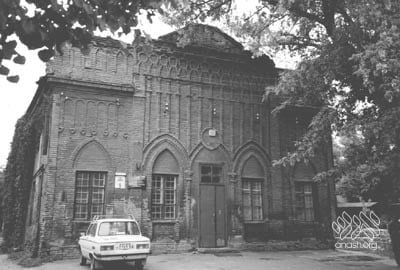
Harav Levi Yitzchak’s shul in Yekatrinoslav, on 9 Mironova St.
In the days of old, every community in every place that needed a rov or moreh horaah would select from among their own several talmidei chachamim, upstanding men of integrity, yerei shamayim and shomrei mitzvos, individuals truly qualified for the task. They would empower these representatives to deal exclusively with this matter, which is of the greatest importance for Yiddishkeit.
These select individuals, guided by the purity of their hearts and the clarity of their judgment, would choose a rov for the community. Thus, there was no room for strife or quarrel, no disputes or discord—no breach and no outcry, only quiet, tranquility, and blessing.
But in our time, to our great sorrow, we have seen everything turned on its head. Especially in the cities of the south of our land, there are many “modernist” communal activists who have violated Hashem’s Torah and do not keep His mitzvos. They scorn everything precious to the Jewish people and treat the sacred matters of our people with mockery.
These men, raised without Torah and without wisdom, tread with arrogant pride upon the heads of their community. They push themselves to the forefront of every communal institution and even mix their hands into the selection of religious rabbonim, even though the source of those rabbonim’s salaries and income is, as is well known, the “meat tax fund,” into which not a single coin is ever contributed by these “activists” and “leaders” of the community, who, for the most part, eat only non-kosher meat, rachmana litzlan.
And so too in our own city, with its large Jewish population (kein yirbu): the matter of electing rabbonim has been in such an abnormal state over the past five years, to our shame and frustration.
It is only now, with thanks to Hashem, that an end has finally come to all the unseemly and deeply unpleasant conflicts in our city. The “question of the rabbonus,” which had been so deeply entangled, has now been resolved peacefully.
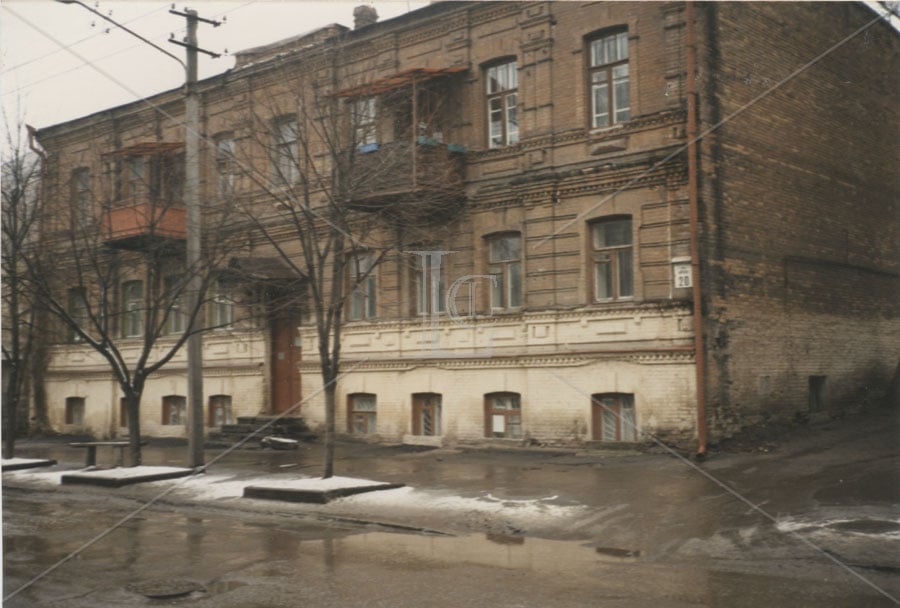
The home of Harav Levi Yitzchak in Yekatrinoslav. Library of Agudas Chassidei Chabad.
It was decided not to appoint a new Av Beis Din in place of the late gaon, Harav Binyamin Zev ז״ל. Instead, the rabbinic leadership of the city now rests with two rabbonim: Harav hagaon hachasid R. Levi Yitzchak Schneerson and the renowned gaon, Harav Pinchas Gelman. Three dayanim and morei tzedek were also appointed: Rabbi N. [Nachum] Gurevitch, Rabbi Y. [Yaakov Gershon] Akoshkin, and Rabbi H. Galatz—may they all be blessed with long and good years.
The salary allotted to these three newly appointed morei tzedek is, to our sorrow and shame, very small. A sacred responsibility rests upon our leaders and communal activists to address this issue and provide for their livelihoods. It should not be difficult to secure a proper source of income so that these rabbonim can live with dignity, bringing peace to the Jewish people and honor to their Torah.
Thus, peace finally came to Yekatrinoslav, with Harav Levi Yitzchak occupying his place as the chasidishe rov of the city. In 5681, Harav Gelman passed away at the young age of 40. Harav Levi Yitzchak moved to the city center to fill his place and, from that point on, served as the sole, universally recognized rov of Yekatrinoslav.
Mesiras Nefesh under the Soviets
Harav Levi Yitzchak’s final residence in Yekatrinoslav, from where he was arrested in 5699. Library of Agudas Chassidei Chabad.
Our next article comes from deep in the Soviet era of persecution, in 5694. In Toldos Levi Yitzchak (vol. 1, p. 270), a quote from a letter by Harav Yaakov Zechariah Maskaliker is published, mentioning a visit by Harav Levi Yitzchak to Moscow in 5694 to appeal to the government after the authorities in Yekatrinoslav closed the city’s shuls.
The following article, published in the Haaretz newspaper in Eretz Yisrael on 5 Tammuz 5694 (June 18, 1934), gives us a detailed report of Harav Levi Yitzchak’s trip and reproduces his written appeal to the central government on behalf of the Jews of Yekatrinoslav.
Synagogues Are Once Again Being Closed in Russia
A new wave of shul closures has recently swept through several cities in Soviet Russia with significant Jewish populations. Shuls have been shut down in Odessa, Baku, Kiev, Dnepropetrovsk, and elsewhere. This has not come as a decree by the central authorities, but rather as an order of the local governments.
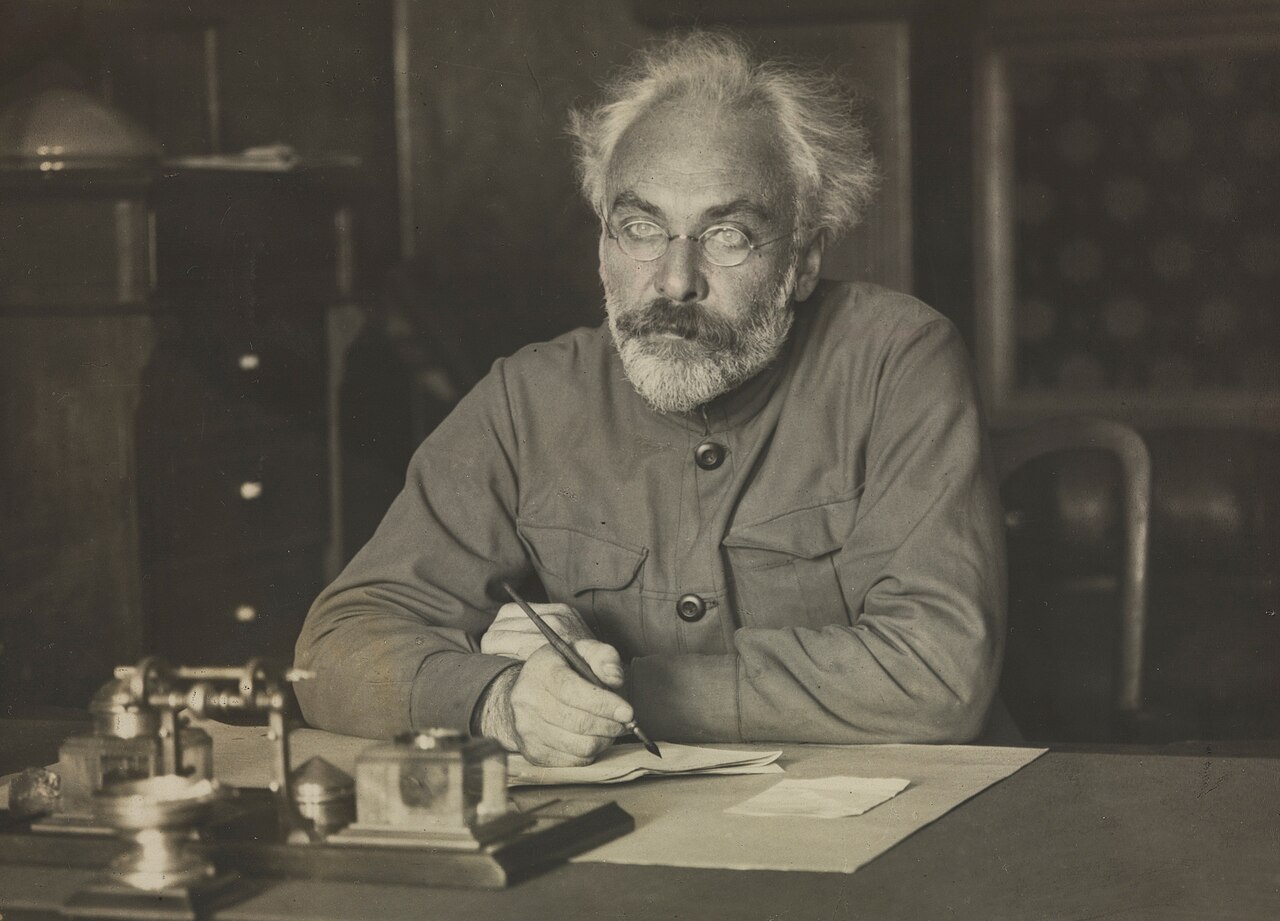
Pyotr Smidovich (1873-1935)
In response to the closure of three shuls in Dnepropetrovsk, representatives of the religious Jewish community traveled to Moscow. They were the rabbi of Dnepropetrovsk, Harav Leib [sic] Schneerson, and Aharon Liachov. They submitted a formal statement to Smidovich, a member of the presidium of VTsIK [All-Russian Central Executive Committee] and chairman of the Standing Commission on Cults, drawing his attention to the actions of the local authorities concerning the Jewish religion.
“In Dnepropetrovsk,” the statement says, “more than one hundred thousand Jews reside. We estimate the number of Jews who attend shul for davening at 10,000, at least. In the past, there were forty-five shuls in the city. One by one, they were gradually closed, until only eight remained. Last summer, the two largest and finest shuls were taken. The six remaining shuls—most of them located in the suburbs—accommodate only a small number of mispalelim. In April, three more shuls were taken, leaving only three small shuls, capable of holding no more than seven hundred mispalelim. Moreover, these are situated on the outskirts of the city, and the elderly are unable to reach them.
“With the seizure of these three synagogues (‘Beis HaMedrash HaYashan,’ ‘Har HaNegev,’ and ‘Beis Shmuel’), the Jewish population of Dnepropetrovsk has been deprived of the ability to conduct its tefilos,” the petition to Smidovich continues. “This stands in contradiction to the Soviet constitution, which guarantees freedom of religious worship.”
“The hearts of the religious Jews of Dnepropetrovsk are deeply shaken,” the petition concludes. “Our spirits are heavy, for we have been stripped of our great right: to observe our religion.” The representatives express their hope that they will find justice and fairness with the higher authorities of the Soviet Union.
Harav Levi Yitzchak, pictured during his exile in Kazakhstan.
Albert Fuchs, an unofficial representative of the Jewish community in Moscow, also appealed to Smidovich regarding this matter.
According to reports, Smidovich sent a telegram to the local authorities instructing them to halt the closure of synagogues until an investigation could be conducted to determine whether the synagogues had indeed been closed in accordance with the law, that is, with the consent of the believers themselves.
This article gives us a new glimpse into Harav Levi Yitzchak’s incredible mesiras nefesh under Soviet rule, mesiras nefesh that later cost him his freedom, and ultimately, his life.
זכר צדיק וקדוש לברכה, זכותו יגן עלינו.
To view all installments of From the Margins of Chabad History, click here.
For additional exclusive content, follow the column on X: x.com/ChabadMargins
COMMENTS
We appreciate your feedback. If you have any additional information to contribute to this article, it will be added below.
Newspapers Report the Leadership and Sacrifice of Harav Levi Yitzchak
In honor of 18 Nissan, 148 years from the birth of Harav Levi Yitzchak Schneerson, the Rebbe’s father, From the Margins of Chabad History presents a series of newspaper articles about his appointment as rov of Yekatrinoslav and his mesiras nefesh under Soviet rule.
By Anash
Introduction
18 Nissan marks 148 years from the birth of Harav Levi Yitzchak Schneerson, the Rebbe’s father, in 5638. The same day is also the 124th anniversary of the bris of his son, the Rebbe. In honor of the occasion, the present installment From the Margins of Chabad History presents new information about his appointment as rov of Yekatrinoslav in 5668 and his mesiras nefesh fighting to preserve Yiddishkeit under Soviet rule.
After their marriage in 5660, Harav Levi Yitzchak and Rebbetzin Chana lived in Nikolayev, where Rebbetzin Chana’s father, Harav Meir Shlomo Yanovsky, served as the rov. It was here that their three sons were born, and where the Rebbe’s bris was held on 18 Nissan 5602, Harav Levi Yitzchak’s 24th birthday.
Harav Bere Volf Kozevnikov (c. 5598-5668)
In 5668, the nearby city Yekatrinoslav (now Dnipro, Ukraine) was in a rabbinic crisis. The city had long been served by an Av Beis Din, Harav Binyamin Zev Zakheim (c. 1840-1913), and a chasidishe rov, Harav Dov Zev (Bere Volf) Kozevnikov, a chasid of the Tzemach Tzedek, Rebbe Maharash, and Rebbe Rashab, and a close talmid of Harav Hillel Paritcher. Harav Zakheim served as rov in the old city center, while R. Bere Volf served in the neighborhood on the bank of the Dnieper River. Two other rabbonim, Harav Eliyahu Shmuel Levin and Harav Baruch Zaslovsky, served as morei tzedek in newer neighborhoods of the rapidly growing industrial hub.
On 27 Teves 5668, the chasidishe rov Harav Bere Volf passed away. A few weeks later, shortly before Pesach, Harav Baruch Zaslovsky passed away as well. When Harav Eliyahu Shmuel Levin suddenly fell ill and passed away on 27 Iyar of the same year, the city was plunged into a crisis of rabbinic leadership. The only remaining rov was Harav Zakheim, and he was already elderly and weak.
It was clear that a new rov was needed. For the chasidim of Yekatrinoslav, it was also clear that the new rov needed to be a chasid, like R. Bere Volf, whose place he would be filling. This has been the arrangement in the city: a non-chasidishe rov and a chasidishe rov. But the booming city of Yekatrinoslav was now dominated by modern secular and Zionist elements, and they had other ideas.
The Dispute Over the Rabbonus of Yekatrinoslav
Harav Binyamin Zakheim’s seal and signature on a document.
The story of the dispute over the Yekatrinoslav rabbonus and the eventual appointment of Harav Levi Yitzchak as the chief rabbi of the city is surveyed in Sefer Yekatrinoslav-Dnepropetrovsk (pp. 113-119) and Toldos Levi Yitzchak (vol. 1, pp. 128-153). In the present article, we present a series of contemporary newspaper reports that complete the picture, adding new information.
Our first report of tensions in Yekatrinoslav over the rabbonus comes from the Vilna-based Hebrew-language Hazeman newspaper of 4 Elul 5668 (August 31, 1908). This was a modern secular newspaper, so its report naturally favors this side of the dispute, but it still gives a good picture of the background.
Yekatrinoslav:
Following the period of the Revolution, a new interest arose in our city regarding internal community life. Everyone felt the need for a central body to conduct all the affairs of the Jewish community, which had been in a state of terrible neglect.
Such a body—more or less suited to this purpose—took shape in the form of representatives from the various shuls. There are 110 representatives in total, and they selected a committee from among themselves to administer all communal affairs. Whenever an important communal issue arises, the committee convenes all the representatives, and decisions are made by majority vote.
At present, the question of the rabbonus is on the agenda, the resolution of which is of great importance to us.
Sergei Pallei (d. 5678)
Regarding this question, there are two opposing views among the members of the committee. One group argues that the rov is the symbol of Yiddishkeit, and he must therefore be a yerei shamayim, a lamdan, a man cloistered in the realm of halachah. The other group, by contrast, demands that the rov must be a man of his time, engaged in contemporary life, a person with an impressive personality whose presence will be felt in the life of the community.
The first group, who are the minority, have put forward the rov from of Nikolayev, Mr. Schneerson, as their candidate. This side includes the chasidim, along with some members of the intelligentsia. The majority, however, who follow the second view, support the candidacy of the rov of Tarashcha, Mr. Pinchas Hillman. The good reputation this esteemed rov earned in the Kiev district during his tenure in Tarashcha has become known in our city as well, and our community has found in him the rov it desires.
So what did the chasidim do? They rose and appointed Mr. Schneerson as rov on their own initiative. They rented him a residence and sent to bring his family here.
Now the question of the rabbinate has grown even more charged, and a fierce dispute has broken out in the city.
Ben Menachem.
This article draws the battle lines between the chasidishe and the modern camp. Interestingly, it notes that some of the modern intelligentsia actually support the chasidishe candidate, Harav Levi Yitzchak. This appears to reflect the support of the local secular Zionist leader, Sergei Pallei, for Harav Levi Yitzchak, after he met with him personally and was deeply impressed. Rebbetzin Chana relates the story of this meeting and Pallei’s support for Harav Levi Yitzchak in her diary (Part 30).
But even with Pallei’s support, the chasidim were in the minority. The largely secular community representative body convened and elected Harav Pinchas Gelman (also spelled alternatively as Hilman or Helman) as the rov of the Dnieper river district, in place of Harav Bere Volf.
Hazeman newspaper reported on the election, a week after their original article (11 Elul 5668 – September 7, 1908).
Yekatrinoslav
Harav Levi Yitzchak, pictured after his arrest in 5699.
At last, after the many disputes and clashes stirred up by the question of the rabbonus in our city, Harav Pinchas Hillman—formerly the rabbi of Tarashcha in the Kiev district—was elected, almost unanimously.
The supporters of Harav Schneerson employed various means to win the favor of the public, but all their efforts came to nothing. They even tried to publish a notice that Harav Schneerson would be arriving here with his family to settle, hoping thereby to establish a chazakah, but this attempt, too, did not succeed. The heart of the community was drawn instead to Harav Hillman, the gifted orator.
The election of this rov is certain to have a significant impact on the course of communal life in our city. The authority of the religious rov here is exceptionally strong, and Harav Hillman has a reputation as an energetic communal activist. There is broad scope of opportunity for meaningful communal and national work in Yekaterinoslav, where the community is in need of activists and organizers for communal affairs and its public institutions.
But in reality, the dispute was far from over. The chasidim did not accept the authority of the largely secular community council to decide who the rov should be. And the election itself was hardly free and fair. Rebbetzin Chanah relates the story in her memoirs (Part 31):
At first the opponents thought that since my husband was a young man, only 30 years of age, and was also a Chasid—belonging to a group they held in very low regard—only a few old Jews would support him and that would be all. But the attitude towards him improved by the day, and people of all backgrounds began to come over to him.
A letter written by Harav Pinchas Gelman (5641-5681).
In order to prevent this movement in favor of my husband from becoming too influential, the opponents immediately called a meeting at the building of the “Upravver” (Jewish community council), as it was then called. The initiative for the meeting came from the more powerful camp noted above. Police were stationed at the door, admitting only a very limited number of people, mainly from the opposing camp. Accordingly, decisions were taken that were not entirely to Schneerson’s benefit.
On the morning following the meeting, young people walked around the streets dressed in the party uniforms of the era—black shirts with leather belts—showing their lack of any connection with Orthodox Jewish life. Their faces reflected their sense of triumph, giving them great cause for rejoicing.
Another newspaper report about the Yekatrinoslav rabbonus dispute appeared in the Yiddish-language Forverts newspaper. This New York-based secular newspaper had a column titled “What’s news back home? Tragic and comic news from your shtetl,” keeping the Jewish immigrants to America informed about news from their old hometowns in Eastern Europe.
An article in the September 30, 1908 issue of the newspaper surveyed the dispute, from a decidedly secular perspective.
In Yekatrinoslav: A dispute over a rov
For several months now, there has been an uproar and commotion among the Jewish population of Yekaterinoslav, and a deep agitation among the city’s Jewish leadership. Large assemblies are held very often, where shouts and yells are heard.
The minds of the communal leaders have become so consumed by this matter that they have ceased to take any interest in the communal institutions. They have even abandoned the Jewish hospital, which now remains almost entirely without supervision.
The Great Synagogue in Yekaterinoslav
All of this turmoil stems from the need to appoint a second rov in place of the one who passed away this past winter. In Yekaterinoslav, there have always been two rabbonim: a chief rabbi for the city center, and another for the “factories.”
Fairness dictates that the rov should be chosen by the city administration, which includes the Jewish representatives from all parts of the city, including the factory districts. Had things proceeded this way, there would have been no dispute.
But the Lubavitcher chasidim—though they are few in number, joined by a handful of prominent lumber merchants—refuse to rely on the judgment of the city administration. They insist on having a rov like the one who passed away: a Lubavitcher chasid. Without much effort, they indeed found the rabbi they wanted. He arrived here and has remained, waiting until he can secure the local rabbonus.
The protests published by the city administration in the local newspaper against his settling here have made no impression on him.
The city administration put forward as its candidate the rov of Tarashcha, Harav Gelman—a man who is both a great lamdan and a well-educated person, and a good speaker as well. At the same time, they also included the “arriving” rabbi as a candidate, despite the fact that he had only a very small number of supporters among the city’s leaders.
It was decided that whichever of the two candidates found greater support would be chosen as rov. The result of this rabbinic contest was that Gelman was selected. But the chasidim were not moved by this outcome and went their own way: they issued their rov a ksav rabbonus and went from house to house collecting signatures, spreading the word that their candidate was already the rov, and that all that remained was to secure the necessary financial support for him.
How this dispute will ultimately end—no one can say.
The Settlement
After a few months of intense communal fighting, a settlement was reached whereby Harav Gelman served as rov in the Dnieper river district, where Harav Bere Volf had served previously, and Harav Levi Yitzchak served as rov in the new district of the city, where Harav Eliyahu Shmuel Levin had previously served (see Sefer Yekatrinoslav-Dnepropetrovsk).
But this settlement didn’t put the dispute completely to rest. A few years later, on erev Pesach 5673, the chief rabbi of Yekatrinoslav, Harav Binyamin Zakheim, passed away. Over the course of the following year, a comprehensive settlement of the Yekatrinoslav rabbonus situation was reached. Harav Gelman moved to the city center, taking Harav Zakheim’s place. Harav Levi Yitzchak now moved to the Dnieper River district, finally taking the place of Harav Bere Volf, as the chasidim had desired from the outset. Additional rabbonim were also appointed to serve as morei tzedek in the city’s various suburbs.
The frumHamodia newspaper (1 Adar 5674 – February 27, 1914) reported on the settlement, including background about the dispute. Written by Baruch Mordechai Hakohen Tzerniak, previously the founding editor of Hamoriah newspaper in Yerushalayim, this report finally gives us the perspective of the frum camp on the entire affair.
Yekaterinoslav.
Great turmoil prevailed here over the past five years surrounding the election of rabbonim. Quarrels and clashes between people, resentment and rivalry among various factions and groups, differences of opinion and discord came to the fore day after day, at every opportunity, in the many gatherings and in the ongoing meetings of the “Council of Representatives from all the Shuls.” Whenever two or three people came together, the “question of the rabbonus” was on their lips. It became the constant subject of discussion and debate for all the residents of our city, across every faction and group, at home and in public.
Since the passing of the local rov, the gaon and distinguished chasid, Harav Dov Zev Kozevnikov זצ”ל, and especially after the passing of the Av Beis Din of our city, the renowned gaon, Harav Binyamin Zev Zakheim זללה”ה, the issue of the rabbonus here became a serious point of contention.
Now, however, thanks to Hashem, the Adon Hashalom, this highly complex matter has been fully resolved, and everything has settled in place peacefully.
Harav Levi Yitzchak’s shul in Yekatrinoslav, on 9 Mironova St.
In the days of old, every community in every place that needed a rov or moreh horaah would select from among their own several talmidei chachamim, upstanding men of integrity, yerei shamayim and shomrei mitzvos, individuals truly qualified for the task. They would empower these representatives to deal exclusively with this matter, which is of the greatest importance for Yiddishkeit.
These select individuals, guided by the purity of their hearts and the clarity of their judgment, would choose a rov for the community. Thus, there was no room for strife or quarrel, no disputes or discord—no breach and no outcry, only quiet, tranquility, and blessing.
But in our time, to our great sorrow, we have seen everything turned on its head. Especially in the cities of the south of our land, there are many “modernist” communal activists who have violated Hashem’s Torah and do not keep His mitzvos. They scorn everything precious to the Jewish people and treat the sacred matters of our people with mockery.
These men, raised without Torah and without wisdom, tread with arrogant pride upon the heads of their community. They push themselves to the forefront of every communal institution and even mix their hands into the selection of religious rabbonim, even though the source of those rabbonim’s salaries and income is, as is well known, the “meat tax fund,” into which not a single coin is ever contributed by these “activists” and “leaders” of the community, who, for the most part, eat only non-kosher meat, rachmana litzlan.
And so too in our own city, with its large Jewish population (kein yirbu): the matter of electing rabbonim has been in such an abnormal state over the past five years, to our shame and frustration.
It is only now, with thanks to Hashem, that an end has finally come to all the unseemly and deeply unpleasant conflicts in our city. The “question of the rabbonus,” which had been so deeply entangled, has now been resolved peacefully.
The home of Harav Levi Yitzchak in Yekatrinoslav. Library of Agudas Chassidei Chabad.
It was decided not to appoint a new Av Beis Din in place of the late gaon, Harav Binyamin Zev ז״ל. Instead, the rabbinic leadership of the city now rests with two rabbonim: Harav hagaon hachasid R. Levi Yitzchak Schneerson and the renowned gaon, Harav Pinchas Gelman. Three dayanim and morei tzedek were also appointed: Rabbi N. [Nachum] Gurevitch, Rabbi Y. [Yaakov Gershon] Akoshkin, and Rabbi H. Galatz—may they all be blessed with long and good years.
The salary allotted to these three newly appointed morei tzedek is, to our sorrow and shame, very small. A sacred responsibility rests upon our leaders and communal activists to address this issue and provide for their livelihoods. It should not be difficult to secure a proper source of income so that these rabbonim can live with dignity, bringing peace to the Jewish people and honor to their Torah.
Thus, peace finally came to Yekatrinoslav, with Harav Levi Yitzchak occupying his place as the chasidishe rov of the city. In 5681, Harav Gelman passed away at the young age of 40. Harav Levi Yitzchak moved to the city center to fill his place and, from that point on, served as the sole, universally recognized rov of Yekatrinoslav.
Mesiras Nefesh under the Soviets
Harav Levi Yitzchak’s final residence in Yekatrinoslav, from where he was arrested in 5699. Library of Agudas Chassidei Chabad.
Our next article comes from deep in the Soviet era of persecution, in 5694. In Toldos Levi Yitzchak (vol. 1, p. 270), a quote from a letter by Harav Yaakov Zechariah Maskaliker is published, mentioning a visit by Harav Levi Yitzchak to Moscow in 5694 to appeal to the government after the authorities in Yekatrinoslav closed the city’s shuls.
The following article, published in the Haaretz newspaper in Eretz Yisrael on 5 Tammuz 5694 (June 18, 1934), gives us a detailed report of Harav Levi Yitzchak’s trip and reproduces his written appeal to the central government on behalf of the Jews of Yekatrinoslav.
Synagogues Are Once Again Being Closed in Russia
A new wave of shul closures has recently swept through several cities in Soviet Russia with significant Jewish populations. Shuls have been shut down in Odessa, Baku, Kiev, Dnepropetrovsk, and elsewhere. This has not come as a decree by the central authorities, but rather as an order of the local governments.
Pyotr Smidovich (1873-1935)
In response to the closure of three shuls in Dnepropetrovsk, representatives of the religious Jewish community traveled to Moscow. They were the rabbi of Dnepropetrovsk, Harav Leib [sic] Schneerson, and Aharon Liachov. They submitted a formal statement to Smidovich, a member of the presidium of VTsIK [All-Russian Central Executive Committee] and chairman of the Standing Commission on Cults, drawing his attention to the actions of the local authorities concerning the Jewish religion.
“In Dnepropetrovsk,” the statement says, “more than one hundred thousand Jews reside. We estimate the number of Jews who attend shul for davening at 10,000, at least. In the past, there were forty-five shuls in the city. One by one, they were gradually closed, until only eight remained. Last summer, the two largest and finest shuls were taken. The six remaining shuls—most of them located in the suburbs—accommodate only a small number of mispalelim. In April, three more shuls were taken, leaving only three small shuls, capable of holding no more than seven hundred mispalelim. Moreover, these are situated on the outskirts of the city, and the elderly are unable to reach them.
“With the seizure of these three synagogues (‘Beis HaMedrash HaYashan,’ ‘Har HaNegev,’ and ‘Beis Shmuel’), the Jewish population of Dnepropetrovsk has been deprived of the ability to conduct its tefilos,” the petition to Smidovich continues. “This stands in contradiction to the Soviet constitution, which guarantees freedom of religious worship.”
“The hearts of the religious Jews of Dnepropetrovsk are deeply shaken,” the petition concludes. “Our spirits are heavy, for we have been stripped of our great right: to observe our religion.” The representatives express their hope that they will find justice and fairness with the higher authorities of the Soviet Union.
Harav Levi Yitzchak, pictured during his exile in Kazakhstan.
Albert Fuchs, an unofficial representative of the Jewish community in Moscow, also appealed to Smidovich regarding this matter.
According to reports, Smidovich sent a telegram to the local authorities instructing them to halt the closure of synagogues until an investigation could be conducted to determine whether the synagogues had indeed been closed in accordance with the law, that is, with the consent of the believers themselves.
This article gives us a new glimpse into Harav Levi Yitzchak’s incredible mesiras nefesh under Soviet rule, mesiras nefesh that later cost him his freedom, and ultimately, his life.
זכר צדיק וקדוש לברכה, זכותו יגן עלינו.
To view all installments of From the Margins of Chabad History, click here.
For additional exclusive content, follow the column on X: x.com/ChabadMargins








 COMMENTS


We appreciate your feedback. If you have any additional information to contribute to this article, it will be added below.