




ד׳ אב ה׳תשפ״ה | July 28, 2025
My Memories of Growing Up Near the Rebbe
Article by Rabbi Mendy Deitsch: “Having had the good fortune to grow up in Crown Heights, my friends and I have witnessed firsthand how the Rebbe transformed the world. Although I no longer live there, having gone on shlichus 27 years ago, the life experiences remain vivid, continually remembered, learned from, and lived by.”
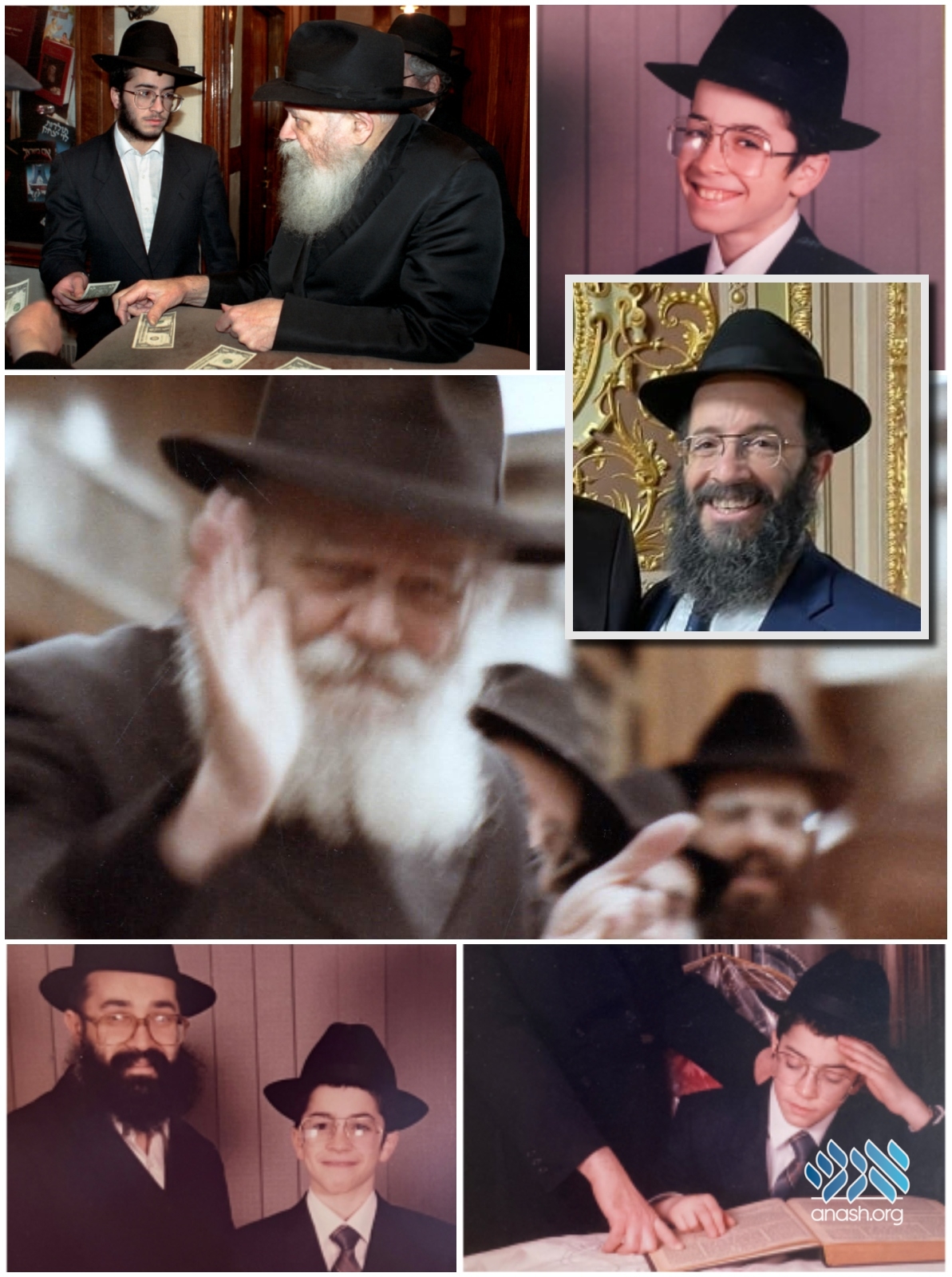
Article by Rabbi Mendy Deitsch: “Having had the good fortune to grow up in Crown Heights, my friends and I have witnessed firsthand how the Rebbe transformed the world. Although I no longer live there, having gone on shlichus 27 years ago, the life experiences remain vivid, continually remembered, learned from, and lived by.”
Rabbi Mendy Deitsch, shliach in Chandler, Arizona, shares his childhood memories of growing up in Crown Heights in the ‘70s and ‘80s
Having had the good fortune to grow up in Crown Heights, my friends and I have witnessed firsthand how the Rebbe transformed the world.
Although I no longer live there, having gone on shlichus 27 years ago, the life experiences remain vivid, continually remembered, learned from, and lived by. Overall, I consider our childhood blessed, beautiful, fortunate, gratifying, unique, and uplifting.
From the dedicated, intelligent, and interesting teachers who taught us in Oholei Torah, to the cast of characters who stood near us in shul and on the street—the extremely colorful characters who lined the sidewalks, the tzedakah collectors, even the pitiful drunks who sat on the sidewalk stumps—each one had an impact on how we experienced the world.
There was Leibel the boxer; we knew to get out of his way if we heard so much as the tiniest grumble from him. There was Yankel the cat guy who lived in a basement on Brooklyn Avenue; he tended to the cats and let them roam freely in and around the Skverer Mikvah.
Then there were the true heroes, who we were too young to appreciate then…
There was sweet Bubbe Maryasha¹ who was a fixture standing in front of 770 after farbrengens collecting money for one worthy cause or another. You mostly heard from her, “Tzedakah Oholei Torah, tzedakah Oholei Torah!” We were fortunate to grow up in a neighborhood with many special souls who survived the hellish nightmares of the Holocaust or the Siberian gulag, even though we took them for granted then.
Mr. and Mrs. Farkash from Singer’s grocery store—we would stand at the bus stop in the morning watching a customer take a bite out of a juicy sour tomato from the pickle barrel in front of the store. Mrs. Farkash would wrap those pickles or sour tomatoes in newspaper for our mothers to bring home before Shabbos. We would see or to be more precise stare at the numbers on the Farkashes’ arms as they reached in to grab the floating pickle. On a slow day they would share a little, very little, about their lives in the concentration camps.
Then there were the many incredible baalei teshuvah, newcomers who landed in this neighborhood from other backgrounds with nothing but a pintele Yid and the determination to learn to live as Yidden; they had the most to teach us, if we only stopped to look and listen and think about what we were seeing. But we were little boys then. We can do that thinking only now.
Oh, the pure joy we felt as children on cold, dark nights on the way home from school, stopping in to 770 (I must confess) not to daven or learn, but to take the candles used for davening and drop them into boiling hot cups of water and watch, mesmerized, as they melted, only to dip our fingers in them and wait for the wax to form around our burning hands and then pull off the wax now shaped as our fingers. I now wonder who cleaned up after us…
The Rebbe
It’s almost impossible to describe a specific moment with the Rebbe; it’s like asking someone to pinpoint the most precious breath of air they took on any given day. The Rebbe was our life; our schedule and conversation surrounded only the Rebbe; and 770 was our home base, our playground, and our go-to place for comfort and peace.
We lived and breathed the Rebbe.
Every week, it was pretty much a given that we kids of seven or eight years old returned home with torn pants from valgaring on the floor of 770; it was part of our life and daily routine.
I once told my mother that I could understand the narrative told by Reb Levi Yitzchok of Barditchev. Twice we were granted the Beis Hamikdash, and twice it was taken from us. Now, Hashem reveals it to us annually, preserving it for a time when we can maintain it permanently. Similarly, a Crown Heights mother buys her son a new suit twice and ultimately stores the third one in her closet until he matures, showing it to him once a year.
Sometimes, we saw the Rebbe as we walked home from school, either entering or exiting his car. Sometimes, we watched the Rebbe go into his office, occasionally receiving tzedakah from him to put into the large wooden pushka that hangs in the front hallway of 770. It was because of short kids like me who couldn’t reach the top slot that they made a lower slot in the pushka.
Friday night davening was a special treat. When many members of the local shuls left Crown Heights in the 1970s and moved to other neighborhoods, the neighborhood shuls almost didn’t have minyanim, and the Rebbe encouraged his chassidim to strengthen those shuls. At that point, my father, Reb Zalman Yuda Deitsch, a”h,² made a hachlatah to do as the Rebbe had asked, and he would daven Friday nights in the Skverer shtiebel on Kingston Avenue (where Mikvah Meir-Levy’s shul is today). Once we turned eight or nine years old, we got permission to daven in 770, while my father stayed with my younger brothers in the Skverer shtiebel.
770 In My Childhood
When we were kids in the ‘70s and ‘80s, we watched the Rebbe daven on a beautiful handcrafted Persian rug rolled out to the shtender with a special chair next to it.
The Vaad Hamesader would build a stage for the Rebbe only for Tishrei, and then it was removed. On a typical Friday night in those years, there was plenty of room to walk around and come and go from the front of 770 to the back.
In the later years, a table was placed to block the weekly overflow crowd from getting too close to the aron kodesh, but when we were kids, Lubavitch was smaller and there was no need for it.
We boys would stand right behind the Rebbe, often talking, and sometimes fighting, pushing, and shoving. There were probably 20 or 30 of us.
Only now as an adult do I realize how unusual it is for children to be up front in an adult venue like shul. In our society kids are relegated to the back if they’re invited at all. The Rebbe not just allowing but welcoming the children to daven with him in front is unique and illustrates how much he loved the children and the tremendous potential he saw in them.
When we davened, it was with chayus, looking in the siddur, singing or saying the words out loud. But we didn’t always behave the way we should have; after all, we were kids, and Oholeitoraniks³ on top of that.
Today, as I reflect on those moments, it surprises me that no one stopped us or attempted to correct our behavior in shul. The Rebbe stood there and lovingly encouraged us to continue davening and singing, and he completely ignored the childish behaviors. We felt how the Rebbe was encouraging us and helping us focus on who we really are, and that he recognized that the day would come when we would outgrow our immature conduct.
When Reb Sholom Ber Harlig, now a shliach in California, turned three, his grandfather, Reb Mordechai Harlig, took him to the Rebbe for upshern. The zaide asked the Rebbe to give the child a brachah. The Rebbe said, “Ich ken em, er davent mit mir,” because his father, Reb Meir Harlig, would bring the little boy to the Rebbe’s minchah every day.
We didn’t understand then what an honor we had, what a priceless gift; we were davening together with the Rebbe, just feet away from him, on the edge of the same carpet the Rebbe was standing on.
Tishrei in 770
Our family was zocheh to sit just eight rows behind the Rebbe for the Yamim Nora’im. From our seats we could see every movement and every tenuah of the Rebbe. We saw the Rebbe whisper to Reb Leibel Groner and Reb Binyomin Klein, his secretaries, to bring the brown bags with the panim and place them on the table to the Rebbe’s left. We saw the Rebbe come in carrying the shofros. We saw how he put his siddur on the shtender and lifted the Tehillim that was resting on top to begin Tehillim.
Everything about Rosh Hashanah and Yom Kippur in 770 was holy and intense. Often our hearts pounded. On those days we didn’t sit with friends; we sat with family.
Sometimes you could hear crying; other years not as much. Sometimes the Rebbe covered himself longer; other years not as long. We saw the Rebbe daven and saw him say the brachos before the tekios. We heard the Rebbe’s clear and powerful voice. We saw the Rebbe gently lift the shofar to his lips. We stood in reverence as he blew tekiah, shevarim, teruah.
While we were close, we weren’t as close as the people who were part of “the washing machine.” I remember one year, my cousin Shoki Deitsch, who is a bit older than I am, told his brothers he wanted to be even closer. Instead of squeezing onto the bench, he jumped into the middle of the “washing machine” to see it, to hear it, and to feel it. That was amazing to me. The mesiras nefesh to get even a few feet closer to the Rebbe.
You can stand far away and still see it, hear it, and feel it. You sweat. You participate. But sometimes you want to be inside. Not watching. In it. You want to experience it with your hands, your feet, your breath, your entire body. You want to be moved from one place to another and then be moved back to where you started, and not know how it happened. Your feet are on the ground but you are suspended in the air because of the force of the people around you. That type of experience doesn’t leave you. It goes deep into your soul.
We felt that the Rebbe’s gaze reached deep into our core. We felt uplifted. We felt that Hashem heard our tefillos, and we were ready for a new year.
Because of where we sat, we were also close to the bimah where the tekios took place. We could see and hear each movement. The Rebbe would receive the bags of panim and place them down. He would cover his head and the bags with his talis as he said the brachos. It made us tremble.
It was humbling to witness the Rebbe doing koirim. So fast. Falling to the ground and standing up. In later years, we saw Rabbi Groner place a chair beside the Rebbe for support as he stood up.
Only after the Rebbe completed his koirim did the crowd miraculously create space so everyone else in the packed shul could do theirs. Our family had a whole bench: Reb Dovid Deitsch and his sons and grandsons, Reb Mordechai Rivkin (whose wife is a Deitsch), and my father with us boys. We crammed in four or five people to a single spot. It worked.
How it felt to sit on the back of the bench, machzor in hand, while the person in front leaned his machzor on your back and someone behind you perched on your bench leaning over you. It felt like family. Closeness. Achdus.
I remember the fiery tefillos of Reb Eliyahu Moshe Liss, a”h, a Russian chossid who survived the gulag. He said every word slowly and carefully. We could feel the energy coming from his hunched back. We could feel the intensity with which he davened. It was a fire that couldn’t be put out.
Tzivos Hashem and Children’s Rallies
We were the generation of children who experienced the launch of Tzivos Hashem. The Rebbe established the army of Hashem and declared that it is made up of children. Every sicha, every mission, every instruction that the soldiers of Tzivos Hashem hear today was told to us at rallies in 770.
There were many rallies throughout the year, and each time, the Rebbe came down and spent over two hours with us children. Two hours. Each time.
The Rebbe, who had to learn, daven, answer letters, guide mosdos, visit the Ohel, spend time with the Rebbetzin, and fulfill countless other responsibilities, saw no greater priority than the time he spent with children under bar and bas mitzvah.
These weren’t rare occurrences. They happened eight or nine times a year. Before Yom Tov, after Yom Tov, yemei depagra, before and after camp, and even during a regular day in Cheshvan. The Rebbe came down to daven minchah with us. He listened to us say Ashrei and Aleinu, heard us say Amein yehei shmei rabbah aloud, heard us say the 12 pesukim, and even stood there as we sang our camp songs.
The Rebbe clapped for us when the winners of the contests were announced. Then, in a clear and powerful voice, the Rebbe addressed us directly. The Rebbe gave us missions. He made us soldiers. Soldiers who must conquer their yetzer hara. Soldiers who must bring Moshiach.
We weren’t dismissed. We weren’t ignored. We were spoken to. Clearly and directly. Even when we misbehaved. Even when we fidgeted. The Rebbe kept talking to us.
He spoke to our hearts. And more than anything, he spoke to our neshamos.
Looking back, it’s painful to remember how we played and whispered while the Rebbe spoke. But the Rebbe knew better. He knew our neshamos were listening. And today, we learn those sichos. We study the Rebbe’s words. And we try to fulfill the Rebbe’s directives to the children of that time—and of all time.
He wasn’t just speaking to the children in 770. He was speaking to the adults they would become.
We didn’t appreciate it then. But the Rebbe kept giving us more. More time. More energy. More love. He stood and gave us dimes. Sometimes one. Sometimes two. Sometimes three. The Rebbe once explained why. One for tzedakah and one for us to spend. He wanted us to learn to give tzedakah, but he also wanted us to have something for ourselves.
Sometimes the Rebbe gave them through the counselors and teachers. Sometimes he gave them directly. Each child passed by the Rebbe and received the coin from the Rebbe’s holy hand.
And if you stood by the shvil during davening, there was a good chance the Rebbe would give you coins as he walked in or out.
Simchas Torah 5741 (1980)
It was the year the Rebbe founded Tzivos Hashem. 770 was packed from wall to wall and floor to ceiling. My father, Reb Zalman Yuda Deitsch, managed to squeeze into his place with five little boys. That year, my brothers and I all came along.
I was sitting on my father’s shoulders during hakafos. Suddenly, I felt myself being lifted and passed over the heads of the chassidim. One person lifted me and handed me to another until I found myself standing right near the Rebbe. Other children were passed along in the same way. The Rebbe held the special Sefer Torah and smiled at us.
We waited in the center of the shul until all the children had arrived. The singing began. First soft. Then louder. The hakafos niggun, maybe it was Reb Levik’s Niggun, grew louder and more joyful.
And then the Rebbe began to dance. With us. Up and down. Up and down. The Rebbe danced with us children!
It’s astounding to think that the Rebbe wanted to dance with us—not with the eltere chassidim, not with the baalei mesiras nefesh, but with the children!
What a zechus.
How can we ever repay the Rebbe for the time he gave us? For the attention he showered upon us?
Maybe we just need to get up and dance more. As we danced then. Until we bring Moshiach.
Singing for the Rebbe
Late at night, we were brought into 770, wearing our matching red choir vests. We were kids, eight or nine years old. We sang for the Rebbe. Niggunim. Some in English. We were accompanied by the Piamentas.
I was the shortest, with the squeakiest voice, and I was chosen to say the pasuk “Torah Tzivah” and also “Yechi.” The choir repeated the words after me. The Rebbe was giving out Kos Shel Brachah.
At one point, the Rebbe put down the becher and began swinging his holy hand like a conductor.
After we finished, we went down. But the Rebbe called us back. He made sure that each of us received some Kos Shel Brachah.
The Rebbe wanted us to know how much our singing mattered. That we mattered.
Bachurim Years
As we grew older and became bachurim, we stayed the entire time for Kos Shel Brachah. Some years we sang the Rebbe’s niggunim from Tehillim. Other years we sang lebedike Lubavitcher niggunim. We stood and sang. We arrived before the Rebbe and left after the Rebbe.
We lived and breathed 770. As children. And as bachurim.
We stood near the Rebbe when he distributed dollars. We sang while the Rebbe gave out kuntrisim. We remained until the very end.
Pesach
After Chof Beis Shevat 5748 (1988), when the Rebbetzin was niftar, we didn’t know what the Rebbe would do for the Seder. We usually went to our grandparents in Springfield for Pesach, but that year, my brothers and I stayed home.
It was late into the night when the Rebbe came out the side door with a candle and a Haggadah for Shefoch Chamascha. There were only a few dozen bachurim there the first night.
The second night, word had spread. A much larger crowd came.
Tahaluchah
On Shavuos, after returning from Tahaluchah, we waited in front of the library for the crowd to return and for the Rebbe to come out.
We saw the Rebbetzin peek out from the front door of 770. Once. And then again. Soon after, the Rebbe came out.
Usually the mashbakim would notify the Rebbe when the crowd was back. But that time, they weren’t there. It seems that the Rebbetzin came to check. That Shavuos was the final Tahaluchah before Chof Beis Shevat. I can’t help but feel that the Rebbetzin was looking at her children—gathered together—for the last time b’alma dein.
On Shevi’i Shel Pesach, after Tahaluchah, the Rebbe came out to greet the returning chassidim. Suddenly, the Rebbe began a sicha. None of the chozrim were there. We young bachurim tried to remember the sicha.
Baruch Hashem, I was able to recall a few lines. I participated in the chazarah. Together, we pieced the sicha together.
Chof Av
Every year around this time, I feel deep gratitude to Harav Avraham Shemtov for taking us campers from Gan Yisroel Parksville to be with the Rebbe on Chof Av, the yahrzeit of Reb Levik, the Rebbe’s father.
This day—more than any other—was when the children felt closest to the Rebbe. The Rebbe encouraged us to sing our camp songs, to daven with camp energy.
Even during the farbrengen, the Rebbe gave special attention to the children. Despite it being his father’s yahrzeit, the Rebbe paid attention to us.
The best summers were when Chof Av was on Shabbos. We slept in Oholei Torah and spent the entire Shabbos in the Rebbe’s daled amos.
Even the Rebbe’s sichos were in simpler language, so we could understand them.
Maybe it sounds arrogant—but we felt, we knew—the Rebbe was speaking directly to us.
And he wanted us right beside him.
We watched. We listened. We learned.
Farbrengen
Living in Crown Heights allowed us to attend the Rebbe’s farbrengens—whether on Shabbos or a weekday. Our fathers brought us along. There was no fixed rule. Sometimes we sat with our fathers. Other times we played outside, or in the courtyard, or even on the street. But we always tried to stay inside for as long as we could—looking at the Rebbe, listening to the Rebbe.
The bribes helped. Dry kichlach in huge brown paper bags. But we were young—eight or nine years old, sometimes even younger. The kichlach only worked for so long.
Sometimes we made it through the first sicha. Sometimes we didn’t.
Often, we didn’t sit with our fathers. We sat on the floor—right under the long table where the Rebbe farbrenged. Right near the Rebbe’s feet. We could see the Rebbe’s gartel hanging over the side of the chair. We could see how the Rebbe arranged his kapota when he sat down.
We even saw the bends and creases in the Rebbe’s shoes.
And we felt every movement the Rebbe made.
It was terrifying to be so close when the Rebbe raised his voice to address a serious matter.
We watched the Rebbe’s hands under the table. Sometimes holding the tablecloth. Sometimes wrapping his holy hand in his handkerchief when saying a maamar.
The eltere chassidim kept us in line. They told us not to talk. Not to block the Rashag—Rabbi Shmaryahu Gourarie, the Rebbe’s brother-in-law—who sat right there. They reminded us to show proper kavod. We knew the Rebbe expected us to respect the Rashag. One time, some bachurim moved the Rashag’s chair—and the Rebbe reprimanded them for their disrespect.
During the singing, the Rebbe often motioned to us to sing louder. With more chayus. There are pictures and videos of weekday farbrengens—you can see us kids standing right near the Rebbe. Singing our hearts out.
Sometimes it got hard to sit squeezed together on the stage. Then we went down to the front of 770 and played kugelach. A weekday farbrengen started at 9:30 p.m. By 10:30 p.m., a ten-year-old could barely focus.
We understood Yiddish—at least conversational Yiddish—but the Rebbe’s pilpulim were hard for us to follow.
So we played.
Kugelach is a quiet game. The tiles in 770 were perfect for it. The little metal balls slid easily. They were easy to scoop up in one swift move.
Sometimes we got kicked out of wherever we were playing. We returned to our seats right away. Deep down, we knew we belonged by the farbrengen.
We stopped the game and went back. To be next to the Rebbe.
A Near Accident
One Shabbos afternoon, during a farbrengen, I was playing outside. Running up and down Eastern Parkway. For some reason I ran into the street.
Suddenly—screeching tires. WHAM!
A speeding car hit me. I flew through the air and landed face-down in the service lane of Eastern Parkway.
Hatzalah was called immediately. There was blood everywhere. They tried to put me in the ambulance. But for some reason, I refused to go.
Mrs. Roz Malamud—may she have a refuah sheleimah—lived a few doors down from 770. She was my mother’s close friend. When she heard the commotion and saw it was me—her friend’s son—she came running. I was brought into their home. Her son, Chesky Malamud, my friend, stayed with me.
Baruch Hashem, I only had some bruises and a few stitches. Nothing serious.
After that incident, the service lane was closed during davening and farbrengens in 770.
My Bar Mitzvah
I’ll finish with my bar mitzvah story.
My bar mitzvah was on Shabbos. According to minhag, a bar mitzvah bachur gets an aliyah either at minchah on Shabbos or on Monday or Thursday.
Since my bar mitzvah was on Shabbos, my aliyah was scheduled for after the farbrengen.
That year, the Rebbe had an infection in his foot. It was very painful for him to walk. So they set up the Rebbe’s shtender right next to his chair on the stage—where the farbrengen had just finished.
I was nervous. And excited. An aliyah by the Rebbe—on stage—right after the farbrengen.
Then someone approached my father.
He had just arrived from out of town. Could his son get my aliyah?
Without hesitation, my father said yes.
I was shocked. Devastated.
But my father said: “It’s a zechus to help another Yid. Especially on the day of your bar mitzvah. It’s a time for extra ahavas Yisroel.”
So I got a weekday aliyah instead.
Because of the Rebbe’s foot, kriah took place in Gan Eden HaTachton—right outside the Rebbe’s holy room—instead of the big zal.
It was a small crowd. Just a minyan. But there I was—13 years old—standing next to the Rebbe for my bar mitzvah aliyah.
Just the Rebbe, my father, a few chassidim, and me.
My father was right. It paid to have ahavas Yisroel.
It wasn’t the aliyah I thought I wanted.
It was much better.
NOTES
- Read about Bubbe Maryasha in the recent Shevat issue of the N’shei Chabad Newsletter in the review of The Queen of Cleveland.
- Read about Reb Zalman Deitsch in the book A Chossid, A Businessman.
- We invite readers to challenge or improve this definition: An OholeiTorahnik is a boy who attends a school where no secular studies are taught, but limudei kodesh—primarily in Yiddish—are taught with great chayus and simchah. The boys are made to feel kind of special, with the side effect being a certain healthy chutzpah which, as they grow, they use most successfully in doing the Rebbe’s shlichus.
- Tahaluchah: On each Yom Tov, the Rebbe sent his chassidim walking to other (non-Chabad) shuls throughout the city to share a vort of Chassidus and to bring simchas hachag to fellow Jews.
Reprinted with permission from Nshei Chabad Newsletter
 COMMENTS


Words are a poor medium to transmit such lofty sentiments. We, who had the merit of growing up on shlichus and visited 770 only on occasion, and even more my children’s generation born after Gimmel Tammuz, owe a debt of gratitude to those like Rabbi Deitch who care to at least try and share their experiences. הֲלֹא לְמִשְׁמַע אֹזֶן דָּאֲבָה נַפְשֵׁנוּ. אַשְׁרֵי עַיִן רָאֲתָה כל אלה
Your father’s immediate agreement to give his son’s aliya and teach his son ahavas Yisroel is powerful. Today, many would make sure to defend their own right or worry about their child’s trauma.
A chassidishe father taught his child a lesson he will never forget about sacrifice for another Yid.