



כ״ח אב ה׳תשפ״ה | August 21, 2025
Murderous Leopard at Biblical Zoo Raises Halachic Debate
After a Persian leopard that had exited its enclosure at the Biblical Zoo in Yerushalayim and tragically attacked an employee and killed him, a halachic debate arose about the permissibility of seeing the animal at the zoo. Rabbi Yosef Braun of the Crown Heights Beis Din issued a detailed responsum.
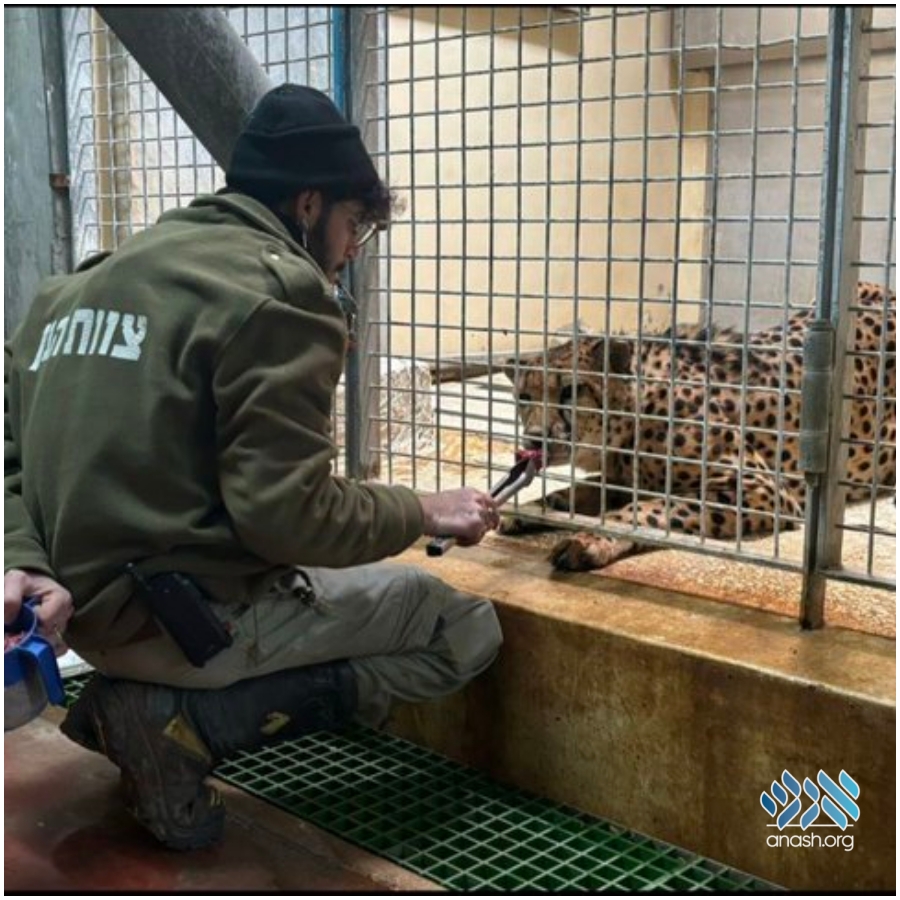
After a Persian leopard that had exited its enclosure at the Biblical Zoo in Yerushalayim and tragically attacked an employee and killed him, a halachic debate arose about the permissibility of seeing the animal at the zoo. Rabbi Yosef Braun of the Crown Heights Beis Din issued a detailed responsum.
By Anash.org reporter
Two weeks ago, a tragic incident occurred at the Biblical Zoo In Yerushlayim when 26-year-old employee Uriel Nuri was fatally attacked by a Persian leopard that had exited its enclosure. The attack happened in plain sight of visitors during preparations for an enrichment activity.
Nuri was rushed to Hadassah Hospital in Ein Kerem in critical condition after paramedics found him unconscious, with severe injuries to his neck and upper body as a result of the attack. Tragically, he succumbed to his wounds.
“With the assistance of the Israel Police, we are conducting a thorough investigation into how the leopard entered the yard,” the zoo said in a public statement. “Our thoughts are with Nuri and his family.”
The zoo subsequently closed its doors until further notice.
The story, widely reported around the world, has sparked a fascinating halachic debate.
After the incident, it was decided, despite major objections, that the leopard would remain in the zoo, raising questions about benefiting from the animal that had killed a Jew. In response to a query posed by various rabbonim from Eretz Yisroel, Rabbi Yosef Braun of the Crown Heights Beis Din issued a lengthy responsum explaining why it is permitted according to halacha.
The question, posed to AskTheRav, was whether visitors to the zoo may gaze at the leopard, given the potential issur hana’ah (prohibition of benefit) associated with a shor haniskal (an ox sentenced to stoning), since the leopard would now be halachically liable to death (which is incidentally discussed in today’s daily Rambam).
The leopard was considered the property of a non-Jew, as it had been lent to the Biblical Zoo by a non-Jewish organization; had it been owned by a Jew, the halachic ramifications would have been very different.
The responsum focuses on the novel ruling of the Minchas Chinuch, who suggests that once an animal is halachically liable to death, even before the court issues its ruling, one may not derive benefit from it. Following that approach, such benefit would remain forbidden even today, despite the absence of a functioning Beis Din which can rule on such matters.
Rabbi Braun, however, challenges this position with six lines of reasoning. Key points of discussion include: the requirement of a Beis Din of 23 judges to sentence a non-Jew’s animal to death; possible exemptions regarding a non-Jew’s animal that killed a Jew; whether the prohibition on benefiting from an animal applies only after the court’s formal verdict; and whether merely gazing at such an animal constitutes a prohibited form of benefit.
To read Rabbi Braun’s full responsum, click here.
 COMMENTS


I think the animal should be destroyed. The leopard went for the worker’s neck. It was not playing, it meant to kill and it can be relatively easy to replace! I would not want to visit that zoo if I were there in Israel.
Of whether it is mutar or ossur –
A jew should not step foot in a place
That doesnt value jewish life.