




כ״ג אב ה׳תשפ״ה | August 17, 2025
Lost Data in Utah Mountains Leads to Unexpected Encounters
When Dovid Braun and Meir Schmukler got lost in the Utah mountains and had to rely on old-fashioned maps, they never expected they would unexpectedly stumble upon a long-lost Jew from Saudi Arabia and meet some others at the mountain’s peak.
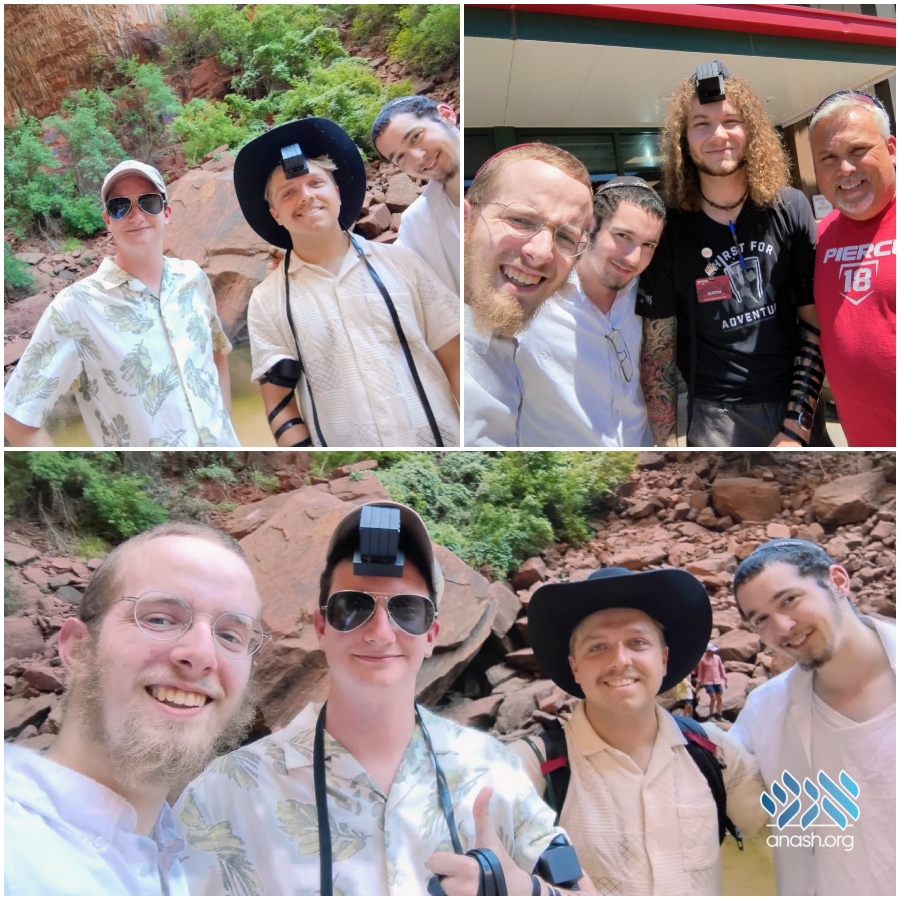
When Dovid Braun and Meir Schmukler got lost in the Utah mountains and had to rely on old-fashioned maps, they never expected they would unexpectedly stumble upon a long-lost Jew from Saudi Arabia and meet some others at the mountain’s peak.
By Dovid Braun and Meir Schmukler
Last week, as part of the Merkos Shlichus program, we traveled from 770 to St. George, Utah, to assist the local shliach, Rabbi Mendy Cohen, with his daily activities and to search for more Jews in the area. One day, we decided to go on one of the well-known hikes nearby, hoping to meet some Jews and do some mivtzoim along the way.
When we arrived at the park, we quickly realized that the better hiking trails were actually in a different, nearby park that is connected – but once at the park, we had no data on our phones to navigate.
We started asking some people for directions, they gave us old-fashioned paper maps – maps like from the old days – and explained how to get to the second park.
We started driving, but it was not long before we realized we were probably lost. Not knowing who else to ask, we stopped at a gas station.
Inside, there were three guys at the counter. Two looked bored and were not dealing with anyone, and one was helping a customer. We decided for some reason to ask the guy helping the customer. Once he finished, we told him our story and asked for directions.
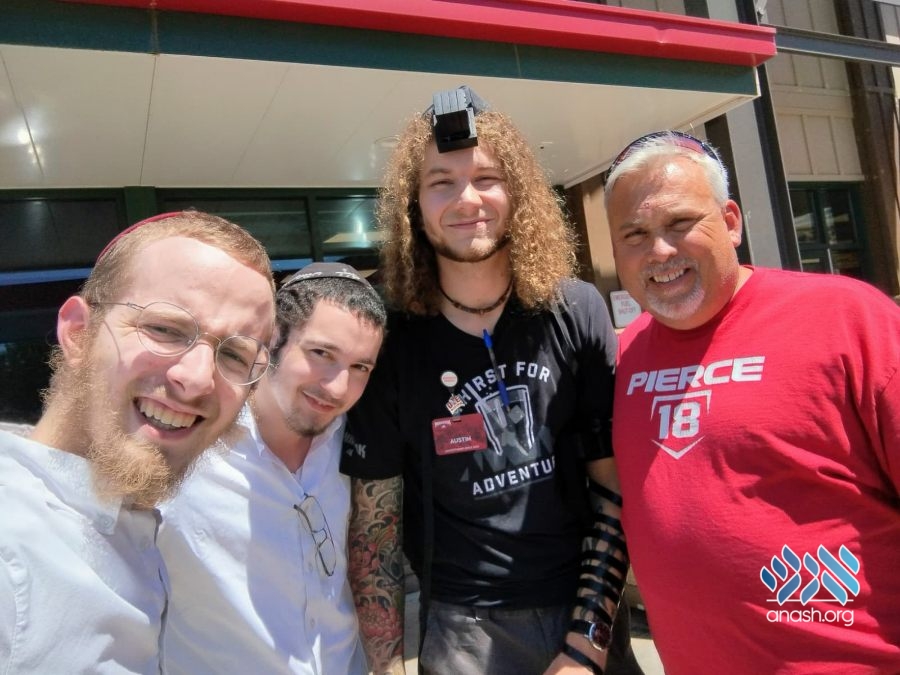
The man was covered in tattoos and said he was originally from Saudi Arabia.
Despite his appearance and his origins, something compelled us to ask if he was Jewish. To our surprise, he said yes, and that his parents were originally from the States but had moved to Saudi Arabia.
We asked if he had a Hebrew name, but he said no. We also asked when he last put on tefillin, and he said it had been when he was six or seven years old… We weren’t sure what to make of that.
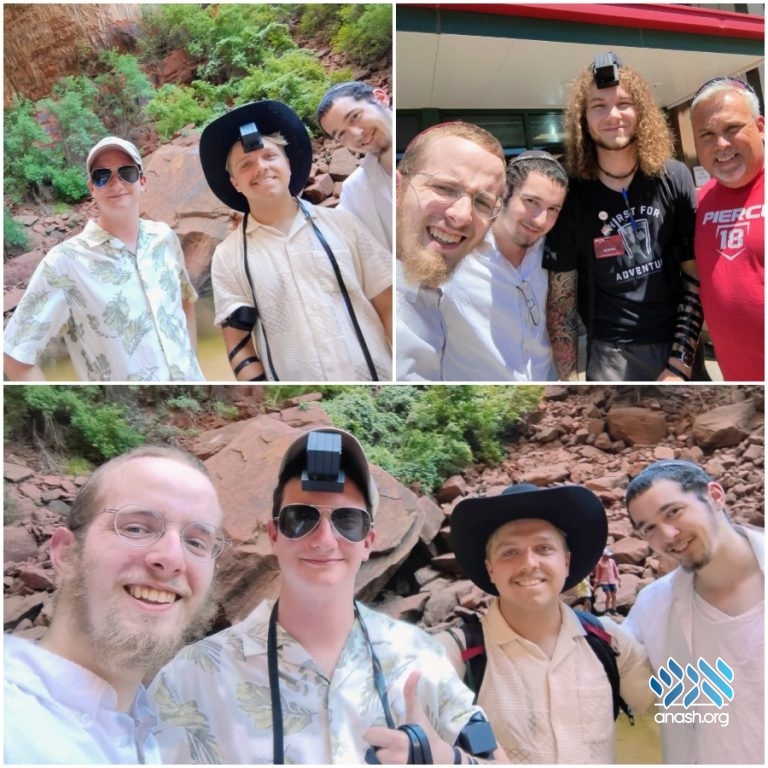
Despite the boiling heat, he came outside with us and we put on tefillin together. It left a tremendous impact on him.
While we were wrapping tefillin, another man passed by. He was not Jewish but said he had visited 770 many years ago. He just happened to be passing by and joined us for a picture.
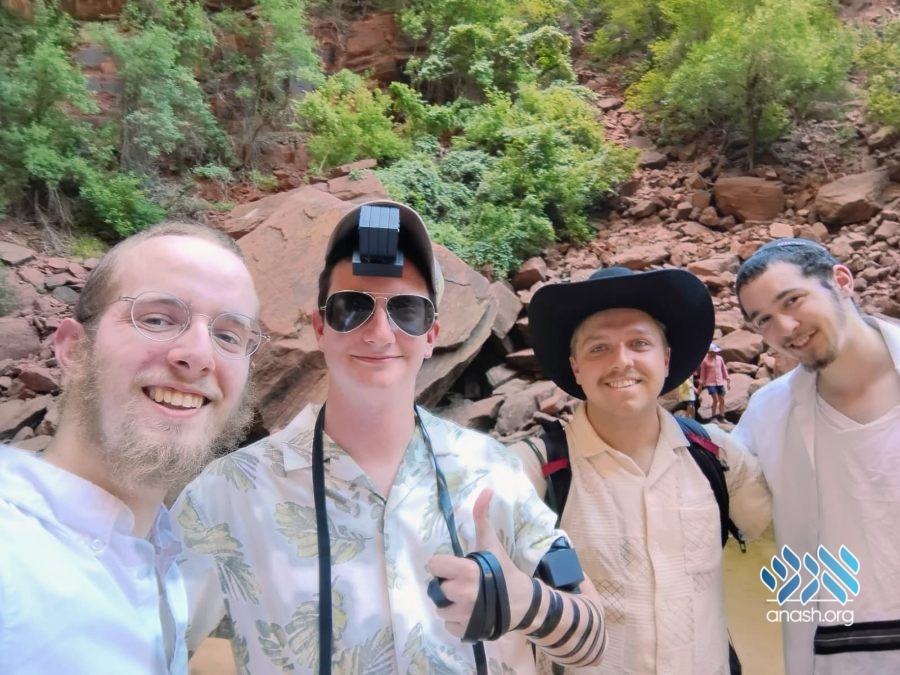
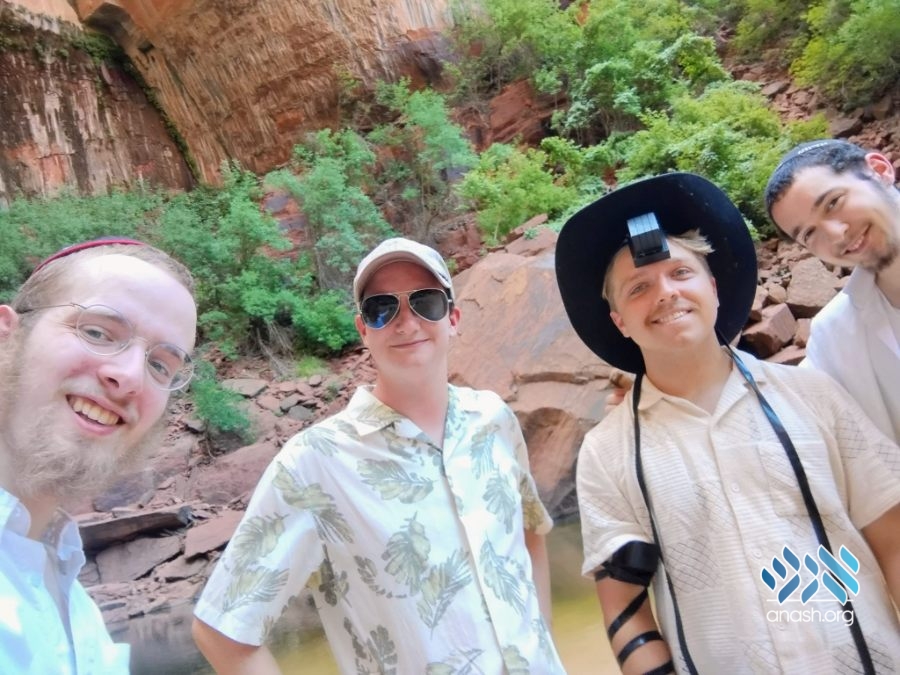
Later, at the top of the hike, two men came over and asked in broken Hebrew if we had tefillin. When we switched to English, they spoke well, and we put tefillin on both of them.
One said he usually carries tefillin wherever he goes in case someone needs them, but this time he forgot. He was deeply grateful and amazed that we had come all the way, searching for Jews with tefillin. One was from New Zealand and the other from Cincinnati.
The man from New Zealand shared that his father was a chaplain in the army and that when the last Jews left Afghanistan for Israel, his father was there with them putting tefillin on those last Jews. The one from Cincinnati knew a lot about Chassidus and said he loves it because it talks about Hashem and answers big questions like why we are here.
Before we knew it, we were having a whole farbrengen right there on the mountaintop in Utah.
Looking back, it became clear why we got lost, had no data, and had to depend on old-fashioned maps. It was all part of Hashem’s plan – to lead us to that long-lost Jew from Saudi Arabia at the gas station, and then to connect with two others who forgot their tefillin and farbreng together at the top of the mountains in Utah in the most unexpected of places.
 COMMENTS


Congratulations to David and Meir!!!
I always knew you would succeed in life…
Continue your wonderful service, and bring joy to the Rebbe