




י״א אב ה׳תשפ״ה | August 4, 2025
Long Overdue: Netanyahu Orders Full Military Occupation of Gaza
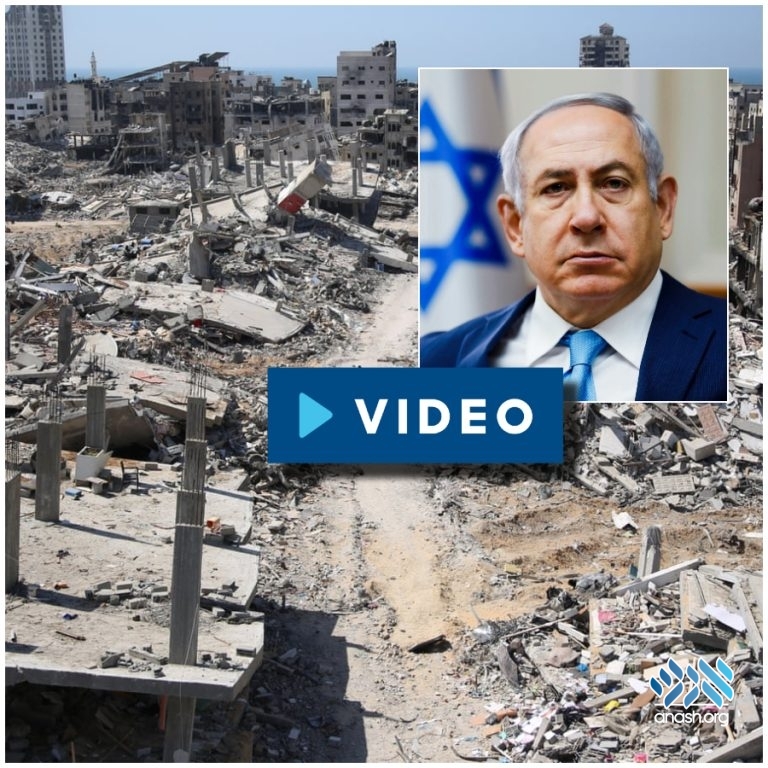
In a dramatic and long-overdue move, Israeli Prime Minister Binyamin Netanyahu on Monday afternoon ordered a full military occupation of the Gaza Strip – including operations in areas where hostages are believed to be held – marking a significant shift in strategy.
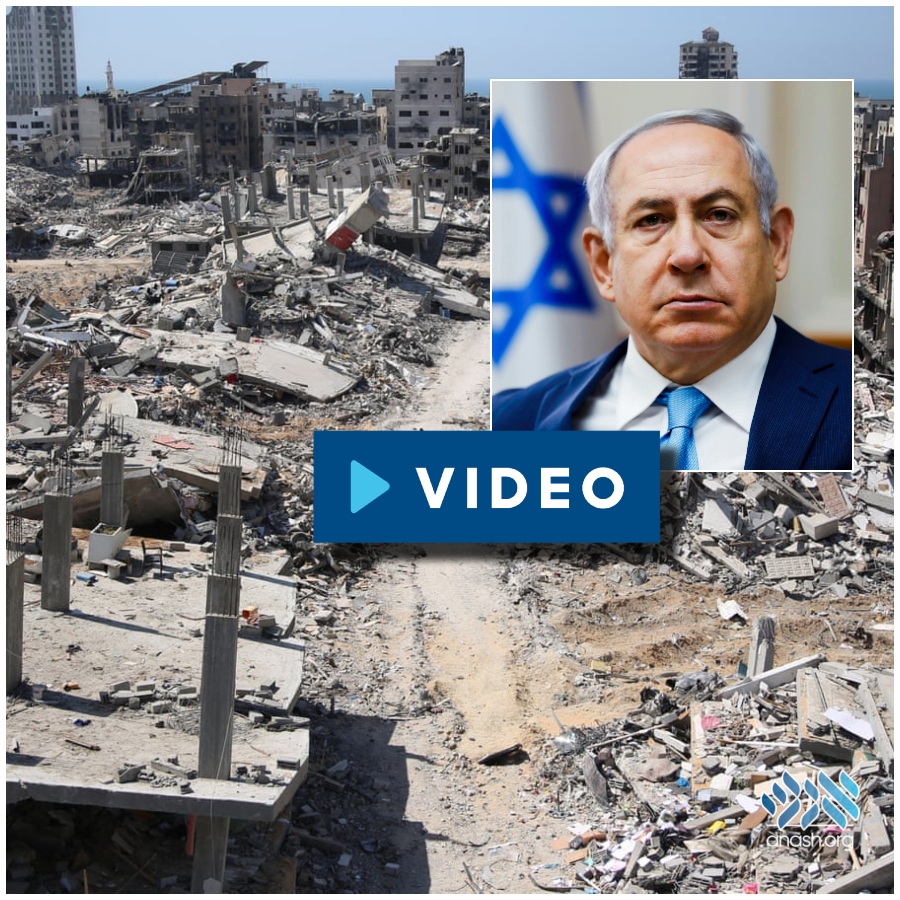
In a dramatic and long-overdue move, Israeli Prime Minister Binyamin Netanyahu on Monday afternoon ordered a full military occupation of the Gaza Strip – including operations in areas where hostages are believed to be held – marking a significant shift in strategy.
By Anash.org reporter
Israeli Prime Minister Binyamin Netanyahu has made a pivotal decision to order a full military occupation of the Gaza Strip, escalating Israel’s 22-month war against Hamas and marking a dramatic shift in strategy.
The move, announced Monday afternoon, includes expanded military operations in areas where hostages are believed to be held, despite reported opposition from the Israeli Defense Forces (IDF) Chief of Staff, Lieutenant General Eyal Zamir. The decision, set to be formalized at a cabinet meeting on Tuesday,
“We’re going to occupy the strip,” a senior figure in Netanyahu’s office said. “The decision has been made. Hamas won’t release more hostages without total surrender, and we won’t surrender. If we don’t act now, the hostages will starve to death and Gaza will remain under Hamas’ control.”
For months, Israel was at a crossroads – achieving neither a decisive military victory nor securing the hostages’ release. Now, the security cabinet appears to be shifting to a new phase, as the IDF prepares to enter areas it had long avoided.
One is the network of camps in central Gaza. The other is Gaza City, where Israeli forces briefly operated around 18 months ago. This shift also signals that the military is now prepared to target Hamas strongholds – even in areas where hostages are still believed to be held.
In a video address, Netanyahu framed the occupation as a necessary step to achieve Israel’s war objectives. “We’re committing to free Gaza from the tyranny of these terrorists,” he declared, claiming that “many Gazans come to us and they say, ‘Help us be free. Help us be free of Hamas.’” The Prime Minister’s Office emphasized three goals: defeating Hamas, securing the release of approximately 50 remaining hostages (of whom only 20 are believed to be alive), and ensuring Gaza poses no future threat to Israel.
A senior official close to Netanyahu underscored the resolve behind the decision, stating to Ynet, “The die is cast – we are going for a full occupation of the Gaza Strip. There will be operations even in areas where hostages are being held.” The official added a pointed message to Zamir: “If the IDF chief of staff doesn’t agree, he should resign.” This ultimatum highlights a rare public rift between Netanyahu’s office and the military leadership.
Zamir, who assumed the role of Chief of Staff in 4 months ago, has reportedly cautioned against a full occupation, citing the risks of prolonged urban warfare, high casualty rates, and resource strain.
This decision is long overdue. For nearly two years, Israel has tried to apply gradual military pressure, but at the same time kept yielding to Hamas demands and international pressure. That strategy has obviously accomplished little – hostages remain in captivity, Hamas has grown bolder, and global criticism has only intensified.
Now, at last, Israel appears ready to shift course. If this new approach is carried through to the end, it could finally mark a turning point: a full-force military operation aimed at breaking Hamas’ control, ultimately securing the hostages’ release, and restoring real security. Israel is preparing for something on a scale we haven’t seen in the past 22 months.
VIDEO:
 COMMENTS


Those who demand strength over concession are rarely put to the test. And when their words are tested, they say we should have fought harder, longer. When that doesn’t work, they offer more excuses: we should have fought even harder; we never should have conceded at all; we told you so.
But the truth is, there is no simple answer—not strength, not weakness; not war, not peace; not dialogue, not silence. No language alone can solve the problem.
The Rebbe said many times that Israel needs to show strength and confidence in the Jewish right to the entire land and the security of the people in it.
Read the book “Make Peace.”
What is he saying that we aren’t hearing?
Does he have a better solution?
Does he simply not trust that if President trump says “ok stop advancing and pull back out” that we will listen, Making the same same mistake we’ve made too many times?
Bh
from the book based on our Rebbe:
MAKE PEACE
1. ASSERT ISRAEL’S G-D given right to the entire Land of Israel, including Judea, Samaria, and Gaza, as promised in the Torah, and reject any pressure to compromise on this principle.
2. REJECT SIMPLISTIC SOLUTIONS for peace, such as unconditional ceasefires without achieving military objectives, relying on international community mediation, or engaging in
“Land for Peace” negotiations, as these approaches have only led to greater loss of life and historically failed to bring lasting peace and security.
3. ADOPT A TORAH-BASED military strategy that emphasizes:
a. Credible deterrence: Demonstrate unwavering resolve to respond decisively to any aggression, making it clear that attacks on Israel will be met with overwhelming force.
b. Proactive neutralization of threats: Take preemptive action against enemies with hostile intentions, eliminating their capacity to harm Israel before they can strike.
c. Fully neutralizing threats: Wage comprehensive offensives to dismantle the enemy’s capacity for warfare until they surrender unconditionally, ensuring that they cannot regroup and pose a future threat.
d. Low risk tolerance: Actively assess potential risks and do not tolerate minor risks that have the potential to turn into more serious security issues.
e. Respect for territory’s strategic value: Land is not mere space that can be traded at will. Instead, land has has critical strategic value and serves to save lives. In contrast, giving up land to current or potential enemies increases the odds of war and loss of life.
4. RECOGNIZE THE IDEOLOGICAL motivation of Israel’s enemies and counter their fervor with an equally strong commitment to Jewish values and the lorah’s teachings.
5. PRIORITIZE JEWISH EDUCATION and the cultivation of a deep connection to the Land of Israel among Israeli youth and diaspora Jewry to foster the necessary resilience necessary to withstand the challenges posed by the Jewish people’s enemies.
6. ASSERT FULL JEWISH sovereignty over Judea, Samaria, and Gaza, and reject Palestinian autonomy.
7, ACTIVELY ENCOURAGE and facilitate Jewish settlement throughout the entire Land of Israel, particularly in Judea, Samaria, and Gaza, to proudly assert Israel’s claim to its ancestral Land and to prevent the establishment of a hostile Palestinian
state.
8. IMPLEMENT A ZERO-TOLERANCE policy towards domestic terrorism, swiftly arresting and deporting all identified terrorists and maintaining strict rules of engagement that prioritize neutralizing threats.
9. REJECT PRISONER EXCHANGES that release convicted terrorists, as they incentivize further attacks and kidnappings.
10. CULTIVATE JEWISH UNITY as a crucial factor in Israel’s security, addressing internal disputes through peaceful dialogue and ashared commitment to the Torah’s values, while encouraging all Jews to educate themselves on Israel’s security challenges and advocate for policies that align with the Torah’s vision.
We might say we shouldn’t worry about what the U.S. or the rest of the world thinks. But the reality is that even when much of the international community opposes us, Israel’s survival is still heavily dependent on the American veto in the UN Security Council. If the world were to divest from Israel the way it did from South Africa, the consequences would be devastating.
If we declare the intention to annex Gaza, Judea, and Samaria, then—as a democracy—we must confront the issue of granting voting rights to the Arab population. That demands a real solution. Try going on a television show and claiming it’s our God-given land and see how much political support that garners. when a individual says it all that it does is make a equivalence to our enemies who make the same claim .
When it comes to hostages, refusing to negotiate would shatter the Israeli ethos and the social contract. The individuals who are risking their lives demand this ethos. the unity, morale, and fighting spirit of the Israeli society rely on the knowledge that their government will not abandon them.
I wish the book Make Peace had addressed these issues with more clarity. I was hoping to see how the rebbe addressed those issues.
And how has the PC talk of Israel’s PR been working for us thus far? The world is turning more anti-Israel amid claims that we “don’t want to resettle Gaza” and offers of arab autonomy in Yehuda and Shomron.
Whereas when Israel acted forcefully and bravely e.g. against Hezbollah by killing Nasralla y”sh, the international community gave little pushback and Hezbollah has quieted somewhat.
Israel needs to stop talking and start doing.
if Bibi the politician is for this solution and the military chief is against it, I recall reading in make peace that the rebbes position was that we should defer to the military experts over politicians in matters of security.
The wife of the chief of staff currently works for a mayor in Israel that says Israel is committing a killing babies for fun etc.
That should tell you enough about Eyal Zamir…
The idea is that politicians need to listen to those focused only on the safety of the Yiddin and not concerned about politics, the current (and in recent years) climate of the top brass of the army is just as political as the politicians… hence why all recent chief of staff’s are in politics…
politicians can make objectively military moves and military experts can be prone to political bias
But that’s not actually what the Rebbe said—that’s your own reasoning. The Rebbe consistently emphasized that, as a general rule, the military is less politically biased than the politicians.
If you want to know the “military opinion,” you need to ask at least several. If one expert opposed, that doesn’t make it the “military opinion.”
Great point, That definitely seem to be the rebbe’s opinion at first glance. So much so, that this point was brought up to the rebbe himself. And in response, the rebbe publicly clarified at the purim Farbrengen of tof shin lamed ches (second sicha) that the military man’s opinion is obviously not the sole arbitirator of what’s the right path. Rather its his military analysis of how to militarily secure the borders that has to be the main factor in any decision. The rebbe went on to explain that you always have to ask the military man what the reason of his opinion, and only purely military calculations of how to secure the life’s of the Yiden are to dictate the right path.
heres a link for sichos kodesh
https://beta.hebrewbooks.org/reader/reader.aspx?sfid=4618#p=58&fitMode=fitwidth&hlts=&ocr=
(see end of this page and following page)
Really does address Avi’s question!
Thank you!