




י״ח מרחשון ה׳תשפ״ו | November 9, 2025
Letting Go of Utensils in the Mikveh?
Ask the Rov: What is the best way to hold a utensil while toiveling it? Rabbi Chaim Hillel Raskin responds.
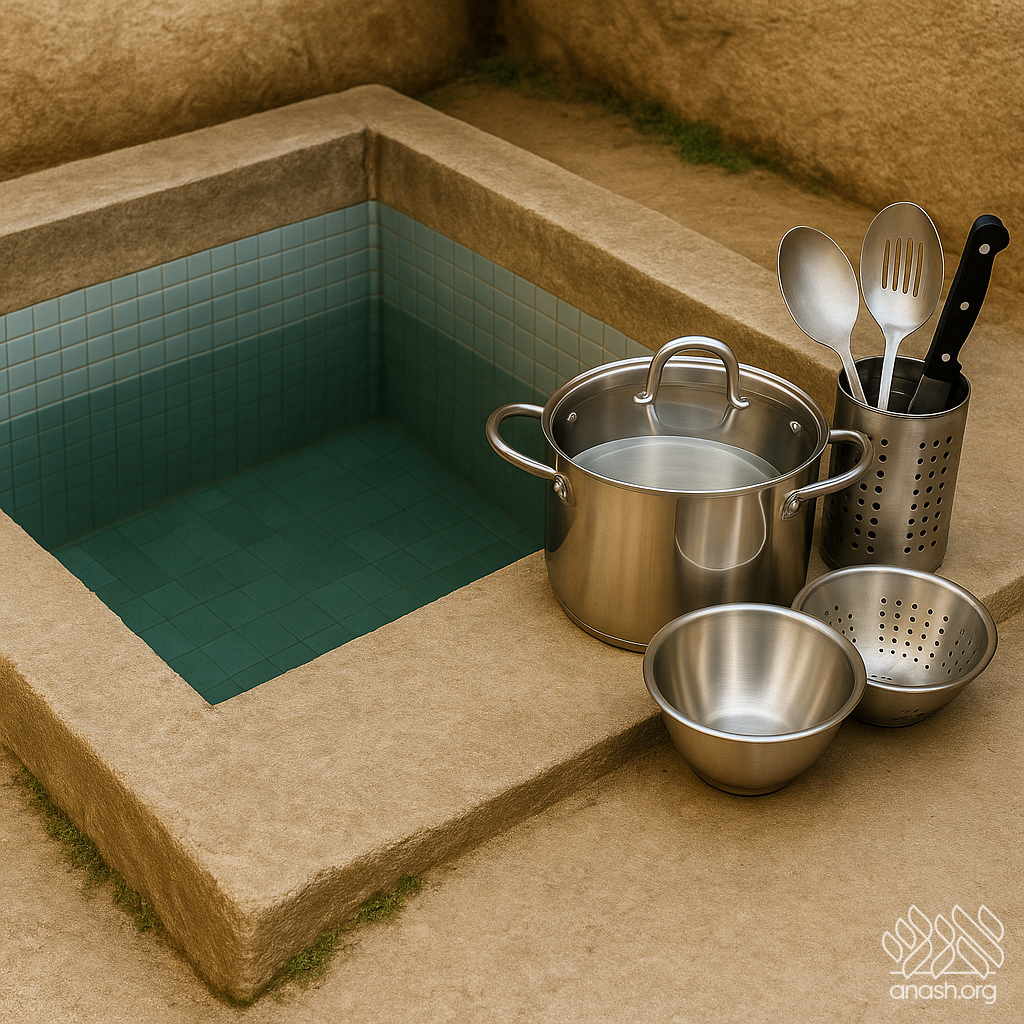
What is the best way to hold a utensil while toiveling it?
By Rabbi Chaim Hillel Raskin – Rov of Anash in Petach Tikvah
When immersing a utensil for tevilas keilim, one must ensure that all its surfaces come into contact with the water, without any intervening substances, in one shot — not in multiple shifts.1
The Mishna rules that if one immerses a utensil with its opening facing down, the tevila is invalid, since the air prevents the water from fully entering. The Mechaber applies this specifically to utensils with a narrow neck, but the Shach and Taz extend it to all utensils with an opening, that they must be immersed upright or tilted sideways, to allow the water to fill them completely, without air bubbles.2 One may also fill the utensil with regular water before immersing it, and then the water inside will connect to the mikveh.3
The Mishna also rules that if one holds a utensil during its immersion, the grip doesn’t allow the water to reach that place, and the tevila is invalid, unless one wets their hands prior. R. Shimon validates the tevila even by holding the utensil loosely.4
According to the Rambam, holding loosely isn’t good since one may not hold it loosely enough. While the Shulchan Aruch rules that either option is sufficient — holding loosely or wetting one’s hands5 – some Acharonim prefer wet hands.6
The Rama writes that the wetting must be done with mikveh water, and it would seem that one’s hands must remain in the mikveh throughout (since if the hands come out they are not halachically “mikveh water”7). Poskim therefore write that one should submerge one hand into the mikveh, and then, with one’s other hand, place the utensil into the submerged hand. This way, the mikveh water definitely reaches the area that is later gripped by your hand. Still, one should avoid holding the utensil too tightly.8
Other options include attaching the utensil loosely to a string or immersing it in a basket with holes.9
See Sources (open PDF)
 COMMENTS


We appreciate your feedback. If you have any additional information to contribute to this article, it will be added below.