




כ״ח מרחשון ה׳תשפ״ו | November 19, 2025
Jamaica Shliach Promised He’d Go ‘Through Fire and Water’ for the Rebbe
Within the surprising landscape of Jamaica, Rabbi Yakov Raskin tells how creating a Jewish community from nothing and surviving one of the Atlantic’s strongest storms shaped a story of faith and resilience that turned a remote island into a place alive with belonging, meaning, and Jewish pride.
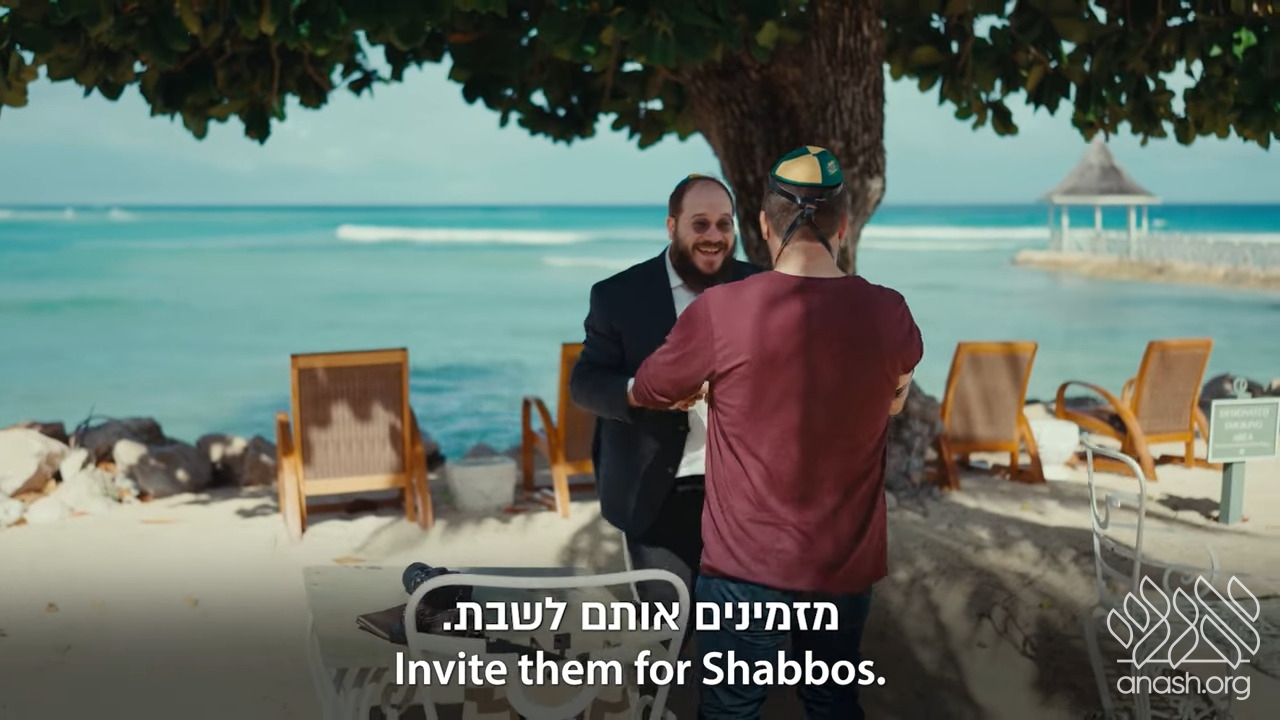
As the thousands of shluchim and their supporters gathered in the room for the gala banquet, recommitting themselves to the Rebbe’s work no matter the odds, “through fire and water”, a stirring video of Rabbi Yaakov Raskin, Chabad shliach to Montego Bay, Jamaica, was shown – perhaps the most powerful example in recent days of pushing through the Rebbe’s shlichus “through fire and water” in the most literal sense.
He shared how the Rebbe’s words and deep bitachon carried him through building Jewish life from nothing, and then through one of the strongest hurricanes ever recorded.
“I am fortunate to grow up as a third generation,” Rabbi Raskin begins. His grandfather was sent by the Rebbe to Morocco; his father to Montreal. “We lived shlichus. We breathed shlichus. It was in our education. There was never a doubt that once we got married, we would ask for our own shlichus.”
At his bar mitzvah, his grandfather, Rabbi Leibel Raskin, made him promise something that would guide his entire life: “You are becoming a man. You need to give yourself over to the Rebbe. Through fire and through water.”
That promise eventually carried him to one of the most unexpected places for a Chabad House – Jamaica.
Rabbi Raskin’s grandfather provided the model of what real shlichus means. When his zeide first arrived in Morocco, thousands of Jews lived there. Over the years, many left. People would ask him, “Until when will you stay here? There are hardly any Jews left.” His answer was always the same: “The Rebbe sent me here. As long as there is even one Jew in Morocco, I am here for them.”
Rabbi Raskin carried that outlook with him. “We came knowing the community is very small, and we were hoping for many visitors. But we knew that if even one Jew is in Jamaica, we need to be here.” Indeed, Hurricane Melissa would soon provide that opportunity to prove that point.
The challenges were immediate. Nothing was in place. There was no kosher bakery, no kosher butcher, no children’s education, no mikvah, no chinuch infrastructure at all.
Visitors would ask, “How do you manage? How do you survive?”
The local community did not appear at the door, so Rabbi Raskin and his wife took an unusual approach. “We would stay in hotel lobbies and look for Yidden.” They approached visitors, wrapped tefillin, and invited them for Shabbos. Nearly every Shabbos, they were asked, “How did you end up here?”
One idea sustained him. Rabbi Raskin recalled hearing Rabbi Jonathan Sacks share a story about the Rebbe at a previous Kinus Hashluchim banquet, describing a moment when the Rebbe stopped him mid-sentence and told him, “Nobody finds themselves in a situation. You put yourself in a situation. You do not get into a situation. You make a situation.”
Rabbi Raskin carried those words everywhere. “If something is needed, we make it. You need challah? Bake it.”
And that is exactly what they did. They built the first mikvah in the history of Jamaica. They created a shul. They built Torah classes. What had been a vacation destination became, as Rabbi Raskin says, “not Jamaica, but Jew-maica.”
One congregant shared, “I was alone here in Jamaica for many years until I found the rabbi. Now I am not alone.”
Another said with hope, “One spark from Chabad revived Jewish life here. The community will come alive again.”
For Rabbi Raskin, the sweetest hour of the day is learning with his children in their online school. “That is the most powerful moment. I thank Hashem for it every day. That is our future. The next generation. And the only way to build the next generation is through being connected to the Rebbe, by learning Torah.”
Then came Hurricane Melissa, the second-strongest Atlantic hurricane ever recorded, heading straight toward Jamaica with winds of 160 miles per hour.
As it approached, Rabbi Raskin was in constant contact with community members, helping them prepare. “You never know,” he kept saying.
When the storm hit with devastating force, he remained focused. “Even though we have damage, the first thing is to help others. Check on fellow Yidden. Be there for people who lost their homes. Make sure they have somewhere to stay, make sure the generator has fuel, make sure there is food, make sure they know the Chabad House is there for them.”
Rabbi Raskin reflected, “The day will come when you will see why everything happened. Hashem prepared my steps.”
He acknowledged the challenges. “Yes, it is hard. Sometimes it is one Yid. Sometimes that one Yid is your child or your wife. But even being there, so a Jew knows they can knock on your door, daven, put on tefillin, learn Torah – even that is shlichus.”
He added the real secret: “If you go alone, it is impossible. But if you go with the Rebbe, and you know it is not about you, everything becomes an opportunity.”
“Every morning I thank Hashem for the privilege of being the shliach of the Rebbe here in Jamaica. Every shliach should know how lucky we are to bring the light of Hashem to every corner of the world.”
His message to fellow shluchim is simple: “You do not get into a situation. Make a situation.”
To a thunderous applause, Rabbi Raskin ascended the main stage to give the d’var Torah of the evening, where he implored his fellow shluchim to learn from Yitzchak Avinu – to keep digging, removing the dirt until you reach fresh, flowing water: a Jewish neshama. Through fire and water.

 COMMENTS


BH! He was able to make it back (?) to Jamaica before the hurricane hit!
Let’s not forget his Shver Reb Zushe obm… who was instrumental in his shlichus
Hatzlacha!