




כ״ו שבט ה׳תשפ״ו | February 12, 2026
J-Post Editor: ‘If You Can’t Beat Chabad, Join Them’
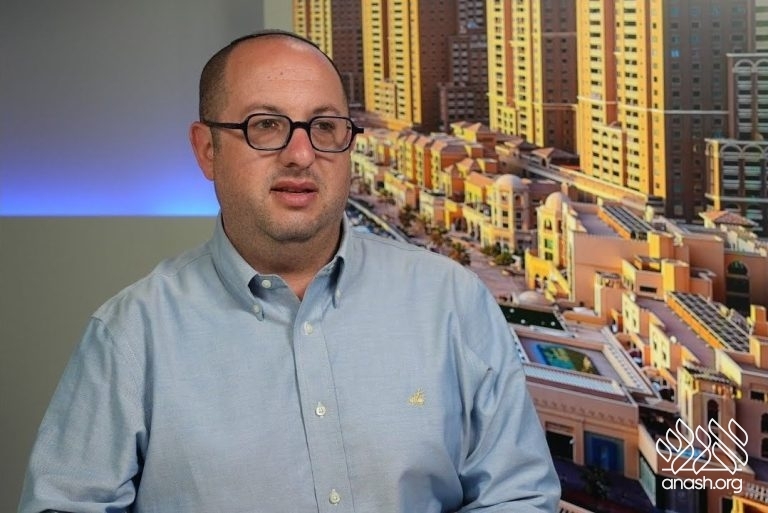
It’s not every day that the Editor-in-Chief of a major newspaper publishes an editorial calling for Jewish organizations around the globe to learn from Chabad. But on Wednesday, Zvika Klein, Editor-in-Chief of The Jerusalem Post did exactly that. “If you can’t beat them, join them. It is not just a competitor. It is the future.”

It’s not every day that the Editor-in-Chief of a major newspaper publishes an editorial calling for Jewish organizations around the globe to learn from Chabad. But on Wednesday, Zvika Klein, the Editor-in-Chief of The Jerusalem Post and a former Diaspora affairs reporter for the Post and Makor Rishon, did exactly that.
“Standing in -22°C Finland, I realized why Chabad is winning,” he began.
He shared an incident that took place 22 years ago, one Chanukah in Helsinki, Finland, when there was a mix-up and the event run by the World Bnei Akiva and World Zionist Organization, which he was a part of, and Chabad scheduled their events for the same time. They were told to go over to Chabad and bring people back to their own event.
“When we arrived, we nearly fainted,” he said. “A massive hanukkiah sculpted out of an iceberg. An ice-skating rink. Hot cocoa and more sufganiyot than you could ever eat, all free… the mayor of Helsinki, local politicians, and wealthy businesspeople.
“We walked back through the freezing cold, shaking our heads. How are we supposed to compete with that? I couldn’t stop thinking about the difference between the two events.”
That moment stayed with him throughout his career covering Jewish communities worldwide, as he kept seeing the same pattern of established communities struggling to match the success of the local shluchim of the Rebbe.
Klein continues to describe what he thinks the secret to the success of Chabad is and why “they keep winning.”
Unlike Jewish Agency emissaries, as talented as they may be, they only stay in a community for a maximum of four years and are often eyeing the next opportunity: a larger community, better pay, and better benefits.
“A young Chabad family arrives with boundless energy, outstanding ideas, and unique branding. And, most importantly, time. They are there to stay. The Lubavitcher Rebbe sent them, and until the Messiah comes… they aren’t going anywhere.”
While in many established Jewish communities you need to pay membership dues or buy seats, in Chabad, there are no required fees, and “Israelis, who have never heard of paying for a synagogue seat, feel far more comfortable there. So do students and young families.”
“What makes Chabad emissaries truly unique,” he writes, “is how deeply this work is ingrained in them from birth. They are educated and prepared for this role from the moment they can understand it. They don’t waste time questioning the mission.”
He also describes the unique branding of Lubavitch shluchim as one of the keys to their success, as well as the fact that they are masters of relationships and build connections with local governments, mayors, and successful businesspeople, leveraging those ties to fund their activities.
Finally, he writes that the Rebbe’s shluchim are always available. “You can call them at any hour of the day. They will not only answer, but they will give you exactly what you need at that moment.”
“As the old adage goes,” he concludes the editorial, “if you can’t beat them, join them. It is impossible to beat Chabad, and perhaps communities should stop trying.
“Instead of fighting Chabad, Jewish organizations and communities worldwide should consider joining forces with it. Because in many communities, it is not just a competitor. It is the future.”
 COMMENTS


They miss it again and again. It’s the Rebbe. The Rebbes brochos, the Rebbes guidance, the Rebbes influence.
Yes we shluchim (proud to be one) are the Rebbes hands, feet etc. And every younger man that goes out on the street corner is a shliach.
But it’s our connection to the Rebbe that is successful. I’m on shlichus 36 years, and our connection gets stronger and stronger every day.
Join us, connect to the Rebbe and do the Rebbes mission and you too will be successful.