



כ״ג טבת ה׳תשפ״ו | January 11, 2026
In Rome Ghetto, Survivor’s Menorah Lighting Completes a Circle
When a young shliach in the Roman ghetto invited a Holocaust survivor to light the menorah outside his Chabad House, he never imagined the symbolism it would hold and the 80-year-old story that would come full circle that night.
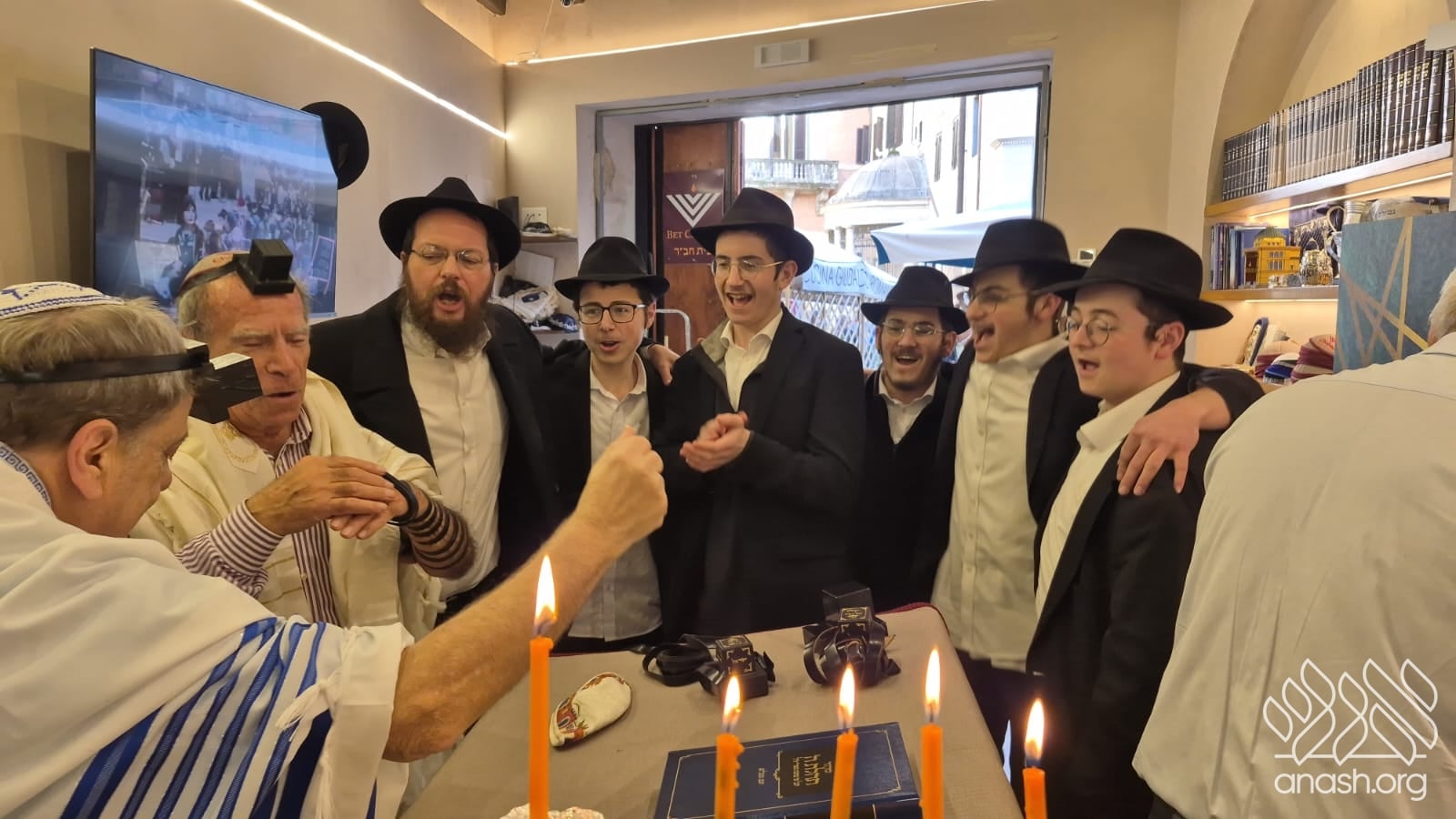
When a young and new shliach in the Roman ghetto invited a Holocaust survivor he had met just days earlier to light the menorah on the last night of Chanukah outside his Chabad House, he never imagined the symbolism it would hold and the story from eight decades earlier that would come full circle that night.
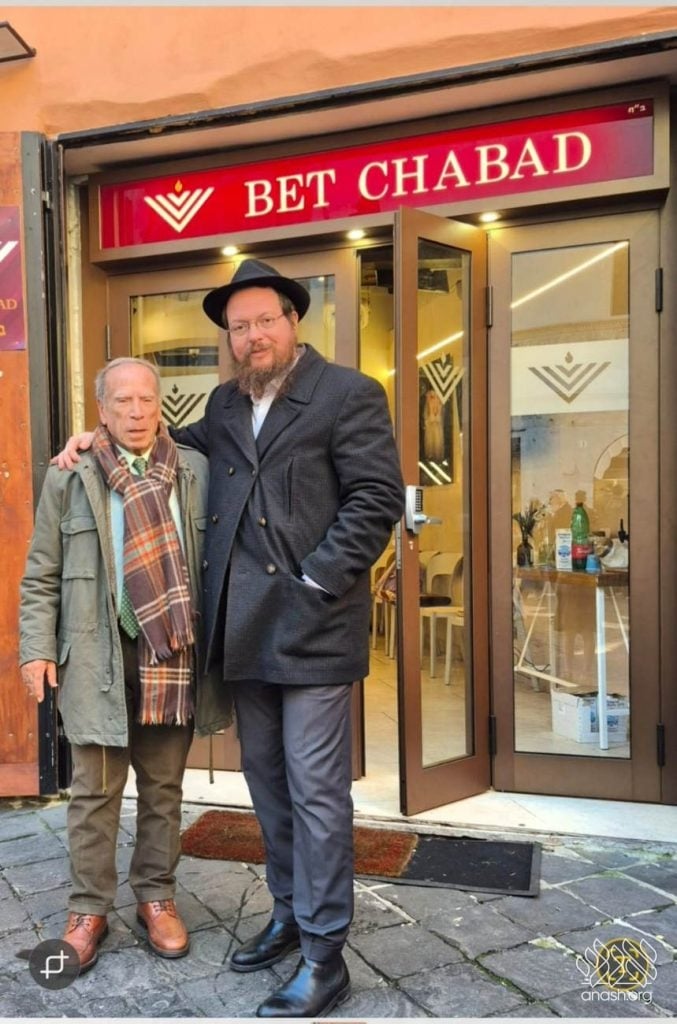
About a year and a half ago, Rabbi Aharon Michoel Canarutto, an Italian chossid who grew up in the local community, opened a Chabad House in the old Roman ghetto. The building itself is over 500 years old, steeped in the long and painful history of Jews in Rome.
In a short time, the building became alive again. There was davening, learning, youth programs, and community events. Jews and tourists constantly passed through the area, and Jewish life returned to the heart of the ghetto.
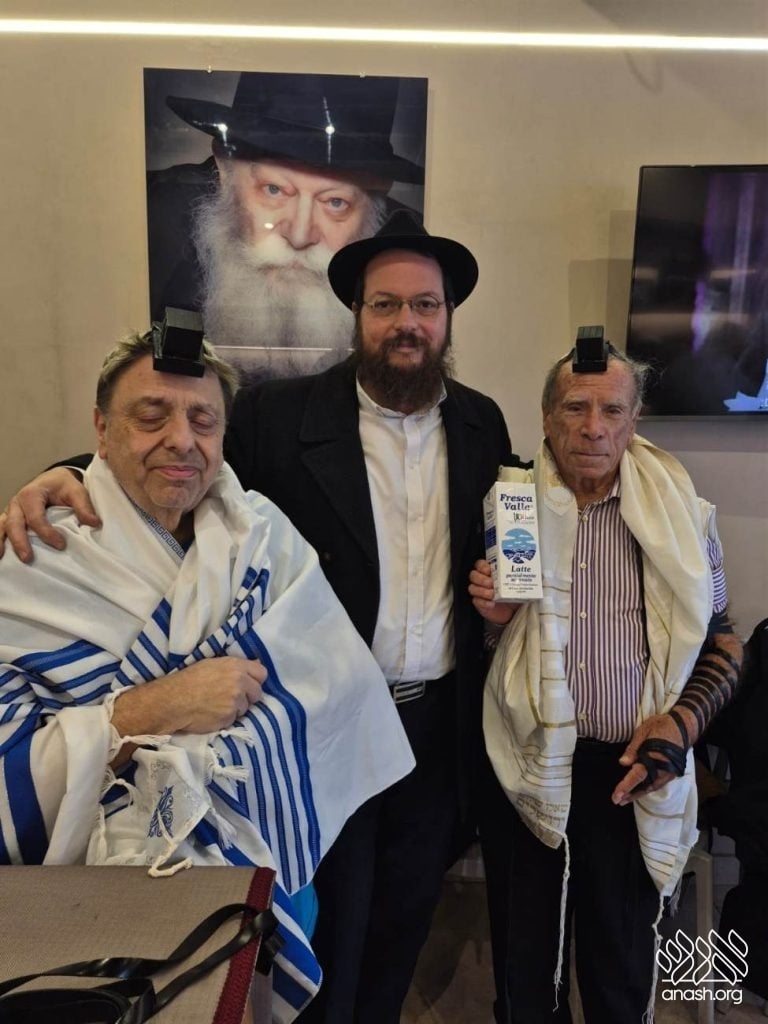
“During Chanukah, a 90-year-old Jew walked in,” Rabbi Canarutto told Anash.org. “Naturally, I immediately asked him: ‘Did you ever have a “bar mitzvah”?’ The man answered no. He had never put on tefillin, and he had never celebrated his bar mitzvah.”
A short while later, another elderly Jew joined him. Gabriel, 86 years old. Same story. He, too, had never had a bar mitzvah.
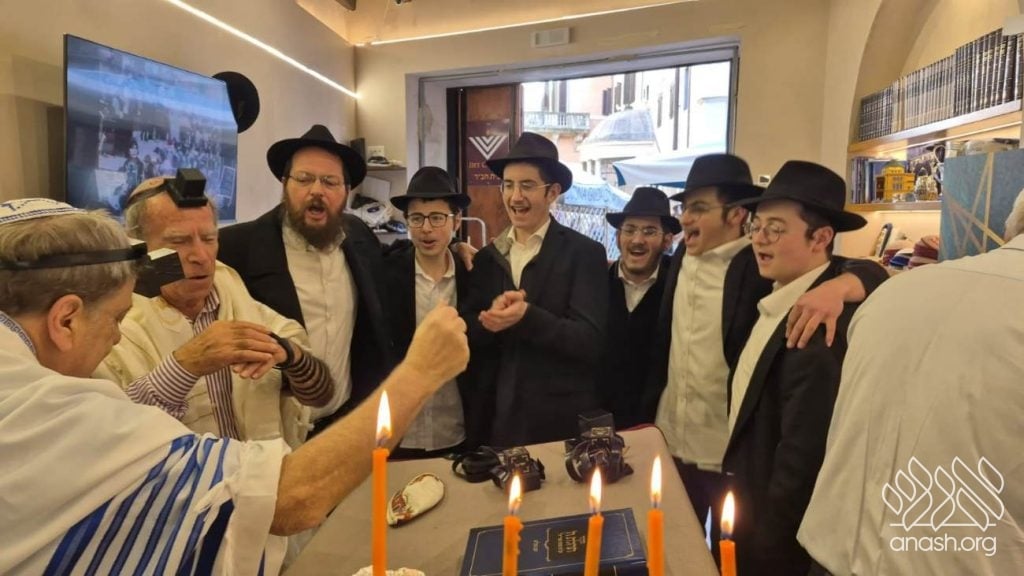
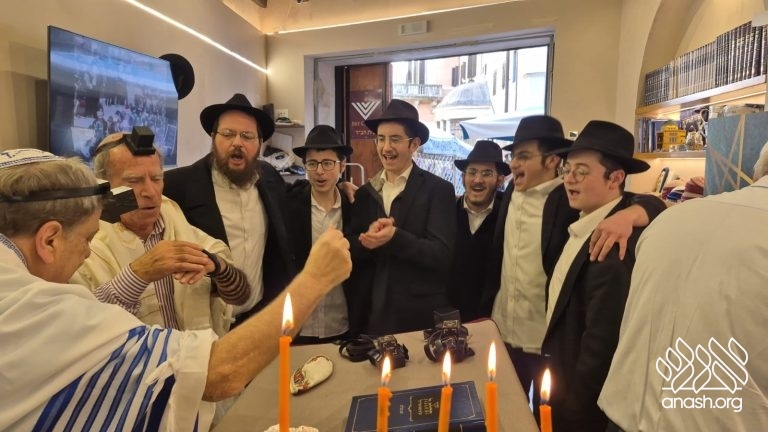
Together with a few yeshivah bochurim who had come to help for Chanukah, Rabbi Canarutto made a minyan and took out the Sefer Torah. The two men, Holocaust survivors in their 80s and 90s, put on tefillin for the first time in their lives. Both received aliyos to the Torah and celebrated their bar mitzvahs.
They danced with a joy that felt almost otherworldly, like souls finally exhaling after a lifetime of silence.
“On the last night of Chanukah,” Rabbi Canarutto says, “I planned a small public menorah lighting outside the Chabad House before driving the bochurim to the airport. I assumed only a handful of people would attend.”
Instead, a sizable crowd gathered, among them Gabriel.
Rabbi Canarutto turned to the crowd and said, “We have here a Jew who just celebrated his bar mitzvah for the first time. A Holocaust survivor. We want to give him the honor of lighting the menorah.”
Gabriel stepped forward and lit all eight candles. The symbolism was not lost on anyone. The flames burned in the heart of the Roman ghetto, where Jews had once been rounded up and sent to their deaths, now kindled by a survivor of that very destruction.
Afterward, Gabriel turned to Rabbi Canarutto and said quietly, “I need to tell you something.”
And he begins to tell his incredible story:
When the Nazis entered the Roman ghetto, Gabriel was a four-year-old child living there with his family. He and his sister were playing in the street, too young to understand danger. A Nazi soldier suddenly noticed them, grabbed both children, and began dragging them away.
As he passed a local dairy shop, the Italian non-Jewish owner saw what was happening. He ran outside and began screaming at the children, “I’ve been looking for you everywhere! Your mother is terrified!” He slapped the girl and shouted like an angry father.
The Nazi stopped. “These are your children?”
“Yes,” the man said.
The Nazi apologized and let them go.
That dairy shop owner saved their lives, and Gabriel ultimately survived the Holocaust.
Gabriel looked up at the Chabad House and said, “Eighty-two years ago, this is the exact spot where I was saved. This building was the dairy shop where the milkman ran out from. And tonight, I stood right here and lit a Chanukah menorah outside the chabd house, the dairy shop – in the very place where my sister and I were rescued.”
“Rome symbolizes the epitome of exile in place, and the Holocaust is the pinnacle of exile in time,” Rabbi Canarutto told Anash.org. “The Rebbe explains that the word ‘Rome’ also comes from ‘Romemos Keil’ – the exaltation of Hashem.
“Now, as we stand on the cusp of geulah, Rome is being transformed into a place of praising and rediscovering Hashem. Indeed, the arrival of Moshiach is imminent.”
Rabbi Canarutto added that since the menorah lighting, Gabriel has been coming to the Chabad House every day to wrap tefillin.
Eighty-two years later, a survivor of Nazi extermination returned to the place of his salvation to kindle the eternal flame that never goes out.
Contributions to Chabad Jewish Ghetto Rome can be made here.
VIDEOS:

Rabbi YY Jacobson tells the story:

 COMMENTS


We appreciate your feedback. If you have any additional information to contribute to this article, it will be added below.