




ט״ו טבת ה׳תשפ״ו | January 4, 2026
How One Educator Is Helping Struggling Readers Thrive
Having taught kriah for over 15 years, Mrs. Devorah Leah Hellinger observed that many students needed more than just repeating and memorizing. By identifying what each child struggled with, she found she could bring struggling students to read in just 6 weeks.

By Bracha Slavaticki – Nshei Chabad Newsletter
Mendel, age 8, avoids doing Chumash homework. When asked to read from a Hebrew text—even Tehillim—he gets flustered. His parents have been trying different methods for years, and they have spent hundreds of dollars on tutors, but something is still holding him back.
It hasn’t been easy for 10-year-old Chaim either. He just brought home his end-of-year report, and his teacher gently indicated that Lashon Kodesh reading is still a struggle. “He’s a smart boy,” the teacher said at the last parent-teacher conference, “but he can’t read the text comfortably on his own.” His mother’s heart sinks, but she’s not surprised.
Seventh-grader Leah has been struggling as well. She’s been falling behind for years, and now she feels like kriah just isn’t possible for her. But deep down, she’d love to read fluently and finally feel like she’s up to par with her class.
“When the right principles are applied, every child can learn how to read,” shares kriah specialist Mrs. Devorah Leah Hellinger. “I hear from many parents who think that their child will never be able to read properly because they lack the focus, brainpower, or patience to learn. The truth is, when a child struggles with reading, there is usually a specific skill that they did not learn properly. Once that is understood, almost any obstacle can be overcome.”
Having taught kriah for 15 years at schools in Crown Heights and Kingston, PA, she observed that many students needed more than just repeating and memorizing. By identifying what every child struggled with, she found she could bring an entire class to fluent reading.
“In one class, I had students who didn’t yet know all of the Alef-Beis, others who were reading fluently, and yet others at many levels in between,” Mrs. Hellinger said. “I developed a program that ensures each student is reading fluently by the end of the year, no matter where they started. After experiencing success with several classes, it occurred to me that the same principles could be applied to help older students who struggle with kriah.”
After working with numerous older students, Mrs. Hellinger discovered that it was possible for students to learn all the skills they were missing in six weeks. That is the bold mission of her program, called Kriah Mastery.
“Children go through years of tutoring, which can be stressful for students and costly for parents—and in the end, they still might not read very well. With targeted lessons, children, and even adults, can fill in whatever they’re missing in a short amount of time.”
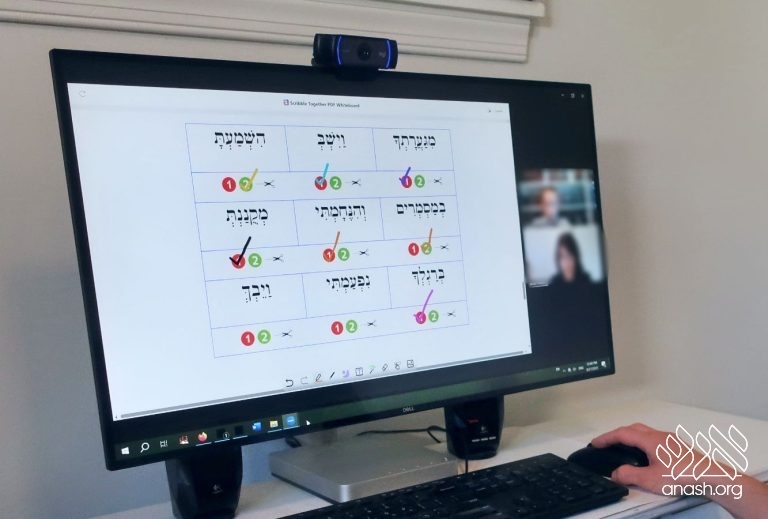
The six-week goal has proven itself time after time for students who have even just a basic background in kriah. The lessons are personalized for each student, and they include innovative worksheets and decoding activities that stimulate the mind and keep things fun and interesting.
For students who can’t read easily, learning can be a drag.
“If a student has a hard time with one subject,” Mrs. Hellinger explains, “they lag behind in just that one area. But if they can’t read well, they may end up feeling unsuccessful in all limudei kodesh and may even resist davening. It causes a lot of embarrassment and can deflate their confidence all around.”
Baruch Hashem, it doesn’t need to be this way. Having worked with hundreds of students to date, she believes that every child can be successful—and the process can be enjoyable and shame-free.
Many parents are wary of kriah solutions, especially if they have been practicing for years with only minor improvement. But that’s where a skill-based program comes in. Practicing with the same mistakes won’t make them go away. Children need the tools to develop new skills and reading habits.
When asked about common mistakes parents should avoid, she points to the notion that once kids have learned how to read, they’re done. “Young children need to keep practicing kriah for a year or two after they’ve learned to read, so that it will come naturally to them. Without this continued learning, their reading won’t develop fully, and they may read very slowly or with mistakes.”
She also cautions against timing kriah practice, as it causes students to rush through and make mistakes. “Children naturally tend to read at the fastest pace they are capable of. If they’re reading very slowly, there’s a skill they need to work on.”
“The most important part of teaching kriah is gaining the student’s trust, and building his or her confidence,” Mrs. Hellinger said. “Once that’s accomplished, everything else follows. And whether the student is 6 or 16, the process is enjoyable and leads to feelings of great success.”
For Mrs. Hellinger, the best part of her work is seeing her students shine and hearing parents express their joy and relief.
“Students who couldn’t follow along in class are now keeping up with confidence. Kids who struggled with davening or thought they would never be able to be a chazzan are suddenly feeling empowered. It’s the nicest thing to hear, and it’s the pride of every parent!”
To find out more information, visit KriahMastery.com.
 COMMENTS


Can a male be trained in this method to be able to help adults males; or is there a referral for adult males to be able to achieve kriah success?
“To find out more information, visit KriahMastery.com.”