



י״א אב ה׳תשפ״ה | August 5, 2025
How Chabad in Vienna Became a Fortress of Hope, Education, and Continuity
As the Jewish diaspora contends with waves of antisemitism, assimilation, and a fading sense of identity, a thriving, vibrant Jewish community has arisen in Vienna—the heart of Europe and a city steeped in painful historical memory. Behind this transformation stand the Rebbe’s shluchim, leading a quiet revolution in education, community life, academia, and even Jewish tourism.
As the Jewish diaspora contends with waves of antisemitism, assimilation, and a fading sense of identity, a thriving, vibrant Jewish community has arisen in Vienna—the heart of Europe and a city steeped in painful historical memory. Behind this transformation stand the Rebbe’s shluchim, leading a quiet revolution in education, community life, academia, and even Jewish tourism.
By Josh Aronson
As the Jewish diaspora contends with waves of antisemitism, assimilation, and a fading sense of identity, a thriving, vibrant Jewish community has arisen in Vienna—the heart of Europe and a city steeped in painful historical memory. Behind this transformation stand the Rebbe’s shluchim, leading a quiet revolution in education, community life, academia, and even Jewish tourism.
From Ruins to a Jewish Core: The Chabad Education Campus
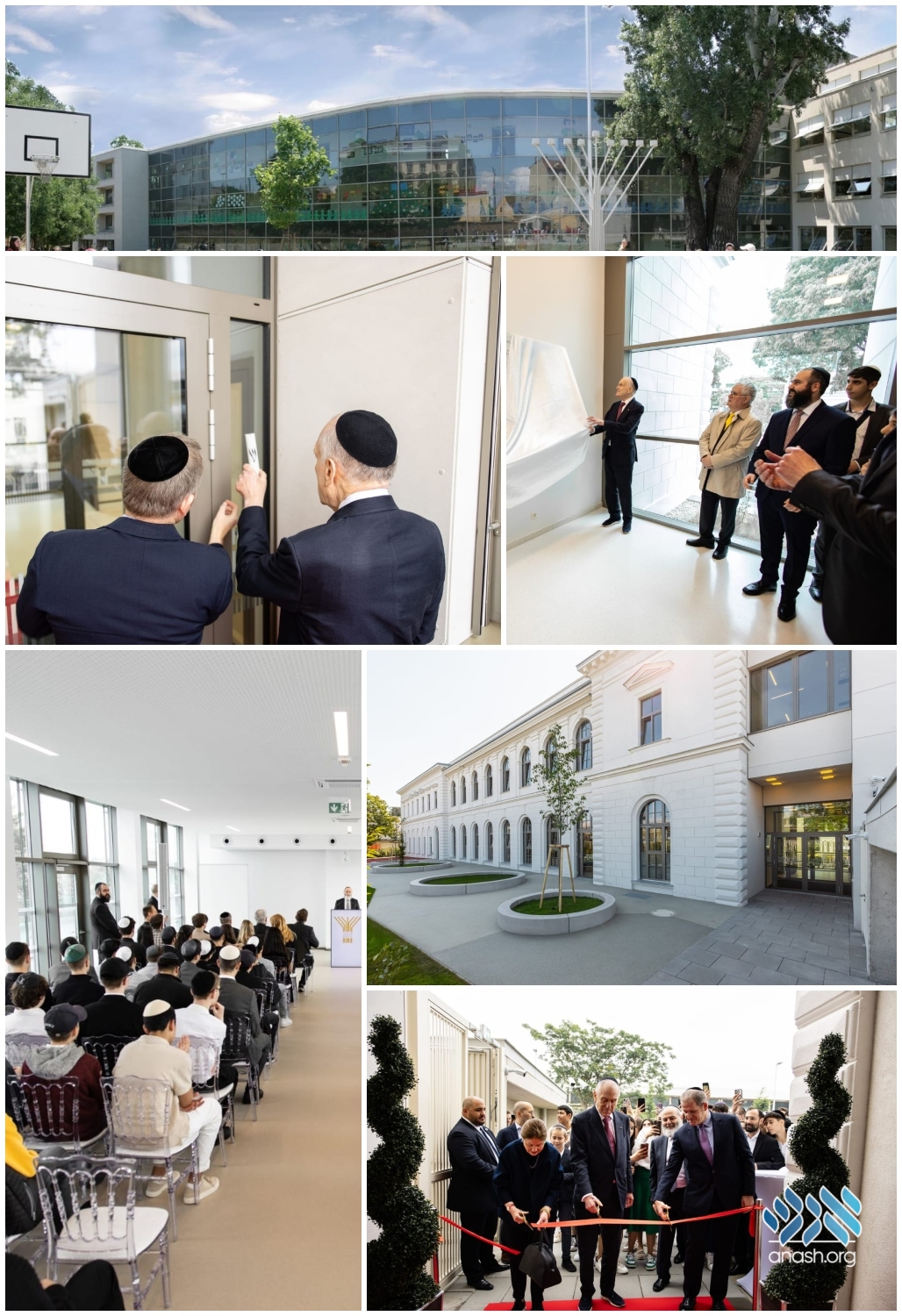
Where once stood a historic train station—formerly owned by the Rothschild family—now stands one of the largest Jewish campuses in Europe. Adolf Hitler gave a speech there upon his entry into Vienna, and it was later the site of the infamous antisemitic exhibition The Eternal Jew. Today, the site houses a thriving Jewish center of life and learning.
The campus includes ten kindergartens spread throughout the city, as well as an elementary school, middle school, and a new Jewish high school. It also hosts bachelor’s and master’s programs in business (LBS), kosher student dormitories, and is home to a yeshiva, seminary, Sunday school, and various after-school programs. Altogether, more than 1,000 students attend Chabad institutions in Vienna—about 520 in the kindergartens and school system, and approximately 340 in the university.
“We provide life skills and values,” says Rabbi Jacob Biderman, head shliach in Vienna. “Since October 7th, demand has skyrocketed. People are searching for security and identity.”
Establishing the campus wasn’t easy. Initial requests for permits were repeatedly denied due to political opposition and historical sensitivities. Then, unexpectedly, help came from a local journalist—a former editor of an antisemitic newspaper—who publicly repented for his views and became a vocal supporter of the Jewish project. He published a series of positive articles and used his connections to persuade authorities to approve the plan. “He became the angel who opened the way for us,” recalls Rabbi Biderman.
Located not far from the city center, the campus walls now display children’s artwork, sacred texts, and the Israeli flag. The site is not only home to educational institutions but also hosts community events, conferences, and seminars.
Support from the Lauder Foundation and the Yael Foundation
This success has also been made possible thanks to strong, stable backing from international philanthropic organizations. The Lauder Foundation, led by Ronald Lauder, has been a key pillar in building the academic and educational institutions on campus—funding infrastructure, scholarships, and academic programs. “Without the Lauder Foundation’s support, much of what’s happened here wouldn’t have been possible,” say campus administrators.
The Yael Foundation, which works to strengthen Jewish education in the diaspora, has also played a significant role. It supports Jewish schools in Vienna, helps with teacher training, builds identity-building programs, and provides innovative resources to empower students. Rabbi Israel Wolfsov says: “The Yael Foundation helped us dream big. Thanks to them, we turned the Jewish school into a top-tier educational hub.”
Europe’s Only Jewish University of Its Kind
The Lauder Business School (LBS), led by Rabbi Baruch Sabach, has become a magnet for Jewish students from around the world. Beyond high academic standards, students enjoy Shabbos meals, Jewish studies, personal support, and collaborative programs with Israeli institutions.
“We have Israelis, Russians, Americans, Colombians—all Jews who want to study without fear of their identity,” Rabbi Sabach explains. “The dorms are right next to the university, and life here allows students to feel at home.”
In conversations with students, one theme repeats: a home away from home. In addition to academics, there are weekly Shabbos gatherings, seminars, lectures, and Friday night meals with dozens of young people around the table. The university administration fully supports these activities.
A Home for Jews from the Former Soviet Union
Rabbi Moshe and Dina Kolomiytsev have built the largest Russian-speaking Jewish community in Europe. In addition to educational and social activities, they work to strengthen Jewish identity among immigrants from Ukraine, Russia, and other former Soviet republics.
“We fight assimilation every single day,” says Rebbetzin Kolomiytsev. “Every child who enters a Jewish framework is a success. Every circumcision is a miracle. And it’s happening here.”
The Russian-speaking community now includes hundreds of families, many of whom are war refugees. Chabad provides them with physical assistance, emotional support, and a Jewish framework—often for the first time in their lives. The guiding motto: “No matter where you came from—you’re Jewish, you belong.”
Education—From Kindergarten to the Wedding Canopy
The formal education system now serves over 600 students. Many of them had no prior exposure to Judaism before enrolling. Rabbi Israel Wolfsov, the educational director, explains: “Our goal is to instill identity—Hebrew, love of Israel, and community. We successfully integrate students from all backgrounds—chareidi, traditional, and secular—into one classroom, one heart.”
The curriculum is divided by levels, so students without prior Jewish knowledge can gradually integrate. Teachers are carefully selected, and the approach is inclusive and non-coercive. In addition, students participate in holiday lessons, international trips, seminars, and extracurricular activities.
Even Tourists Feel at Home: Chabad Hotel in Vienna
One of the most notable projects representing the Rebbe’s vision in Vienna is the Jewish hotel located in the heart of the city—not far from the campus. The hotel allows religious and Jewish tourists from around the world to enjoy a comfortable, kosher, and safe stay in the center of Europe.
Run by Rabbi Motti Segal, the hotel also serves as a spiritual home: it includes a shul, communal Shabbos meals, tourist information in Hebrew, and spiritual guidance. “Our goal is for every Jew who comes to Vienna to feel not just that they’re not alone—but that they’re at home,” explains Rabbi Segal.
The hotel also hosts groups, youth delegations, rabbis, journalists, and students—and is an integral part of Vienna’s educational and outreach efforts. It frequently hosts classes, community events, and informal gatherings that bring people together.
Vision for the Future: Expanding Dormitories, Strengthening Ties with Israel
As the community grows, the shluchim are working to expand student housing and build the next generation. “We need 100–200 more beds,” says Rabbi Sabach. “Without housing, it’s hard to maintain Jewish life. It’s an urgent need.”
At the same time, plans are underway to deepen ties with the State of Israel—through programs like Birthright, Masa, the Ministry of Diaspora Affairs, and more. The dream: to build a living, two-way bridge between Yerushalayim and Vienna.
A Light in the Diaspora
Chabad’s Vienna is not just a community—it’s a story of mission, identity, hope, and revival. Every institution—kindergarten, university, hotel—is built on a single principle: every Jew matters. Everyone belongs.
“We don’t judge—we embrace,” Rabbi Biderman concludes. “And that’s exactly why we’re seeing miracles—every single day.”
 COMMENTS


We appreciate your feedback. If you have any additional information to contribute to this article, it will be added below.