




כ״ח תשרי ה׳תשפ״ו | October 19, 2025
Hamas Violates Ceasefire, Israel Bombs in Response
War Summary, Day 745: Bodies of two hostages identified, Hamas withholds bodies of hostages, Hamas terrorists attack IDF positions beyond ceasefire lines, two IDF soldiers killed, IDF carries out heavy retaliatory strikes, mediators reimpose the ceasefire, frustration grows within the security establishment, Hamas refuses to disarm, violating ceasefire, and what’s next.
War Day 745
0 living hostages remaining in Gaza.
16 bodies of hostages held in Gaza.
168 living hostages rescued.
69 hostage bodies rescued.
1,940 Israelis killed.
918 fallen IDF soldiers.
70 fallen Israeli police.
32,390 estimated projectiles fired at Israel.
1 Jewish nation united in prayer, charity, and good deeds.
Top Headlines
– Bodies of two hostages identifies
– Hamas withholds bodies of hostages
– Hamas terrorists attack IDF positions beyond ceasefire lines
– Two IDF soldiers killed
– IDF carries out heavy retaliatory strikes
– Mediators reimpose the ceasefire
– Frustration within the security establishment
– Hamas refusing to disarm, violating ceasefire, what’s next?
Hostages
The IDF completed the identification process of the bodies of two hostages returned yesterday. They were:
Ronen Engel, 54
Sonthaya Oakkharasr, 30
Hamas is still holding the bodies of 16 hostages, of which Israel is certain that Hamas can reach several more.
Today, Hamas said that they located the body of another hostage, but would only return it to Israel “if the field conditions are suitable.” They did not return the body.
The delay in returning the bodies which Hamas can locate is a severe breach of the ceasefire agreement, and a clear attempt by Hamas to buy time, so that they can reassert control over Gaza.
But this is not the only ceasefire breach…
Gaza
The IDF announced the names of two heroes who were killed while operating within the Yellow Line, and guarding Israel:
Maj. Yaniv Kula, 26
Staff Sgt. Itay Yavetz, 21
The incident happened Sunday morning, in southeastern Rafah. The soldiers were operating excavators in the area, which is under full IDF control, in order to remove Hamas infrastructure.
A large group of Hamas terrorists emerged, and conducted three near-simultaneous attacks:
– One cell of terrorists emerged from a tunnel, and fired RPGs at an excavator. Two soldiers were killed in the attack.
– A terrorist sniper fired and injured a third soldier.
– A short while after, a fourth soldier was injured by sniper fire.
Immediately after the attack began, the IDF began to strike back with Air Force jets and artillery fire, specifically targeting the terrorists, and the tunnel and infrastructure they may have used in Rafah.
Not long after, on the other end of Gaza, several armed terrorists began to approach IDF forces in the Beit Lahiya area. Beit Lahiya, in Gaza’s northern end, is beyond the Yellow Line, and under full IDF control.
When the armed terrorists continued advancing directly towards the troops, and ignored warnings, the Israeli Air Force carried out an airstrike to eliminate them.
**
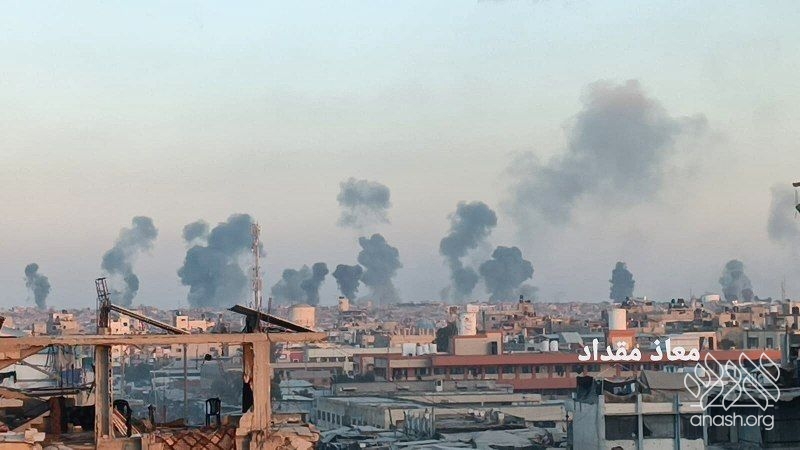
Following Hamas’s severe breaches in the ceasefire agreement, the IDF carried out a wave of airstrikes against dozens of terror targets throughout Gaza.
Many of the targets were in Nuseirat and the central Gaza area, as well as in west Khan Younis—in locations the IDF avoided until now, because Hamas had been holding hostages in there.
Among the targets attacked were sites for storing weapons, military infrastructure used by terrorists for terror activities, firing positions, terrorist cells, and additional terror infrastructure.
In addition, the IDF destroyed a six-kilometer-long (3.7 mile) Hamas tunnel, which was a primary underground route used by Hamas terrorists in attacks against Israel. The IDF did not destroy the tunnel until now, because Hamas had held living hostages in it.
Arab media report that a strike in central Gaza eliminated Yahya al-Mabhouh, a commander in Hamas’s elite Nukhba Force who led massacres on October 7th.
**
Hamas did their best to deny responsibility for the deadly attack in Rafah. They claimed that since the renewal of fighting in March, they lost communication with Hamas terrorists in Rafah, and don’t even know if they’re still alive.
U.S. President Trump appears to believe a version of this. This evening, he told reporters aboard Air Force One that rogue Hamas militants might be behind the shooting in Rafah. “We think maybe the leadership isn’t involved in that, that it’s some rebels within. It’s going to be handled toughly, but properly,” he told them. (Axios)
However, this is Hamas, who is notorious for directing attacks and deflecting responsibility. The attack in Rafah less than two kilometers from other major Hamas groups. The attack also fits within Hamas’s ongoing pattern of ceasefire violations.
**
After Israel responded with a row of powerful airstrikes, and instructions not to allow humanitarian aid in on Monday, the U.S. and mediators stepped in, and the ceasefire was re-implemented, and the aid back on schedule.
Defense Minister Israel Katz warned that Hamas will learn “the hard way,” that the IDF will protect its soldiers. He added that:
“Hamas will pay a heavy price for any shooting and violation of the ceasefire, and if the message is not understood, the intensity of the responses will increase.”
IDF Chief of Staff Lt. Gen. Eyal Zamir told troops: “IDF troops are required to remain on high alert. We are prepared and preparing for any scenario,” he says at a handover ceremony for the president’s military secretary.
Israel Hayom reports intense frustration amongst Israeli security officials, one of whom expressed to the news outlet: “If there was still any doubt about American involvement, now it’s clear: We can not move an inch in Gaza without their permission. What happened tonight is unequivocal proof. Anything that goes against their spirit will be reversed.”
Security officials expressed concern that a sort of Lebanon-style deal would be imposed in Gaza, where it won’t work, due to Hamas’s entrenchment within Gaza society.
**
Hamas officials have already told several news outlets that they will not disarm, and at most, will agree to a 3–5 year temporary ceasefire with Israel, while they rebuild. This is obviously in violation of the ceasefire agreement.
U.S. President Trump, who takes pride in the deal he orchestrated, has made it clear that he wants Hamas gone. The question is, how does he think that could happen? The mediators’ original agreement was for an international force to do the job. The mediators still prefer this, and are working towards establishing it. But with Hamas refusing to disarm, it is becoming more clear to President Trump that this won’t cut it.
Many suspect that if Hamas continues to cross the Yellow Line and target IDF soldiers, and continues with the daily mass killings of Gaza civilians, then Trump will give his approval for the IDF to finish the job.
Prime Minister Netanyahu likely assesses that it’s worth the wait, for two reasons:
- To try and squeeze the maximum number of hostage bodies out of Hamas, and
- To be able to fight Hamas with Trump feeling good about it (and the living hostages out of harm’s way!).
As a reminder, these are the ways Hamas is violating the ceasefire agreement:
- Not returning the bodies of all hostages they can locate within 78 hours.
- Mass executions of Gaza civilians throughout the strip.
- Repeatedly crossing into the Yellow Line area, ignoring warnings.
- Attacking IDF positions in the yellow, even killing two IDF soldiers.
- Refusing to disarm, which is required in stage two.
**
IDF troops are not stationed all along the perimeter of the Yellow Line. In most areas, the soldiers are concentrated in bases that are closer to Israel’s border. Throughout the day, soldiers operate around the area of control to search for and destroy any remaining Hamas infrastructure.
In order to keep Gaza civilians out of harm’s way, the IDF repeatedly send maps of the ceasefire line to Gazans. In addition, the IDF is working to place yellow signs and roadblocks all along the perimeter.
Other
The government voted to change the name of the ongoing war to “Milchemet Hatkuma,” or in English, “The War of Revival.”
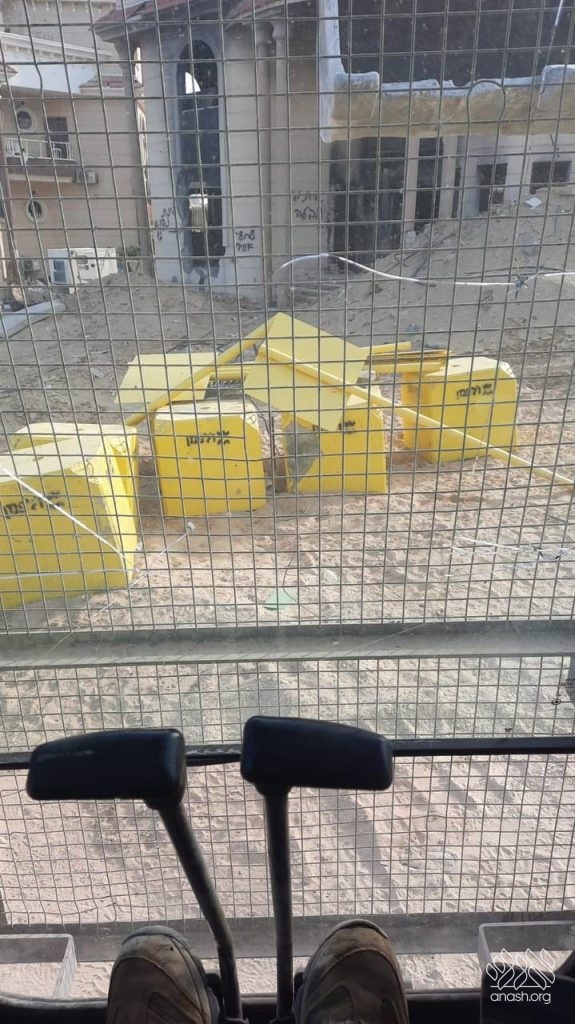
The IDF is working to place yellow warning signs and roadblocks along the entire perimeter of the Yellow Line
 COMMENTS


We appreciate your feedback. If you have any additional information to contribute to this article, it will be added below.