




כ״ב אלול ה׳תשפ״ה | September 14, 2025
Do We Have a Tznius Crisis? Here’s What The Rebbe Had To Say
Is a decline in tznius worthy of being called a “crisis”? Throughout the years, especially around the 1970s, the Rebbe addressed the issue clearly. The Rebbe didn’t hesitate to say it as it is, and he directed us to look into Torah and the Rebbeim’s words for guidance.
Is a decline in tznius worthy of being called a “crisis”? Throughout the years, especially around the 1970s, the Rebbe addressed the issue clearly. The Rebbe didn’t hesitate to say it as it is, and he directed us to look into Torah and the Rebbeim’s words for guidance.
Mrs. S. L. Oberlander
We are in a crisis! Or, are we not? What is a crisis, if we care to know… According to Oxford – cri·sis /ˈkrīsəs / noun – a time of intense difficulty, trouble, or danger.
Let’s hear what the Rebbe thought about the issue at hand.
Throughout the years, especially around the 1970s, the Rebbe often addressed the issue clearly. The Rebbe didn’t hesitate to say it as it is, and they were recorded for eternity. The Rebbe always directed us to look into Torah and the Rebbeim’s words for guidance.
Before quoting the Rebbe’s words, it’s worth prefacing:
Much that is taught through Chazal is sourced directly in Torah and expanded upon in Shulchan Oruch, while many other teachings and halochos have been enacted by Rabbonim and Poskim, hence, we have Mitzvos M’Doiraysa and Mitzvos M’Darabonan.
When it comes to Tznius, we also have the categories of Das Moshe – from the Torah, and Das Yehudis – from the Chachomim. Whereas in most mitzvos, the application of Halachic rulings is entrusted to the Rabbonim, according to the principles of Torah, the proper fulfillment of “Hatzneia Leches Im Elokecha” was entrusted to the refined Jewish women of each generation. Das Yehudis includes safeguards that ensure physical and emotional privacy. So vital are the laws of Das Yehudis, that Halacha considers them binding. If a woman transgresses Das Yehudis in any way, she undermines her marriage and can lose the rights of her Kesubah.
The Torah is our handbook, from the most intense dealings to our minor and petty actions.
Hashem created the world and everything within to serve Him, and He created man to accomplish this mission. Yet, even more than that, He chose us amongst all others and against all odds and charged us with this mission, which ultimately brings us closer to Him as we elevate this world and bring G-dliness into this world.
How do we accomplish this? Through Halacha – Torah guidelines – rules and regulations. Building an edifice for Hashem required us to fit the nuts and bolts according to the manufacturer’s manual.
*
Now to the Rebbe’s words.
Leafing through the Sichos, the Rebbe’s plea of urgency is quite obvious.
On 7 Adar 1, 5730-1970 the Rebbe wrote to the Worldwide Central Organization of Nshei U’bnos Chabad – “I am of the opinion that the topic of Tznius must be set as one of the top priorities of the daily schedule” (Igros Kodesh Vol 26). As per the Rebbe’s instructions, buttons with pins were prepared for the next event.
At the Kinus of Nshei Ubnos Chabad on 28 Iyar 28 5730/1970, the Rebbe emphasized that the safety and security of Klal Yisroel is reliant upon the Kedusha and Tahara of Bnos Yisroel. “When the Almighty sees that by the Jewish nation, wherever they are, there is no lack of Tznius – then the Almighty is between them, as it says, ‘to save you and to place your enemies before you.’”
In a letter dated 27 Sivan 5728/1968 (9512), the Rebbe responded to a Kallah, “Upon your inquiry as to which mitzvah merits an extraordinary segulah for a successful marriage – it is unquestionable that Taharas Hamishpacha and Tznius (head coverings and apparel etc.) merit great reward as is brought in the Zohar.” And, at a Sicha 4th day Succos 5751/1990, the Rebbe said, “Through the merit of Nshei Ubnos Yisroel in our generation, for increasing their Tznius, we will merit the hastening of the true and complete Geula.”
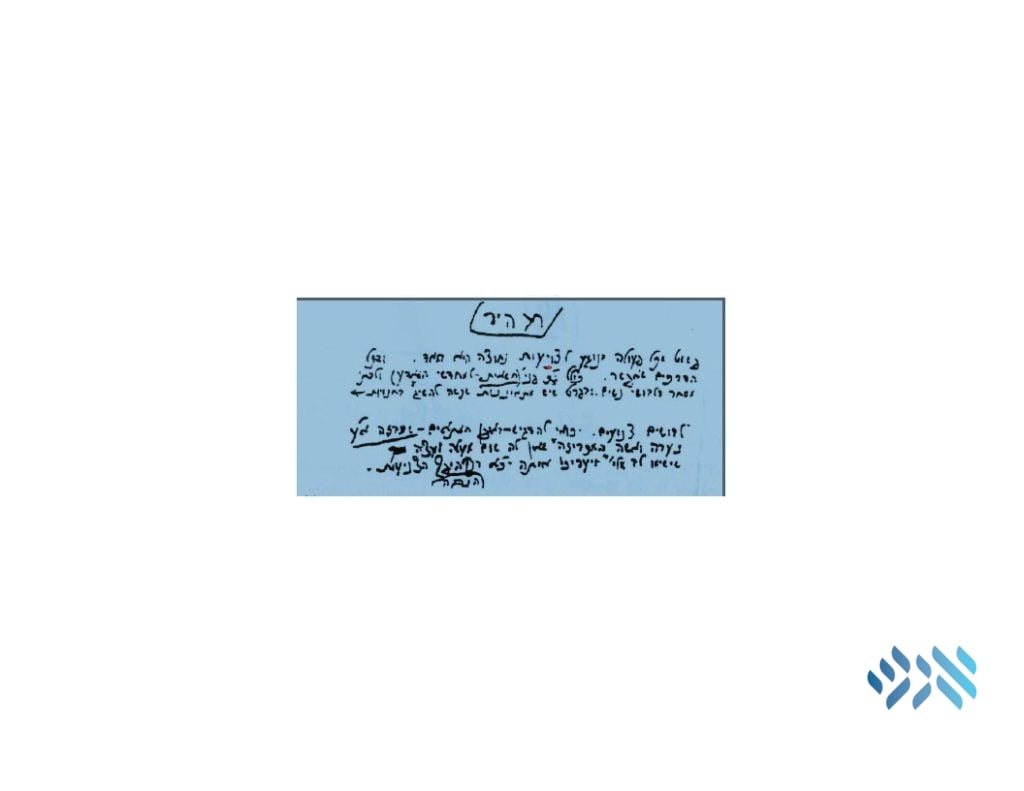
On the other hand, the Rebbe was not shy in proclaiming that failure to follow the halochos of Tznius are detrimental for both the individual and the community at large. In a response to Nshei Chabad for an inquiry as per the theme for their annual convention, the Rebbe penned the following (see Ksav Yad Kodesh):
“Urgent
“It is obvious that any actions with regard to Tznius are extremely important and is to be achieved in all manners possible. This includes approaching (in an inconspicuous way – fashion designers) and women’s wear shops. Especially since there are those who complain that Tznius clothing are difficult to find in the stores.
“It is worth emphasizing, appropriately, that women and girls, whose attire is in an untzniusdik fashion, thereby call attention to themselves, and are disgraced, by proclaiming that they possess no intrinsic values to acquire attention to be evaluated, only in a manner which is contrary to the behavior of Tznius.“
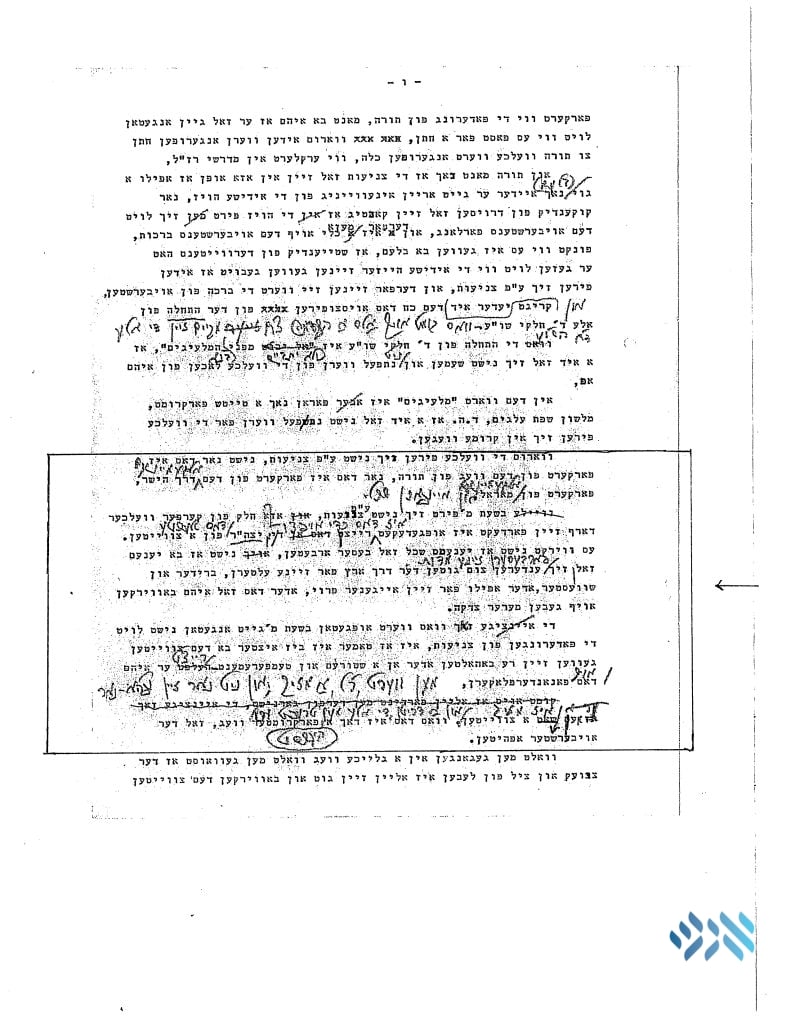
Some argue that whether one dresses in accordance with the laws of Tznius is their private business. Others argue that focusing on modesty of dress is a distraction from the more primary concern of whether one has proper middos and is a good and kind person. At the farbrengen of 12 Tamuz 5730/1970, the Rebbe refuted these positions and demonstrated that dressing immodestly causes harm and damage to others and is an act of cruelty. This applies regardless of how innocent one’s intention to dress immodestly might be, since the outcome and effect of dressing immodestly is that one is engaging in a lifestyle that harms and damages others. (The Rebbe edited the Sicha and added that one becomes a “mazik,” a public damager – see Ksav Yad Kodesh.)
In a Yechidus with Harav Mordechai Shmuel and Sima Ashkenazi in Tishrei of 5729/1968, the Rebbe stated that the determining factor (“even habochein”) of Yiras Shomayim by women is Tznius and Tahara.
The Rebbe notes that when one walks on the street, it should be evident that here walks a Yid (18 Sivan 5724). Our outer dress does not only impress upon others but even more upon ourselves. Our appearance is a reflection of our pnimius (Igros Kodesh, Vol 9 -2834). How insulting when we dress immodestly, revealing that we lack merit to be appreciated, beyond the skin covering our bones (Sicha Simchas Torah 5730 – Likutei Sichos vol 23 pg 487).
The Rebbe often quotes the Zohar, which says that for abiding to the mitzva of Tznius it is evident that we can bring brocha into our homes; and the Rebbe stressed that in the zchus of Tznius we are promised gezunt, parnassa and nachas for generations! (Igros Kodesh vol 8, pg 203) What more can one ask for? Which other Mitzvah generates such reward?
Finally, the Rebbe’s encouraging words are a balm to our neshama:
“Hashem presents us with a nisayon and simultaneously grants us the inner strength to rise to our challenge.”
 COMMENTS


Thank you so much for this article.
I didn’t read the article.
But just saying that it can feel very uncomfortable for men to walk down the street and see what what they are seeing…
I think that even on a most simple level, it’s simply painful (especially fir men) to see some people dressed the way that they are dressed…
Hashem Yerachem. May Hashem help us very soon.
…but since a person ought to be saying or thinking words of Torah when walking in the street, as stated many times in Hayom Yom, they can’t do that where there’s טפח באשה!
just curious how do you know those people who aren’t dressed modestly aren’t just like unaffiliated jews who weren’t ever taught the Torah and have never heard of tzinius? or goyim who look like jews?
Like yosef I too can be misgaber
In not understanding what this paragraph in the article is trying to say and what it is trying to get to:
“It is worth emphasizing, appropriately, that women and girls, whose attire is in an untzniusdik fashion, thereby call attention to themselves, and are disgraced, by proclaiming that they possess no intrinsic values to acquire attention to be evaluated, only in a manner which is contrary to the behavior of Tznius.”
Would the writer be able to please explain?
That is part of the Rebbe’s note to Nshei Chabad of what to convey to the women.
Ok, trying to understand what the Rebbe is bringing out.
The way we dress and behave also communicates about ourselves to the world.
There are different parts of a person. The more human, physical parts, and the more inner, noble dignified parts of a person. A persons heart and mind for example.
Dressing untznius, revealing what is meant be concealed, breaking the boundaries of Halacha, is a disgrace to a person as it draws attention to the more physical aspects of a person and away from the inner, more noble aspects of a person.
In a way it’s communicating that the more noble parts of a person are not as important.
And are not worthy of attention . only when one dresses and act in a way opposite of tznius are they worthy of attention.
Which is a disgrace to their inner, real self. Because there is so much more to us than the physical aspects of our being.
Rebbetzin Oberlander, does this make sense?
Could somebody explain tznius al pi pnimus how its nogea lmala to malchus shcinah that is presented lmata in a bas yisroel whats the pgam etc is it yenikas chitzonim rch”l
It’s the same for men and woman, our Neshama should remain covered . As the shechina is hidden.
It’s Woman who usually have a bigger desire for style. (And style is usually not tznius)
A well dressed man at a goyish wedding is usually Tzniyus. Unlike most of the women.
It’s a challenge but as the writer said it’s a challenge but we can overcome it.
Yes The Rebbe explains on simchas Torah 5730 that we need to explain to the girls that when a girl is dressed untzniusdik, it’s like she’s carrying a placard stating she has no sechel or good middos to attract someone to her, even her face is ugly because the only thing she can resort to getting a hello from a bochur is uncovering that which should be covered. What a disgrace especially because every Jewish girl is truly beautiful and has maalos from the Imahos
In some cases, there are women who feel the need to dress not tznius because that’s what their husbands want. So sometimes the men are also part of the problem
BH
What was the hava amina that this is NOT, equally, almost always, the husband’s problem?
The hava amina is that each person is responsible for their own behavior.
So, you are saying that if the wife, Chas Veshalom, was not careful with Kashrus in her kitchen, or Shemiras Shabbos in her home, it is her “responsibility for her own behavior”??!!
Seriously?
YES!! Tznius is a “family” issue, that affects the family and the home. NOT just 1 person.
Every generation has its defining nisayon. For our grandparents it was holding on to Yiddishkeit in the face of poverty and persecution. For our parents, it was rebuilding Jewish life after the war. And for us? The Rebbe told us clearly: the great test of our time is tznius.
I laughed out loud when I read the comment that “tznius” is a “trigger” word some. When people hear the word tznius, they think “hemlines and sleeves.” But the Rebbe taught that tznius is much bigger. It’s about how a Yid presents themselves to the world — not to scream for attention, not to follow every passing fashion, but to live with the steady dignity of someone who carries Hashem’s name on their shoulders. Kol kevudah bas melech penimah — the true glory of a Jewish woman shines from within.
The Rebbe said openly: tznius is our protection. In a world where threats surround us, this mitzvah is our spiritual Iron Dome. When Jewish women and girls strengthen in modesty, the Shechinah dwells among us and brings safety to the entire nation. What greater responsibility — and what greater privilege — could there be?
The Rebbe also promised something breathtaking: every step forward in tznius hastens Moshiach. Imagine — an extra button closed, a skirt chosen with care, a daughter inspired to dress proudly as a bas Yisroel — each of these is cosmic, each one tips the scales of history. If there is one area where our actions literally change the destiny of Klal Yisroel, it is here.
Why is this issue the #1 issue of today? Because tznius is under attack from every direction. The culture around us worships the superficial, celebrates exposure, and mocks holiness. That is why the Rebbe cried out that tznius must be our top priority. It is the line in the sand. If we hold strong here, we hold strong everywhere.
Tznius is not a burden — it’s a crown. It’s not about rules — it’s about identity. And it’s not about the past — it’s about the future. In Lubavitch today, tznius is issue number one because it is the test Hashem chose for our generation, and it is the key to bringing the Rebbe’s dream of Geulah to reality.
The choice is ours: will we let the world tell us how to live, or will we live as who we really are — children of Hashem, wearing His royalty with pride?
This should be copied and posted widely
Enough talk! We need action.
Today’s generation rejects guilt and negativity, but responds to authenticity, style, and empowerment. The more tznius is framed as confidence, strength, and royalty — the more it will resonate.
Here are six practical, positive, and generation-appropriate ideas that Crown Heights community leaders could implement to strengthen tznius in a way that resonates with today’s young girls. Each idea is rooted in the Rebbe’s emphasis on tznius, but tailored to modern realities:
1. Role Models & Mentorship Circles:
Young girls are most influenced by peers and slightly older role models. Create small mentorship circles where seminary girls or young married women meet regularly with 6-8th graders & high-school girls. These groups should be fun and safe spaces to talk about real struggles, answer questions honestly, and model tznius as confidence, not restriction.
2. Tznius Fashion Initiative:
One of the biggest complaints today is “nothing nice/tznius is in stores.” Partner with frum designers and local boutiques to create affordable, stylish, tzniusdik lines. Run community fashion shows highlighting creativity and beauty in modest clothing. Show that tznius doesn’t mean being “out of style,” it means having a higher style.
3. Positive Messaging Campaign:
Instead of lecturing “don’t, don’t, don’t,” launch a campaign celebrating girls who live with penimius and dignity. Highlight stories of young women who proudly keep tznius and the impact it has on friends, shlichus, and Kiddush Hashem. Flip the narrative.
4. Community Workshops for Mothers & Teachers:
Mothers and educators are the front line. Offer workshops that reframe tznius not as “rules about clothing,” but as an entire worldview: dignity, self-respect, being a bas melech. Give parents the language and confidence to talk to their daughters in uplifting ways, so the message is consistent at home and in school.
5. Annual Tznius Prize / Recognition Event:
Merkoz L’inyonei Chinuch & Tzivos Hashem should create a respected community award — for example, a yearly Bas Melech Tiferes Award — recognizing young women who exemplify modesty in dress, speech, and character. The prize should be something extremely valuable, like an international trip or free scholarship to seminary or very expensive piece of jewelry. Instead of criticism, offer honor, spotlight, and pride. Girls should see that tznius is something celebrated and admired, not something to “get away with.”
6. Building a Bigger Program (Many Winners, Not Just One):
Tzivos Hashem should create a Tznius contest structured it as tiers of recognition:
• Tzivos Hashem “Bas Melech” Ranks:
Create a point-based system, similar to Tzivos Hashem army ranks. Girls earn points for achievements — dressing with dignity, inspiring peers, learning sources about tznius, submitting reflections, etc.
• Monthly Spotlights:
Each month, spotlight several “Bas Melech Ambassadors” in schools, camps, and community events. Give certificates, small prizes, public acknowledgment.
• Annual Grand Recognition Event:
At year’s end, hold a beautiful Melaveh Malka or banquet where all participants are honored, but the top winners (the highest rank, most points, or most influential ambassadors) get the major prize (trip, scholarship, etc.). Other participants get other really great prizes and plaques.
• Ongoing Community Platform
Create a dedicated “Bas Melech” column in newsletters etc where girls are featured, quotes are shared, and role models are celebrated.
Great ideas.
Just the award for the most tznius person sounds like the opposite of tznius-
Kind of Like the most humble person award although well intended seems the opposite of humility.
I thought about that point too, and it’s a valid point, but we have a crisis, a fire burning, and we must do something major to counter it. (I think this idea is water on the fire, not gasoline.) Positive reinforcement and rewarding good behavior works for youth. Ultimately our Rabbanim should be asked this question and we should follow their guidance. In fact, ALL of these 6 ideas and any other ideas should be guided by our Rabbanum.
why can we get our act together. let’s find out from basically every orthodox community why and how they do better in tznius.
Crown heights rabbanim should meet up with Boro park rabbanim and get advice from them on this issue
מצוה לפרסם עושה מצוות
As this serves to encourage and inspire others further. Especially by the younger generation who naturally performs well by the rule:
מתוך שלא לשמה בא לשמה – which is the process and avenue by all youth to eventually fulfill all mitzvos with proper intentions.
In the Rebbe’s words:
The possuk says “And walk discreetly with your God” . This verse teaches that one must be careful not to be at all conspicuous about one’s piety, as the Talmud states, “A person should always be artful in piety” (Brachos 17a), i.e. one should act wisely so that one’s piety should not be noticed at all. Many of the early Chasidim concealed their true level of observance, and if it was subsequently discovered, they were genuinely distressed ([Hayom Yom, 8th of Tishrei).
In our generation, however, there is a need to spread the wellsprings of
Judaism (especially Jewish mysticism) to as many people as possible, and
it is impossible to do such a task “discreetly.” Rather, we need to follow
the advice of Rashba, who wrote that, It is a mitzvah to publicize those
who perform a mitzvah” (Responsa 1:581). Furthermore even in one’s
own religious life, sincere effort to be discreet about one’s piety is likely
to be counterproductive since, knowing that one’s pious deeds are
hidden from the eyes of others, the yetzer hara (evil inclination) is more
likely to persuade a person to stop being pious altogether. If, on the other hand, others know of one’s religious acts, it is much more difficult to stop doing them. “Walking discreetly” is a very worthy path, but not if it is at the expense of increased activity. (Sichas shabbos parshas Eikev 5748)