




י״ט אב ה׳תשפ״ה | August 13, 2025
Cossack Gallop Revived in Joyous Farbrengen Nigun
Chabad mashpia, baal menagen, and music producer Rabbi Mendel Markel breathes life into the Cossack gallop sung by R’ Mendel Futerfas, refreshing its Chabad mesirus nefesh spirit with bold arrangements and vibrant contemporary energy.
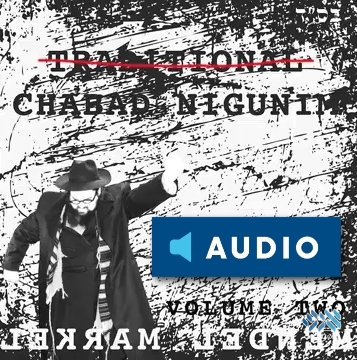
Chabad mashpia, baal menagen, and music producer Rabbi Mendel Markel breathes life into the Cossack gallop sung by R’ Mendel Futerfas, refreshing its Chabad mesirus nefesh spirit with bold arrangements and vibrant contemporary energy.
Chabad baal menagen, mashpia and music producer Rabbi Mendel Markel has released four powerful new recordings of Chabad nigunim, blending authentic melodies with fresh EDM arrangements to connect today’s generation to the timeless spirit of Chabad nigunim. These are the first four nigunim of his new Chabad Nigunim project, Chabad Nigunim Volume Two.
One highlight is the music video for Lyuba Bratsi Lyuba (Люба, братцы, лю́ба) — a stirring adaptation of an old Cossack war song, reimagined in Chabad tradition as a nigun of mesirus nefesh for Chassidus with joy under the Rebbe’s direction. When sung by R’ Mendel Futerfas by farbrengens or Chazan Tzvi Hirsh Tsatskis by kos shel bracha, the gallop of the Cossack horses became the march of Chassidim, united in purpose to bring Torah and Yiddishkeit to the world. Both the recording, as well as the video, are meant to be an ode to the joy and mesirus nefesh of the Rebbe’s Chassidim.
WATCH:

LISTEN:
All tracks are available now on YouTube, Spotify, and other major platforms. Each track stays faithful to the original tune while giving it a vibrant, modern energy — making these nigunim accessible to both seasoned Chassidim and new listeners. In addition to Lyuba Bratsi Lyuba, the released songs include Hoaderes Vihaemuno 1, Nikolayever Wonk, and Der Rebbe Zol Gezunt Zein.
“Producing and recording these tracks myself, I can keep costs very low comparatively,” says Markel. “But there are still some small costs involved in putting these out. If you would like to help more of these come out faster, you can support through GoFundMe or Patreon, which makes it possible to record, mix, and share more nigunim — helping spread the Rebbe’s message in a way that resonates with today’s audiences.” You can sponsor an entire nigun in honor of an event or in memory of a loved one, or you can just send a few dollars to help out. Everything helps (it takes around $500 to put out each nigun).
Download for free on Bandcamp. Listen on Spotify. Listen on YouTube.
Support Chabad Nigunim Volume Two on GoFundMe or Patreon.
Fans can expect more releases in the near future, with the same dedication to authenticity and creative presentation. Two more nigunim have already been sponsored and are in the recording process.
 COMMENTS


Rabbi Markel has been doing great work, may hashem help him to continue mitoch brius veoisher.
Regarding that kind of songs as luba bratsi, it is a good idea to talk over with mevinim before publishing, there is a reason why reb Mendel and other chasidim sang only two small parts of the song, 1, some of the words are totally unappropriet especially for the word ATAMAN refers to the REBBE! 2, only this words sung by chasidim were mevuror and have a meaning for chasidim. כוונתו רצויה…
I’m curious where the definitive line is. Why can a chosid from now not be further mevarer? What held meaning for Reb Mendel from then is fine but what holds meaning for Reb Mendel from now is a problem?
They sang the word “ataman” before the Rebbe during kos shel bracha, and the Rebbe gave his encouragement.
Doesn’t it mean leader?
Reb Mendel sang it and when they sang it by Kos Shel Brocho the Rebbe encouraged it
First refer to point #1
Second, I am not qualified to judge and compare chasidim, I know that I am definitely not comparable to reb Mendel, the main point is, if one hears by hasgacha protis a non Jewish song, and it resonates with his avodah, he is using it to elevate himself that is birur.
We can farbreng on many more points…
Again refer to point 1, if it’s not appropriate you can’t be mevarer
Can someone post the lyrics?
Ataman is referring to the Rebbe, and was sung as such in front of the Rebbe, as can be hear 4 minutes and 19 seconds in – https://youtu.be/tyF831K-Ysc?t=259, if it were not respectful it would’ve been shut down immediately.
That part of the video is NOT them singing it by the rebbe if you look at tsatkis hes not saying those words…
You can find it by one instance in motzai simchas torah mem zayin at exactly 1 and half hours in to kos shel bracha
Which can be found here
https://videos.jem.tv/video-player?clip=14583
https://en.wikipedia.org/wiki/Lyubo,_bratsy,_lyubo
Thousands of Cossacks, thousands of brothers
Led to Terek thousands and thousands of steeds.
And the bank was covered with the fallen brothers,
And the bloody bodies made the river waters flee.
Love it, brothers, love it, love to fight and live,
Having such an ataman, you cannot ever grieve!
Love it, brothers, love it, love to fight and live,
Having such an ataman, you cannot ever grieve!
Now the first bullet, now the first bullet,
Now the first bullet, brothers, wounded my steed.
And the second bullet, and the second bullet,
And the second bullet in a twinkle found me…
Love it, brothers, love it, love to fight and live,
Having such an ataman, you cannot ever grieve!
Love it, brothers, love it, love to fight and live,
Having such an ataman, you cannot ever grieve!
And the wife will hear, will shed not many tears,
She will wed again, she will forget about me,
Pity for my wild will, for my silent wide field,
Pity for my mother, for my stray cream-coloured steed!
Love it, brothers, love it, love to fight and live,
Having such an ataman, you cannot ever grieve!
Love it, brothers, love it, love to fight and live,
Having such an ataman, you cannot ever grieve!
Ah, my curls that are so light and my eyes that are so grey,
Soon they will be overgrown by the grass and webs,
While my heart that is so brave and my bones that are so pale
Will be scattered by the ravens over the steppes…
Love it, brothers, love it, love to fight and live,
Having such an ataman, you cannot ever grieve!
Love it, brothers, love it, love to fight and live,
Having such an ataman, you cannot ever grieve!
Chassidim only sang the first two lines. if you read the translation its a bit inappropiate for a chassidishe niggun