



ד׳ מרחשון ה׳תשפ״ו | October 26, 2025
Chayenu Launches New Chitas Podcast, Learning Initiatives
In honor of the new year, Chayenu has introduced a number of new learning initiatives and a new series of podcasts for Chitas and Rambam.
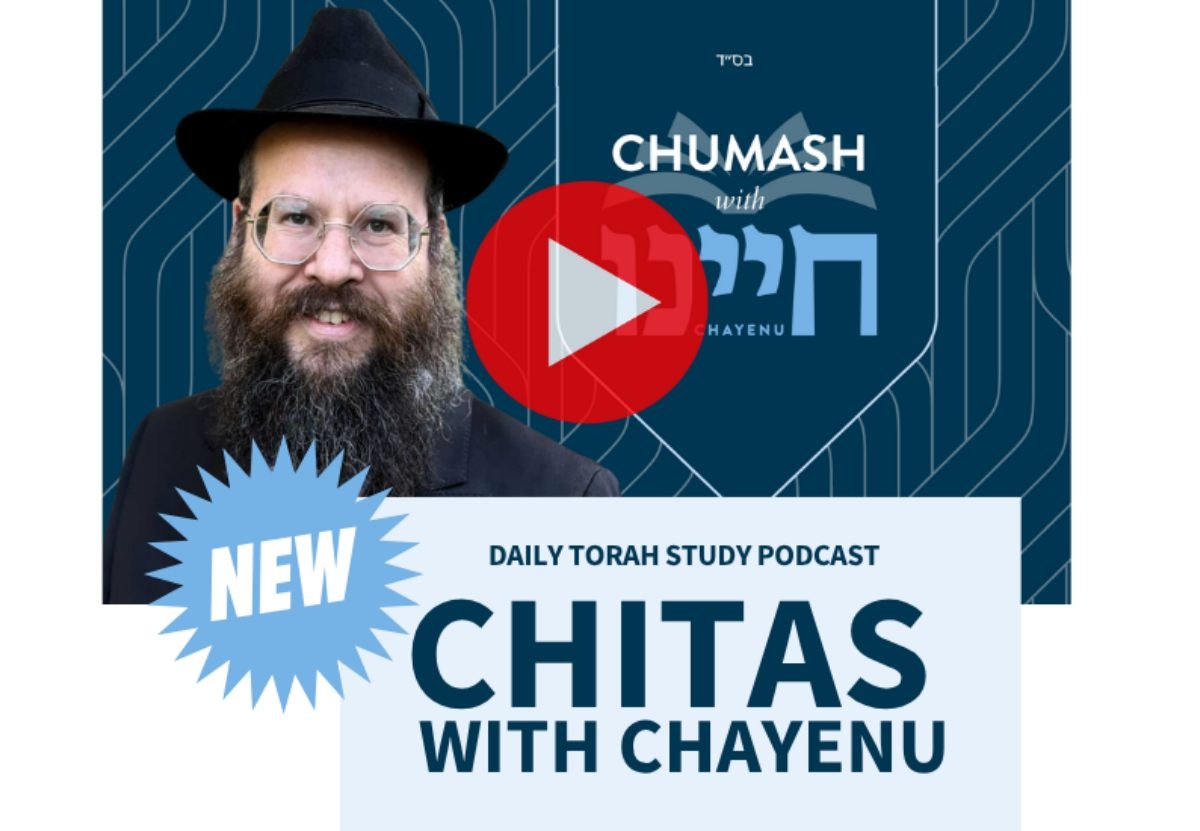
In honor of the new year, Chayenu has introduced a number of new learning initiatives and a new series of podcasts for Chitas and Rambam.
To help with the learning of the daily Chitas and Rambam, Chayenu has announced clear, well-paced video and podcast classes from expert teachers. The series begins with Chumash classes led by Rabbi Mendy Goldberg, who has a rare knack for presenting the daily Torah portion with clarity and warmth. Each class walks through the pesukim, highlights Rashi’s questions and answers, and offers practical takeaways for daily life.
New episodes are posted daily, making it easier than ever to keep up with the learning. Tehillim, Tanya, and Rambam classes will follow soon. The free Chumash podcast can be found here.
Chayenu has also launched several major new learning initiatives. One of them is the Samach Vov Project.
In 5666 (1905–1906), the Rebbe Rashab delivered an extensive Chassidic treatise known as Samach Vov. Spanning 61 maamarim over more than two years, it explores creation, human purpose, mitzvos, and the Divine revelation of the Messianic era. Despite its importance, the work had never been translated into English until now.
Rabbi Yehuda Fenton, under the guidance of Kehot Publication Society, has begun publishing an English translation of the first nine discourses, which form a distinct section within the larger work. The translation appears exclusively on Chayenu.org/5666, with a new daf uploaded weekly, along with introductions, summaries, and flow charts for easier study.
Another project underway is the Translation Project, led by Yosef Shaffer, which aims to translate all of the Alter Rebbe’s maamarim in Likkutei Torah and Torah Ohr. These foundational teachings, rich in depth and emotion, form the basis of Chabad Chassidus. While many have been translated before, Chayenu will now publish them in both Chayenu and Chayenu3 in a clear, interlinear format, allowing readers to follow the Hebrew text phrase by phrase alongside the English.
A new section in the flagship print edition, Haparsha B’Halacha, explores how each parsha connects to mitzvos and Jewish practice, showing how the Torah guides daily life. Topics include: Are we allowed to look at a rainbow? Who names a baby – the mother or father? When should one recite Tefilas Haderech? Does a phone call suffice for visiting the sick? The section is authored by Rabbi Menachem Kahn, a Moreh Tzedek at the Crown Heights Beis Din and author of several halachic works.
Finally, Chayenu has upgraded the Hebrew Chumash and Onkelos text and the trop in its print editions for improved accuracy. Through these new projects, Chayenu continues to expand its mission of making daily Torah study more accessible and meaningful for every reader.
 COMMENTS


We appreciate your feedback. If you have any additional information to contribute to this article, it will be added below.