




י״ח אב ה׳תשפ״ה | August 12, 2025
Chabad-IDF Talks Collapse Over Yeshiva Enlistment Agreement
Despite many attempts to reach an agreement, talks between Chabad and the IDF regarding the enlistment of Chabad bochurim have officially collapsed. The IDF, citing legal restrictions, refused to compromise on proposals presented by the Beis Din Rabbonei Chabad to renew the “Chabad Arrangement.”

Despite many attempts to reach an agreement, talks between Chabad and the IDF regarding the enlistment of Chabad bochurim have officially collapsed. The IDF, citing legal restrictions, refused to compromise on proposals presented by the Beis Din Rabbonei Chabad to renew the “Chabad Arrangement.”
By Anash.org reporter
Despite many attempts to reach an agreement, talks between Chabad in Eretz Yisroel and the Israel Defense Forces (IDF) regarding the enlistment of Chabad yeshiva bochurim have officially collapsed. The IDF, citing legal restrictions, refused to compromise on four proposals presented by the Beis Din Rabbonei Chabad aimed at renewing the “Chabad Arrangement.”
Since 5776 (2016), an arrangement allowed Chabad yeshiva students to defer military service until their mid-20s, after they generally completed their years of learning in yeshiva. Under this framework, Chabad was the largest charedi group to enlist, with over a thousand soldiers participating. However, the law enabling this arrangement was repealed two years ago, and since then, efforts to establish a new framework have repeatedly failed.
This breakdown is part of a wider stalemate pulling at the fabric of the country, fueling major turmoil in talks between the IDF and the broader charedi community, which has yet to find common ground on enlistment policies. Chabad had hoped to renew its unique agreement but was unable to do so amid current legal and political challenges.
Immediate implications include hundreds of Lubavitcher bochurim currently studying abroad – mostly in “kvutza” at 770 – facing potential arrest upon returning to Eretz Yisroel, depending on their individual military status. Additionally, many students planning to travel to the Rebbe for the upcoming “kvutza year” or for Tishrei may be unable to leave, and those who do will risk arrest on return.
Military officials believe it may be easier to find solutions for students already overseas, but anticipate significant challenges for those planning future travel.
Long-term, the IDF’s refusal to compromise “due to the legal situation” is expected to drastically reduce charedi enlistment, causing the military to fall short of its recruitment goals.
In response to the ongoing deadlock, which insiders describe as irreconcilable, Beis Din Rabbonei Chabad of Eretz Yisrael issued detailed public guidelines after extensive consultations with yeshiva heads, administrators, and Anash activists who have been working with the relevant authorities. The Beis Din emphasized the Rebbe’s directive that the primary role of bochurim – and young married men immediately after marriage – is to focus full-time on Torah study. This is especially crucial during times of conflict, when the defense effort depends on the spiritual protection of their learning.
Accordingly, the Beis Din instructed that all bochurim should continue their learning in yeshiva, and that any military enlistment should occur only after marriage, within frameworks appropriate for a yerei shomayim, and only after consulting with one’s mashpia or personal rov.
However, they note, those who have already received draft notices should report as required to avoid immediate sanctions. Additionally, bochurim planning to travel for Tishrei were urged to refrain if such travel might risk endangering or disrupting their learning after returning. Similarly, bochurim preparing for next year’s “kvutza” year abroad were encouraged to consult closely with their mashpia and Anash activists before making any arrangements.
Finally, the Beis Din called on all bochurim to draw strength and inspiration from generations of chassidim who sacrificed their lives for Torah and klal Yisrael, urging them to remain steadfast and dedicated despite the current external challenges.
The situation remains fluid, with tensions high and the path forward still uncertain, filled with many unresolved questions and challenges. In the coming days, representatives will be appointed for each yeshiva in Eretz Yisroel to help address the questions and concerns of all the bochurim.
 COMMENTS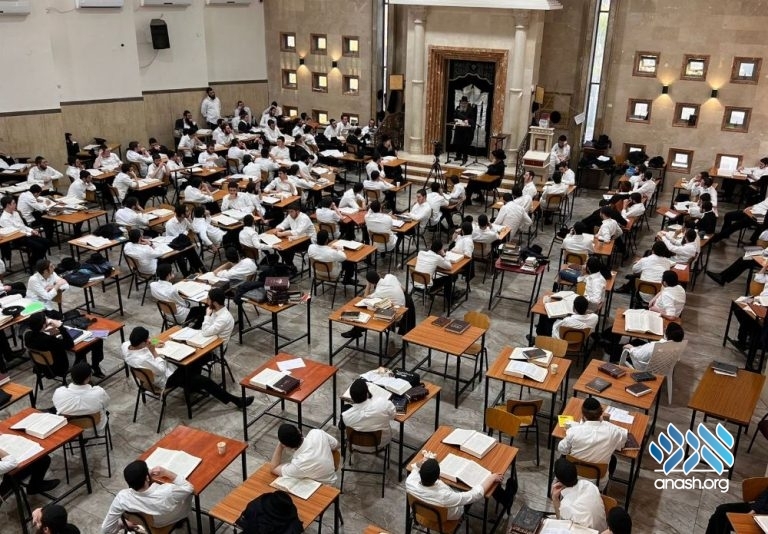


Anyone with an open mind can see that
1. This is a terrible gezeira,
It is not just a political thing,
And 2. We have the ability to anull it –
So
Regarding number 1. We see that as much as efgorts wrr made bederech hateva, everything seems to have failed, it is not an ordinary feat,
And regarding number 2.
The rebbe teaches us that whenever the opposite side comes with a taano – such as when by the mishpat haseforim the other side said that חבד איז נישט אקטיוו,
We should use that as a sign that we should increase our efforts,
So in this case –
The common claim amongst the people pushing for the draft – is that the frum jews are not taking participation in the needs of the people..
So, although everyone in israel knows that frum jews run organozations like zaka amd hatzala, and are definetly participating –
Nevertheles,
This claim should serve as call to all those studiying in yeshiva:
The yeshiva system is not there just for you to shteig,
The idea of learning torah לשמה
Is for the sake of am yisrael.
And then, all will feel it
And the limud hatorah will continue
All chareidi rabbonim said not to even report, because it is a hezeiras shemad. Why is chabad different than all other frum yidden, litvish, chassidish, sefaradim?
Because Chabad has a Rebbe to direct us in every area of life! If we follow his directives, we will have the Zechus to fulfill our purpose in this world.
Remind me where the rebbe said to go to the army in such a situation? And to be different than the rest of chareidi rabbonim? I don’t recall any such directives
Sorry, but I think you got the wrong picture. Learning Torah לשמה doesn’t mean for “the sake of am yisrael”. It means learning for its own sake!
It’s easy saiying, but in reality this should be known and dear to us as own children.
I don’t understand the government’s position. Unlike many other groups, Chabad men are willing to serve, and this is a kiddush Hashem. Our men are NOT asking to “stay home while (our) brothers go to fight”, just to do it according to halachic guidelines of first completing studies and then one year of marriage as the Torah prescribes. Government should be HAPPY, not turn us away.