




י״ג אדר ה׳תשפ״ו | March 1, 2026
‘Blood Moon’ on Purim Signals Downfall of the Wicked
This Purim, a rare total lunar eclipse will turn the moon a deep red—a “blood moon.” According to the Radak, this signals the downfall of the wicked. The Rebbe explains that eclipses mark a time of sudden and unexpected tensions, including violent clashes between nations or individuals.
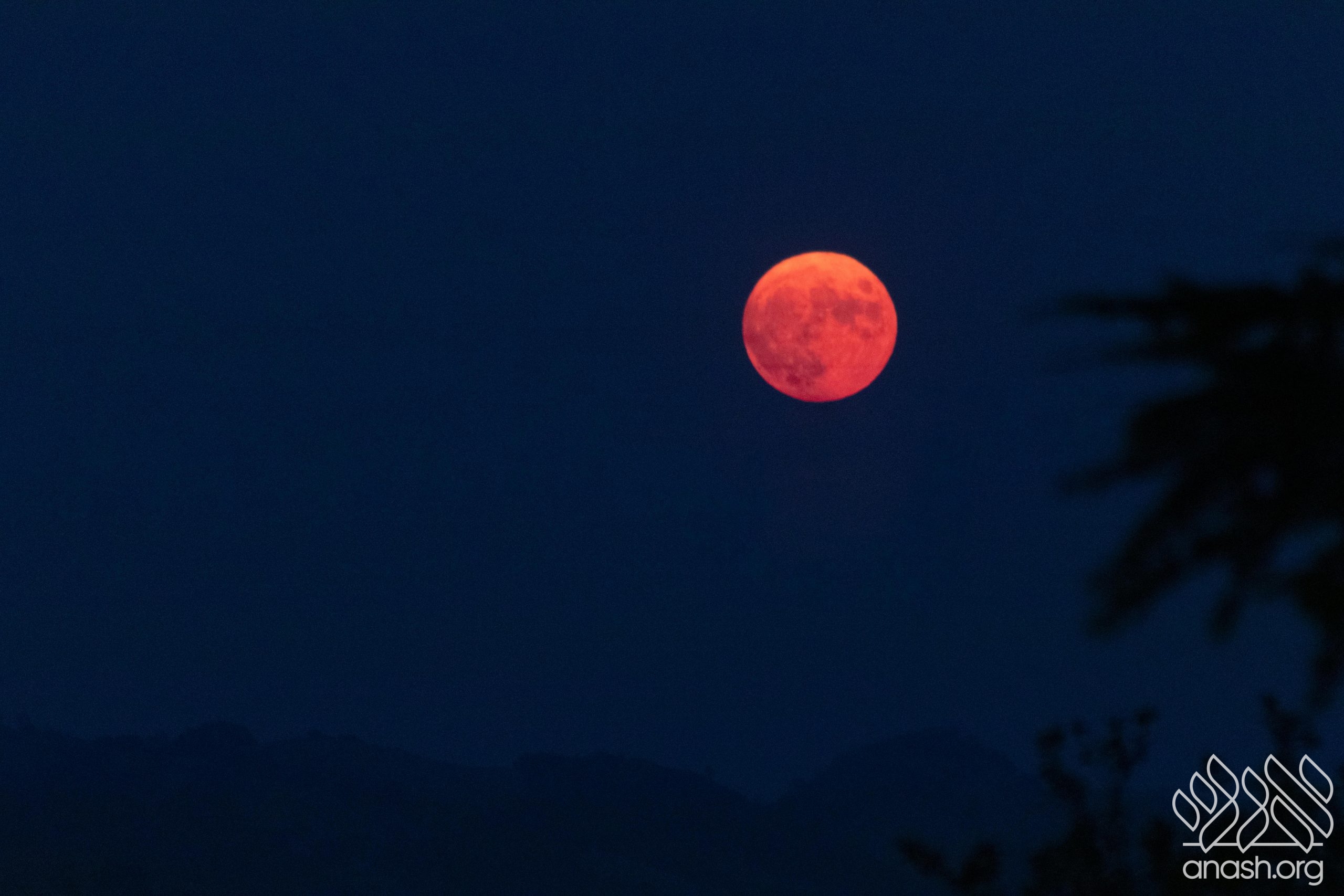
This Purim, a rare total lunar eclipse will turn the moon a deep red – a “blood moon.” According to the early commentator Radak, this signals the downfall of the wicked.
North and South America, Africa, Asia, and parts of the Middle East will see the event on Tuesday morning, while Australia and eastern Asia will witness it Tuesday night. Partial stages – where only a small portion of the moon is covered – will be visible in Central Asia and parts of South America. Africa and Europe will largely miss the eclipse.
Lunar eclipses occur when the Earth comes between the sun and the full moon, casting a shadow that gradually covers the moon. The reddish color appears as sunlight filters through Earth’s atmosphere, giving the “blood moon” its striking appearance. The entire event unfolds over several hours, with totality lasting about an hour.
Although eclipses are often considered signs from Heaven, the Yidden themselves have nothing to fear. The enemies of the Jewish people, however, have much to worry about.
In Tanach, Yirmiya Hanovi says (Chapter 10):
“Thus said Hashem to the way of the nations: Do not learn and do not fear the signs of the heavens, for the nations will be dismayed at them.”
The Gemara (Sukka 29a) explains that this applies “at a time when Yisrael is doing Hashem’s will,” then there is no need to fear an eclipse.
The Likutei Mahari”ch comments on the Gemara:
“If the sun is eclipsed on the first day of Adar, the leader of the enemy oppressing Israel is destined to fall in that same month.”
The Radak writes that during a total lunar eclipse, the moon appears dark, while during a partial eclipse it can take on a red, “blood-like” appearance. This symbolizes the downfall of the wicked. A “blood moon” is not a sign of general disaster, but a spiritual omen specifically concerning those who act wickedly.
Although solar and lunar eclipses are natural events, part of Hashem’s creation, and occur at fixed, predictable times, the Rebbe explains (Likutei Sichos, Volume 15, p. 7) that when Hashem created the world, He arranged it so that, from time to time, an unfavorable mazal would shine at predetermined moments.
On those days, a solar or lunar eclipse would occur, signaling a negative influence. The eclipse itself is not caused by human actions; it is a sign marking a time of potential calamity, when special consequences may be applied.
This “bad mazal” can lead to misfortune and causes Heaven to pay closer attention to anyone who transgresses certain aveiros. When the Yidden are fulfilling Hashem’s will, however, they have no need to fear these calamities.
The Rebbe further explains that this bad mazal influences natural tendencies, bringing out negative inclinations. When a solar or lunar eclipse occurs, these inclinations can appear in the world and sometimes lead to sudden and unexpected tensions, including violent clashes between nations or individuals.
The Yidden, through additional service of Hashem, can rise above the restrictions of nature. Therefore, “there is no need to fear any of these.” They can overcome negative inclinations and, from the outset, do not need to concern themselves with the signs of the heavens.
This is especially significant in the month of Adar.
As the Rebbe explains, although Haman’s lot fell in Adar – a month he assumed had no “mazal” – he was sorely mistaken. The Yidden are not only not dependent on the mazalos; they are on a level far higher. In Adar specifically, being that Moshe Rabbeinu was born, the mazal of the Jewish people is at its fullest – bari mazlei – and the essence of the neshamah of each Jew is revealed.
It should be noted that the Radak specifically refers to a red “blood moon” during a partial lunar eclipse, while modern science typically uses the term for a total eclipse. In any case, this year’s Purim eclipse will feature both partial and total stages – providing a real-time example of these extraordinary occurrences, as we witness the downfall of the Haman of our generation, along with many of the arch-enemies of the Jewish people, just in time for Purim.
 COMMENTS


Moshiach is coming!