



ט״ו אב ה׳תשפ״ה | August 8, 2025
A Staunch Soldier: Rabbi Yaakov Yehuda Hecht
In honor of the 35th yahrtzeit of Rabbi Yaakov Yehuda (JJ) Hecht, we present a captivating look at the life and work of a devoted leader whose boundless energy, care for others, and unwavering dedication to the Rebbe left a lasting impact on the Jewish world.
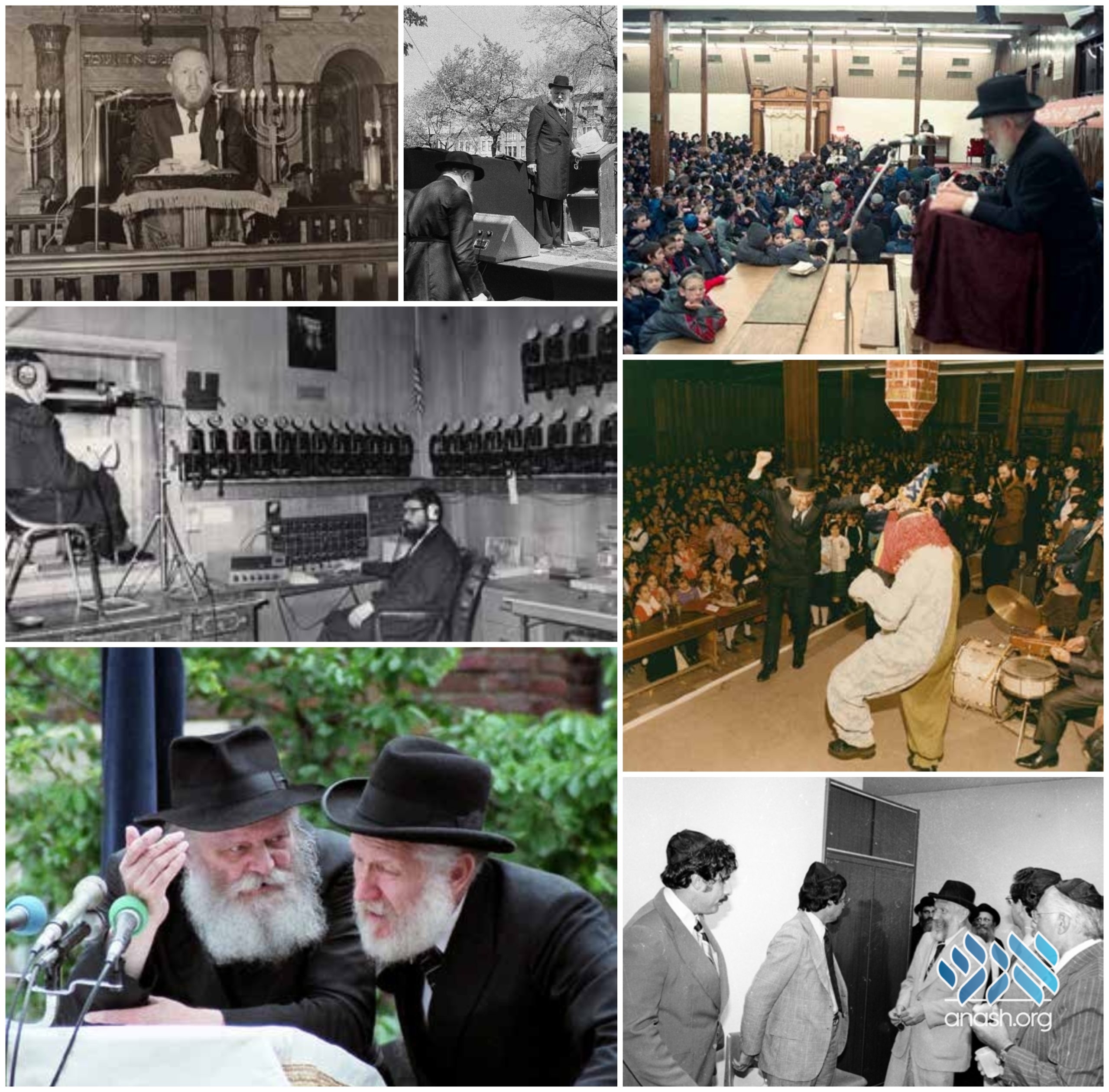
In honor of the 35th yahrtzeit of Rabbi Yaakov Yehuda (JJ) Hecht, we present a captivating look at the life and work of a devoted leader whose boundless energy, care for others, and unwavering dedication to the Rebbe left a lasting impact on the Jewish world.
Rabbi Yaakov Yehuda Hecht (known to many as “Yankel” or “JJ”) was a man of many colors.
He was lively and vivacious; many fondly recall his fiery speeches and entertaining style. He was dependable and a natural leader; he carried the weight of many institutions and responsibilities. And he was also genuinely kind and gracious. The many people whom he helped attest to his boundless care for his fellow Jew, and his constant readiness to help anyone in a tough situation.
But beyond all this, there is one characteristic that those who knew Rabbi Hecht remember most about his persona and very fulfilling life. It is his service, his dedication and his love for the Rebbe, which knew no bounds.
Always at the forefront of the Rebbe’s activities, Rabbi Hecht served in many different roles, often all at the same time, and he merited to receive a vast range of directives and special kiruvim from the Rebbe.
In the next few pages, we will attempt to portray just a sample of the fascinating relationship.
Oasis in America
Yaakov Yehuda Hecht was born in תרפ”ד in the Brownsville neighborhood of Brooklyn. Being an observant Jew in the United States was not easy nor common in those days, but in the home of Reb Yehoshua and Sara Hecht, Yiddishkeit was a way of life.
Young Yankel and his five brothers were brought up as proud Jews, and received an authentic Yiddishe chinuch from their father, a prominent activist in the Jewish community.
After attending Yeshiva Chaim Berlin elementary school, the Hecht boys enrolled in Yeshiva Torah Vodaas. At that time, Reb Yisroel Jacobson, who was a prominent Chossid, lived in New York, where his home served as a stronghold for Chabad activities in the United States. The oldest Hecht brother, Shlomo Zalman, began learning Chassidus with Reb Yisroel, and Yankel and his younger brothers followed in his footsteps. When Yankel was sixteen years old, the Frierdiker Rebbe arrived in America and established Yeshivas Tomchei Temimim. This was a turning point for him. Not long afterwards, he transferred to Tomchei Temimim and dedicated his heart and soul to the Frierdiker Rebbe.
Someone’s Watching
Immediately after his arrival, the Frierdiker Rebbe declared that “America iz nit andersh, is no different,” and began plans to rebuild Yiddishkeit in America. When the Rebbe arrived just over a year later, the Frierdiker Rebbe tasked him with leading Merkos L’inyonei Chinuch, Machne Yisroel, and Kehos.
One of the earliest programs of Merkos was the Mesibos Shabbos gatherings, where Jewish children would gather on Shabbos afternoon to say brachos and pesukim and to strengthen their Yiddishkeit together.
As a young bochur, Yankel volunteered for the Mesibos Shabbos programs and dedicated himself to the education of the many Jewish children he encountered. His talent in connecting with the youth stood him well, and over the years he impacted countless children and strengthened their Yiddishkeit. After a short period of time, he was put in charge of the entire operation.
The work of Mesibos Shabbos in those years was of immense importance. In those early days before the launch of mivtzoim, etc., this was the main vehicle of hafatzas hayahadus in America. Although its impact may not have seemed so global at the time, the Rebbe felt otherwise. During a farbrengen in those early years, the Rebbe said, “My father-in-law, the Rebbe, is starting with Mesibos Shabbos, and with that he will take over the world!”
In the merit of his work, Yankel received special kiruvim from the Frierdiker Rebbe and the Rebbe, and he merited to enter into yechidus with the Frierdiker Rebbe on a number of occasions.
One of his earliest experiences was on Rosh Hashanah 5702, a few short months after the Rebbe arrived in the US. On Yom Tov afternoon, Yankel gathered a few Jewish children in the courtyard of 770, davened with them, told them stories, and gave out candies. (This was before the Rebbe began the Mesibos Shabbos program.) All the while, the Rebbe quietly stood on the porch and observed him. Little did Yankel know that the Frierdiker Rebbe, too, sat near the window and watched his little “event” take place.
After it was over, the Rebbe called Yankel and told him to come with him. He led him up the stairs to the second floor of 770, and ushered him into the Frierdiker Rebbe’s yechidus room.
The Frierdiker Rebbe sat at the table wearing his shtreimel, reciting Tehillim from a sefer before him. “As we walked in,” Rabbi Hecht later related, “the Frierdiker Rebbe looked up and gave me a bracha. I was so startled and so overcome with emotion that my entire body shook and I couldn’t make out a single word.”
Another special kiruv he received in those years was from the Rebbe: Due to the Frierdiker Rebbe’s frail health, his farbrengens and tefillos were held on the second floor, and only a select group of people were allowed to participate. One year before hakafos, the Rebbe called Yankel, ushered him into a side room on the second floor, and a few minutes later brought him inside the room where the hakafos were being held.
“For me,” Rabbi Hecht would relate years later, “the most special moment was when, after hakafos concluded, the Rebbe thanked me for being lebedik. I understood that I had brought the Frierdiker Rebbe a lot of nachas.”
Hidden Miracles
Rabbi Hecht once related a personal story of salvation that occurred to him as a young bochur:
During World War II, all divinity students, including yeshiva bochurim, were initially exempt from the military draft. However, at some point they decided that yeshiva bochurim should be drafted, and they decided that I would be the first one who would prove that yeshiva bochurim would do just fine.
My father hired a lawyer who traveled to Washington and fought the case, but ultimately we failed; they refused to exempt me, and I was summoned for the physical examination prior to being drafted.
Before going, I went into yechidus to ask the Frierdiker Rebbe for a bracha. I gave a tzetl to the Frierdiker Rebbe, and he looked up and said, “Der Aibershter zol helfen, may Hashem help you that your salvation will come in a natural form, but if it needs to be l’maalah miderech hateva, above nature, then let it be so.” With that, the yechidus concluded.
I arrived at the examination office, and they sent me from doctor to doctor, each checking me from top to bottom. The eye doctor, the nose doctor, all the doctors gave me an A. I was in perfect health. Each time I received an A, I became more and more worried.
I finished all the doctors, and my report was perfect; I realized that I might very soon be carrying a gun off to war…
There was just one more stop. The psychiatrist.
He began to ask me questions.
“What do you do?”
“I’m a yeshiva bochur; I study Torah.”
“Do you go out with girls?”
“Girls!? I told you, I’m a yeshiva bochur!”
“Do you go to the movies?”
“Movies!? It’s avoda zara, how could I ever do such a thing?”
He went on and on, until he concluded, “You’re nuts!”
He marked my report with an F4, which meant total failure, and I was released.
My father and I came back for yechidus to say thank you. As we entered the room, the Frierdiker Rebbe gave us a broad smile and said: “Ein baal haness makir b’nisso, you don’t understand the miracle that happened to you. You should know what type of miracle that was.”
And then he said with a niggun, “L’oisei niflaos; gedolos—levado. The Aibershter does great miracles. But their true greatness, only He knows.”
Release Time
In 5702, the Frierdiker Rebbe began another campaign to save the Jewish children being educated (r”l) in the public school system. Under the auspices of Yeshivas Tomchei Temimim, a daily after-school Talmud Torah was launched, and scores of Jewish children would arrive each day after school to learn about Torah, mitzvos, and Yiddishkeit. Within some time of working in these schools, Yankel was promoted to principal of the Crown Heights division, and later, of the entire operation.
In 5703, a new program was started. New York State law allows children to attend one hour of religious instruction during the school week, and the Frierdiker Rebbe asked that this law be utilized to teach Yiddishkeit.¹ Every week, bochurim and girls would take children out of school on Wednesday afternoon and learn Torah with them. Yankel began working as a volunteer for the Released Time program, and he was phenomenally successful.
Within a few short years, Released Time had over two thousand children enrolled in their programs, and by the year 5710 there were more than ten thousand children participating! The program, which continues to this day, was a first step for many children; from there, they enrolled in Jewish day schools, and made leaps and bounds in their Yiddishkeit.
Over the following years, Yankel continued his work as the principal of the Talmud Torah. In Shevat 5705, he married his wife, Chava (Lasker). After their wedding, Rabbi Hecht’s father Reb Shea was in yechidus with the Frierdiker Rebbe, and he mentioned that his son, Reb Yankel, “toigt zich ois in mein gesheft, he is successful in my business.” Yankel had helped his father each Friday as well as during summer vacation, and seeing his success, his father wanted him to continue working for him.
The Frierdiker Rebbe replied: “Er toigt zich besser in mein gesheft, he is even better in my business.” It was around that time that Rabbi Hecht was appointed to be the head of the entire Released Time operation, which was called “Shaloh (שיעורי לימוד הדת),” and run under the title “NCFJE – National Committee for Furtherance of Jewish Education.”
As the head of Merkos L’inyonei Chinuch, the Rebbe was intimately involved in everything concerning this program. Throughout those years, it remained under the Rebbe’s close care, and was run with the Rebbe’s direct involvement. In fact, it was Rabbi Hecht’s activities in these programs on behalf of Merkos L’inyonei Chinuch that largely facilitated the close connection he had with the Rebbe. In the years before the Frierdiker Rebbe’s histalkus, Rabbi Hecht was in and out of the Rebbe’s room on a regular basis, constantly working, consulting, and reporting to the Rebbe.
After a couple of years of heading this vast operation, certain challenges arose, and at one point Rabbi Hecht was nearing despair. When he wrote this to the Frierdiker Rebbe, the Frierdiker Rebbe answered him in a letter that “through your involvement in saving the neshamos of thousands of Jewish boys and girls in Shaloh, you are fulfilling the purpose for which your neshama came down into the world, and it is a great merit for you and your family.”²
Rabbanus
In addition to all of his responsibilities, Rabbi Hecht served as the rav of a community, as well. He began his post in 5708, when the members of a prominent shul in East Flatbush approached him and asked him to serve as their rabbi.
Reb Yankel was quite young at the time, and he was involved over his head in Mesibos Shabbos and Shaloh, where he was able to utilize his talent in dealing with children; he didn’t feel that the offer was something he should accept.
Others, however (the Rebbe included), encouraged him to take the post. With the guidance and bracha of the Frierdiker Rebbe, he took the post.
Rabbi Pinchas Feldman, the Rebbe’s shliach to Sydney, Australia, relates that when he asked the Rebbe how he should conduct himself regarding a rabbinical post in Sydney, the Rebbe said that he should speak to Rabbi Hecht who happened to be visiting Australia at the time for his son’s wedding; he would be able to give him a “breitkeit and shtel—a proper rabbinic confidence” in his rabbanus and in general.
In the years before the Frierdiker Rebbe’s histalkus, whenever Rabbi Hecht needed to deliver an important speech, he would ask the Rebbe for a novel idea to give over. The Rebbe would say, “Nem a pencil, grab a pencil to write it down,” and would immediately proceed to give him a Torah thought to speak about.
During the later years of his life, the demographics changed and the population of his shul dwindled. Being a very well-known and beloved figure in the wider Jewish community, he received numerous offers to become the rabbi of various prestigious shuls in other locations. But Rabbi Hecht wasn’t one to abandon his shul. As per the Rebbe’s clear instructions,³ he remained with the small congregation and tended to all their needs for the rest of his life.
Deep Roots
The connection between the Rebbe and Reb Yankel began immediately after the Rebbe arrived in the United States. Rabbi Hecht would relate that from the moment the Rebbe stepped off the boat, he was captivated by his personality.
“He made a powerful impression on us. I would always try to have some sort of connection with him, and the Rebbe reciprocated. I felt like the Rebbe’s child.”
“I used to tell the Rebbe that I was his Chossid,” Reb Yankel would say, “before the Rebbe was Rebbe.”
In those early years, Rabbi Hecht would sometimes drive the Rebbe to the public library to make copies of various documents and pictures. Once, after returning from spending many hours with the Rebbe at the library, Rabbi Hecht received a phone call from the Rebbe.
“Did you go to mikvah today? Do you have a gartel?”
Rabbi Hecht answered in the affirmative.
“So please come over.”
When he arrived, the Rebbe told him that Professor Abraham Joshua Heschel was writing a book about the Baal Shem Tov, and he asked the Frierdiker Rebbe if he could see the Baal Shem Tov’s siddur.
“Normally,” the Rebbe said, “I wouldn’t have dared touch the Baal Shem Tov’s siddur. But since the [Frierdiker] Rebbe asked me to show it to Professor Heschel, I wanted to give you the opportunity as well.”
The Rebbe flipped through the pages until he reached a certain page, and handed the siddur to Rabbi Hecht. On the page, there were two drops of blood. The Rebbe related that these drops fell from the Baal Shem Tov when saying the words “בכל לבבך” in Krias Shema.
On other occasions, the Rebbe would “repay” Reb Yankel for his services by sharing information or anecdotes that he heard firsthand from the Frierdiker Rebbe. During one drive, the Rebbe shared with him that Reb Yitzchak Meir Levin, the chairman of Agudas Yisroel, had been in yechidus, and the Frierdiker Rebbe explained to him why it was forbidden for a Torah-observant Jew to be a sitting member of the Israeli Government.
When Climbing the Gate
On Erev Rosh Hashanah 5717, when Rabbi Hecht came to the Rebbe to give a pan, he asked the Rebbe what to do about tashlich: For several years he had a program of Tehillim recital for his community on the first afternoon of Rosh Hashanah. Now, taking part in the program himself would mean forfeiting the chance to join the Rebbe for tashlich. However, his absence may cause the program to become a social gathering, instead of the serious nature of reciting Tehillim on Rosh Hashanah.
The Rebbe replied that it is a “good idea,” and that he should remain with his congregation. Regarding tashlich, he should recite it near a running faucet in the shul, and during the Aseres Yemei Teshuva, he should go to a natural body of water and recite tashlich a second time.
Tashlich with the Rebbe that year turned out to be quite monumental. It was pouring rain, and when they arrived at the Botanical Gardens, the gate was closed. The Rebbe climbed over the large gate into the garden, and everyone else, hundreds of younger and older Chassidim alike, followed suit. Later that week when Reb Yankel came to the Rebbe to receive lekach, the Rebbe told him, “When I climbed over the gate, what was I thinking about? That I told you to stay at your shul during tashlich.”
Answers
This connection remained strong for the next (almost) fifty years, until Reb Yankel’s passing. The Rebbe’s secretaries could attest to the fact that Reb Yankel would, on average, receive more answers from the Rebbe than anyone else. On a normal day, Reb Yankel could pen one or two notes, sometimes more, with messages or questions for the Rebbe, and he would receive answers within a short period of time.
By nature, Reb Yankel was an upbeat person whose happiness was contagious. However, there were times when carrying the weight of his responsibilities became tough, and he would write to the Rebbe asking for a bracha to find a way out of the predicament.
Once, the situation in one of the mosdos was so difficult that he sat down and despondently wrote a letter to the Rebbe describing the situation and concluding that he had no choice but to return the keys of the mosad to its real owner: the Rebbe himself.
Very quickly, he received a reply. The Rebbe had crossed a line through the entire letter with such force that the pencil mark went through the other side of the paper. At the end, the Rebbe wrote something to the effect of, “I don’t have time to read nonsense.”
On a different occasion, Rabbi Hecht submitted a financial report to the Rebbe, and the Rebbe commented that a certain source of money wasn’t perfectly kosher. Receiving the answer, he immediately wrote back that he would stop taking any money from that source, but “Mei’ayin yavo ezri, from where will my salvation come?”
The Rebbe replied, “You surprisingly write that you don’t know, but Dovid Hamelech already answered the question: Ezri mei’im Hashem, osei shamayim va’aretz, my salvation is from Hashem, the Maker of heaven and earth.” Together with the note, the Rebbe included ten one hundred dollar bills, and said that “if this is how much has come from aretz mitachas, from this physical world, you can only imagine how much will come from shamayim mimaal, from Hashem in the heavens.”
One of his last answers from the Rebbe was two days before he passed away. He had written about something that was causing him stress, and the Rebbe replied, “מה לו ולעצבים, what do you have to do with nerves? Consult with understanding friends. I will mention it at the Ohel.”
Even Before I Say….
Over the years, Rabbi Hecht headed a large number of institutions—NCFJE, Camp Emunah for girls, Yeshivas Hadar Hatorah for baalei teshuva, and more. Each institution on its own was a full time job, yet Rabbi Hecht took full responsibility for them all.
After the founding of Machon Chana for women, an institution established in memory of the Rebbe’s mother, Rebbetzin Chana, the Rebbe called Reb Yankel in, and asked “a personal request”—to become the “Zevulun,” the one responsible for the finances of that institution as well.
The many responsibilities on his shoulders took up all his time. At one point, Rebbetzin Hecht felt that it was too much for him, and while in yechidus, she asked the Rebbe to tell him to “take it easy.”
The Rebbe’s answer wasn’t what she had hoped for. The Rebbe said that if he knows that someone won’t listen to his instructions, he tries not to offer them in the first place. With a broad smile, the Rebbe continued, “And I know that for your husband, ‘taking it easy’ isn’t in his dictionary.”
Some years later, Rabbi Hecht and his wife went to the Rebbe for dollars, and the Rebbe turned to Rebbetzin Hecht. “Nu, does your husband listen to you?”
Rabbi Zalman Gurary was once in yechidus when the Rebbe remarked that his will isn’t easily fulfilled. There weren’t many Chassidim who were ready to follow the Rebbe’s directives without hesitation. The Rebbe mentioned three Chassidim who do listen right away and continued by saying, “There is one person who fulfills my will even before I ask. That is Yankel Hecht.”
Once, when Reb Yankel returned from fulfilling a certain shlichus, he sent in a report for the Rebbe with his younger brother Shalom, who also had a unique relationship with the Rebbe, and would enter the Rebbe’s room on a frequent basis. When he walked in, Shalom told the Rebbe, “Yankel asked to give over that the shlichus was very successful, obviously through the koach hameshalei’ach, the Rebbe’s power.”
The Rebbe answered, “Der shliach darf oich epes kenen, the messenger must be capable too…”
The extent of the trust the Rebbe had in him is expressed in the following story:
After the Rebbe recovered from the heart attack on Shmini Atzeres 5738 and went home on Rosh Chodesh Kislev, the Rebbe held an unofficial seudas hoda’a farbrengen on the afternoon of Zos Chanuka. The Rebbe kept the plan a secret (perhaps so as not to disturb the workday) until the last minute, and the only one whom he shared it with—so that challah and some basic necessities could be prepared—was Rabbi Hecht.
At noon that day, the Rebbe called him in and said, “I’m looking for a baal meretz and a baal sod (someone capable and secretive), and I have found you.” The Rebbe told him about the farbrengen, asked him to prepare what was needed, and cautioned him not to tell anyone, even the mazkirim.⁴
Open Love
In addition to his dependability, Rabbi Hecht was well-known at times for his audacious style. Even when in front of the Rebbe, where he conducted himself with the utmost reverence, his love for the Rebbe would break through.
Many people recall his heartfelt brachos that he would bentch the Rebbe at the conclusion of each children’s rally (which he led as the head of Mesibos Shabbos and Shaloh) to which all of the children would answer with a resounding amen. His genuine love for the Rebbe would shine forth, and he would bentch the Rebbe, in his words, “from the bottom of my heart.” The Rebbe would listen to him intently, often with a broad smile, and answer amen as well.
“More Important Than Eating”
In 5727, Rabbi Hecht traveled to Eretz Yisrael a short time before the outbreak of the Six Day War. At the farbrengen before he left, the Rebbe gave him a bottle of mashke and told him to farbreng in the Chabad shul in Yerushalayim. The Rebbe also warned him to be careful about what he says. “Remember that over there,” the Rebbe said, “kulanu chachamim, kulanu nevonim, everyone is ‘smart’ and everyone has an opinion…”
When he returned, he went in for a yechidus, with the following background story:
Reb Yankel’s son Shea had become bar mitzvah during his father’s visit to Eretz Yisrael, and hadn’t had the opportunity for a bar mitzvah yechidus with his family as was customary in those years. Reb Yankel’s return wasn’t on a yechidus night, but the Rebbe instructed that they enter for yechidus before Maariv that night, “Uhn a shturem, without making a big deal out of it.”
That night, Rabbi and Rebbetzin Hecht and Shea entered for yechidus. The Rebbe spoke with Shea, and then after he left the room, Rabbi Hecht gave over a report of his trip. The yechidus went on for quite a while, and the time for Maariv arrived. That day had been on of the days of bahab,⁵ and the Rebbe was going to fast until after Maariv, so eventually the mazkir opened the door to inform the Rebbe that the time for Maariv had arrived. When he did so, the Rebbe told him, “Dos iz mer vichtig vi essen, this is more important than eating.”
As part of the report, Rabbi Hecht told the Rebbe what he had said in the shul:
“Sometimes, people think they are chachamim, that they are smart and knowledgeable, and whenever the Rebbe gives a directive, they sit and discuss and deliberate about it. Ultimately, however, the Rebbe doesn’t have enough foot soldiers to fulfill his will in actuality…”
The Rebbe was very pleased with his words of encouragement and call to action.
Chief Translator
Perhaps what Rabbi Hecht is most remembered for is being master of ceremonies for the Tzivos Hashem gatherings and Lag B’omer parades. He is probably the only person who would speak publicly in the Rebbe’s presence on a regular basis. Not only would he speak, he would also translate the Rebbe’s words into English while the Rebbe stood there and listened.
These weren’t the only occasions when he would give over the Rebbe’s sichos.
In 5732, someone asked the Rebbe if he could broadcast the Rebbe’s farbrengen over WEVD radio in New York City. The Rebbe replied that while it was a good idea, the time hadn’t yet come.
Two months later, Rabbi Hecht brought the same suggestion and the Rebbe agreed that he go ahead with it. The Rebbe’s weekday farbrengens on Yud Shevat, Purim, and other special days were now broadcast on New York radio. Besides running the whole operation and its overhead, Rabbi Hecht would summarize the Rebbe’s sichos during the short intervals when niggunim were sung.
The Rebbetzin became one of his avid listeners. After many a farbrengen, the Rebbe would comment to Rabbi Hecht about his delivery. Once the Rebbe asked him how he was feeling; “M’hot gehert az m’hot gehust asach, I heard that you were coughing a lot.”
The cost of these broadcasts was prohibitive, and sometimes the Rebbe sent money to Rabbi Hecht to help cover the expenses.
This wasn’t Rabbi Hecht’s only presence on the radio. Each week, his lively voice would fill the New York airwaves with words of Torah, and during the nine days leading up to Tisha B’av, he would conduct a siyum on the radio every day. When the Rebbe asked that siyumim be conducted through the fifteenth of Av, the radio siyumim were continued through the fifteenth, too.
The Iranian Children
In 5739, the Jews in Iran realized that they had no future in the country. The country was in the throes of a revolution, and if it were to succeed—as it eventually did—the government would be controlled by Islamic fundamentalists.
Many Jewish youths began to look for ways to reach the United States. When Rabbi Hecht’s son Shalom Ber visited Iran in the summer of 5738, many youngsters begged him to assist them. Shalom Ber contacted a number of Jewish institutions, but they were all unwilling to take on the responsibility.
He then contacted his father, who sat down and wrote a long letter to the Rebbe, detailing the entire situation. The Rebbe replied with a lengthy answer, and promised Rabbi Hecht that helping the Iranian children would be an opening for financial success for all of his mosdos.
Rabbi Hecht didn’t waste a minute, and began a massive covert operation to spirit hundreds of Iranian children into the United States. For a number of years the children lived in Crown Heights and Rabbi Hecht took personal responsibility for their needs. The Rebbe was very involved in this project, and took great interest in the wellbeing of the children. The full story of the Iranian children and the Rebbe’s involvement is beyond the scope of this article; see Derher Nissan 5773.⁶
Another field in which Rabbi Hecht was active was fighting cults and missionaries who were ensnaring many Jewish youths at the time. As the years passed and the rising tide of intermarriage became better known, he would also dedicate much time and effort to stopping it. He would spend hours with youngsters involved in cults or non-Jewish relationships, convincing them, in his fun and engaging style, that they were making a disastrous decision.
Camp Emunah
In 5713, Rabbi Hecht established Camp Emunah for girls as an outgrowth of Released Time; he had realized that thousands of girls enrolled in Released Time were going to spend the summer in a non-Jewish environment. While there were Jewish camps for boys, there was nothing for girls, and with the Rebbe’s bracha, he decided to fill the gap.
The camp was built with the Rebbe’s many brachos, and the Rebbe himself visited Camp Emunah on two occasions. The Rebbe surveyed the entire camp grounds and facilities and spoke to the campers and staff.
In the summer of 5750, Rabbi Hecht spent the summer in Camp Emunah as usual. On the eve of 15 Av, he suddenly passed away at the young age of 66. His passing came as a complete shock.
The Rebbe was inside the Ohel during the levaya, and afterwards, on his way out, the Rebbe spent some time next to his graveside.
During the shivah, the Rebbe instructed that two of his institutions be named after him. After asking the Rebbe’s advice, the two mosdos chosen were Hadar Hatorah and Camp Emunah. Hadar Hatorah was renamed Yeshivas Kol Yaakov Yehuda—Hadar Hatorah, and Camp Emunah was renamed name Camp Emunah—Bnos Yaakov Yehuda.
That Shabbos, in an almost unprecedented fashion,⁷ the Rebbe spoke about him during the farbrengen, and did so once more before his shloshim. The sichos were later edited by the Rebbe and published.⁸ The Rebbe requested that the edited sicha be given out at the shloshim event that took place in 770.
The Rebbe spoke about his mesirus nefesh to spread Yiddishkeit amongst Jewish children, and his perseverance to accomplish what he did. The Rebbe also explained the hora’a from his name, Yaakov Yehuda. Yaakov, the Rebbe said, is a name that is a shem hakolel—a unification of all Yidden—because the neshama of Yaakov Avinu was a neshama klalis—a general soul of all Yidden, and Yehuda was the head of the shevatim. The Rebbe also noted that Yaakov Yehuda has the same gematriya as rebbi, and connected it with his life mission of bringing Torah to Jewish children.
The Rebbe said:
“His main occupation was the avoda of Yaakov Yehuda—to bring the Torah of Yaakov to the Jewish people, and primarily to Jewish children, even those far down in the public schools, and he did it with the fortitude of Yehuda; he disregarded the law and he prevailed and established Released Time.
“In general, he occupied himself with carrying out the will of Yaakov [the nossi of our generation, the Frierdiker Rebbe], and he accomplished it with fortitude—to the extent that with hearing only a hint from ‘Yaakov,’ he immediately brought it to fruition.
“…Being that it is close to his shloshim, it is an appropriate time for every person to contemplate about what he accomplished, and to learn a lesson from it…”
Footnotes:
- Interestingly, this law came into effect the very month that the Frierdiker Rebbe arrived in the United States—Adar 5700.
- Igros Kodesh Admur HaRayatz vol. 10, p. 96.
- See Crown Heights, Derher Cheshvan 5777, for more on the Rebbe’s view on shuls in dwindling communities.
- For the full description of this farbrengen, see Seudas Hoda’ah, Derher Teves 5775. See also Derher Kislev 5777, p. 67.
- The Monday, Thursday, and Monday after each Yom Tov are called “bahab,” and some people have the custom to fast on those days. The Rebbe privately followed this custom.
- Escape from Iran.
- It should be noted that upon the passing of Reb Yankel’s brother, Reb Moshe Yitzchok Hecht, the Rebbe likewise spoke about him during a following farbrengen.
- Sefer Hasichos 5750 vol. 2, p. 666
This article first appeared in A Chassidisher Derher and is reprinted here with permission.
 COMMENTS


We appreciate your feedback. If you have any additional information to contribute to this article, it will be added below.